
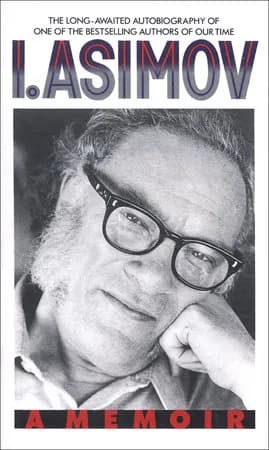
Quotes
Nor did I learn about sex from any reasoned source of instruction. I learned about it from the distorted and imperfect knowledge of other boys. This is the usual fate enforced upon youngsters by a society that is too prim and too hypocritical to have sex taught like any other branch of knowledge.
Considering how important sex is, how great a source of joy, how enormous a source of misery and disease, how is permeates the workings of courtship and marriage, isn’t it strange that we go to great lengths to teach our children to play football and make no effort whatever to teach them to play sex?
p. 93
There are no nations! There is only humanity. And if we don’t come to understand that right soon, there will be no nations, because there will be no humanity.
p. 421
Publishers, with their usual bravery, dumbed down their books in order to make money at the expense of leaving American children undereducated or, worse, miseducated.
p. 306
I refuse to consider myself to be anything more sharply defined than “human being,” and I feel that aside from overpopulation the most intractable problem we face in trying to avoid the destruction of civilization and humanity is the diabolical habit of people dividing themselves into tiny groups, with each group extolling itself and denouncing its neighbors.
p. 325
I received other options but nothing ever happened and I developed what I call Asimov’s First Law of Hollywood, which goes as follows:
“Whatever happens, nothing happens!”
p. 371
However trashy pulp fiction might be, it had to be read. Youngsters avid for the corny, lightning-jagged, cliché-ridden, clumsy stories had to read words and sentences to satisfy their craving. It trained everyone who read it in literacy, and a small percentage of them may that have passed on to better things.
Now consider what has happened since.…
In general, the trend over the last half century or so has been away from the word to the picture. The comic magazines increased the level of looking, decreased the level of reading. The television set is carried this to an extreme.
p. 46
When Israel was first founded in 1948 and all my Jewish friends were jubilant, I was the skeleton at the feast. I said, ‘“We are building ourselves a ghetto. We will be surrounded by tens of millions of Muslims who will never forgive, never forget, and never go away.”
I was right.
p. 420
As the Reagan administration continued to transfer funds from hospitals and other much-needed social institutions into the pockets of arms manufacturers and politicians, working conditions grew steadily worse.
p. 487
Of course, some people did not like my headnotes. They took them to represent an unhealthy, hypertrophied ego on my part. It’s not true, of course. I just like myself, that’s all, and I don’t think there’s anything wrong with that. One critic wrote something I’m willing to agree with. He said, “The man is very immodest, but he has much to be immodest about.”
p. 298
As far as we know, the human species is the only one that understands that death is inevitable, not only in general but in every individual’s case.
p. 335
Ronald Reagan I have always viewed as a brainless fellow who echoes the opinions of anyone who gets close to him.
p. 77
What I do now is think of a problem and a resolution to that problem. I then begin the story, making it up as I go along, having all the excitement of finding out what will happen to the characters and how they will get out of their scrapes, but working steadily toward the known resolution, so that I don’t get lost en route.
When I asked for advice for beginners, I always stress that. Know your ending, I say, or the river of your story may finally sink into the desert sands and never reach the sea.
p. 49
When an old person dies who has been a part of your life, it is part of your youth that dies. And though you survive yourself, you must watch death take away the world of your youth, little by little.
p. 538
To me, however, death is merely death, and a person who was alive is gone, and although sorrow and loneliness may devour you as a result, it should not be put on public display, any more than it must. I realize that this is not a popular view and will not prevail.
p. 329
I don’t expect to live forever, nor do I repine over that, but I am weak enough to want to be remembered forever. —Yet how few of those who have lived, even of those who have accomplished far more than I have, linger on in world memory for even a single century after their death.
p. 539
Ten thousand years ago, human beings devised the techniques of agriculture and herding and slowly begin the process of destroying the environment by overgrazing and by overfarming.
Still, not all that human beings could do in the wildest excesses of war and rapine could seriously damage the planet until 1945. In that year, the first nuclear bomb was exploded, and the Industrial Revolution, fed by cheap oil, went into high gear. We are now perfectly capable of damaging the planet beyond repair in any reasonable time, and are, in fact, in the process of doing so.
p. 221
I refused to make any changes.
I said to them, haughtily, “It isn’t written in the stars that I must make a million dollars, but it is written in the stars that I must be true to my principles.”
So they fired me. They had someone else do the changes, and on June 26, 1978, I made them remove my name from the book. The project was a fiasco from beginning to end.
What does one do in a case like this? One is helpless in the face of cowardly publishers, pliant school boards, and fanatical ignoramuses. All I can do is write essays denouncing creationism with its believe in Adam, Eve, a talking serpent, and a worldwide Flood, all in a six- to ten-thousand-year-old universe, and in a supernatural creation of all the species of life so that they were different from the start.
Some of my essays appeared in as august an organ as The New York Times Magazine and that roused the anger of many Fundamentalists—an anger I am happy and proud to inspire.
p. 307
I just work on the principle that of all the virtues gratitude (next to honesty) is the greatest, and that has helped me on numerous occasions in my life.
p. 266
Man proposes and old age disposes—
p. 356
It is not very difficult to write for teenagers if you avoid thinking of them as children. I do not simplify my vocabulary for them, though I often add the pronunciations of the technical terms, merely to reduce the terror they inspire visually. I do avoid sentences that are too long and complex and I do not indulge in obscure illusions. What is lacking in a teenager is not intelligence or reasoning ability, but merely experience.
p. 525
The rest of the faculty avoided me for fear that too close an association with the school leper might get them into trouble too. One of them, however, approached me cautiously once and, making sure we were not under observation, he told me that he was proud of me end of my bravery and continuing to fight for academic freedom.
I shrugged. “There’s no bravery about it. I have academic freedom and I can give it to you in two words.”
“What’s that?” he asked.
“Outside income,” I said.
It’s true. The average faculty member is under an enormous disadvantage in a fight with the administration. He need not even be fired, he need merely be harassed, and he must start looking for a new position. They are not easy to find and generally, if he waits too long, he might find he is fired and, without a salary, he can be in deep financial trouble.
p. 198
As one gets older and more rickety, and as medical technology advances, doctors love to play with their toys, using you as their victim.
p. 131
Once when Isaac and I talked about old age, illness, and death, he said it wasn’t so terrible to get sick and old and to die if you’ve been part of life completing itself as a pattern. Even if you don’t make it to old age, it’s still worthwhile, there’s still pleasure in that vision of being part of the pattern of life—especially a pattern expressed in creativity and shared in love.
p. 562
It is amazing how the young women flock about me now that I’m old and harmless. Where were they when I could have taken wicked advantage of their affection?
p. 515
If I were not an atheist, I would believe in a God who would choose to save people on the basis of the totality of their lives and not the pattern of their words. I think he would prefer an honest and righteous atheist to a TV preacher whose every word is God, God, God, and whose every deed is foul, foul, foul.
I would also want a God who would not allow a Hell. Infinite torture can only be a punishment for infinite evil, and I don’t believe that infinite evil can be said to exist even in the case of Hitler. Besides, if most human governments are civilized enough to try to eliminate torture and outlaw cruel and unusual punishments, can we expect anything less of an all-merciful God?
I feel that if there were an afterlife, punishment for evil would be reasonable and of a fixed term. And I feel that the longest and worst punishment should be reserved for those who slandered God by inventing Hell.
But all that is just playing. I am firm in my beliefs. I am an atheist and, in my opinion, death is followed by an eternal and dreamless sleep.
p. 338
Lecturing helps only the students. Research, on the other hand, means government grants, and a portion of the grants is invariably marked for “overhead,” which goes to the school. What it amounts to is that the school chooses research over lecturing every time—money for itself over education for its students.
p. 164
I have a horror of funerals, not only because I dislike anything unpleasant but also because I detect a tang of hypocrisy to the whole thing. As soon as someone dies, he or she becomes transformed into a miracle of angelic behavior and personality which in life was never true, and everyone puts on an attitude of deep sorrow which, in truth, he or she might not feel.
p. 329
On the QE2, I devoured caviar every chance I had, while Janet loved the chocolate soufflés. We both reveled in beef Wellington, and a lucky thing too, for, as we found out, as one grows older the doctors take you off any kind of food that tastes good, and it’s just as well we ate it while we could.
p. 416
I shuddered at the thought of living in Florida, though, a place where six inches is a high elevation.
p. 408
Happiness is doing it rotten your own way.
p. 277
The novels I have been writing lately are the kind I wrote in the 1950s. (I have been criticized for this by some critics, but the day I pay attention to critics is the day the sky will fall.)
p. 77
I resented much modern poetry, because I couldn’t understand it (and, worse yet, there was nothing about it that gave me the urge to try to understand it) and because I despised its freewheeling notions of what a poem should look like.
p. 303
In writing a science fiction novel, you must invent a futuristic social structure which is complex enough to be interesting in itself apart from the story and which is self-consistent. You must also invent a plot that works only within that social structure. The plot must develop without unduly obscuring the description of the social structure, and the social structure must be described without unduly slowing the plot.
Making a science fiction novel fulfill this double purpose is difficult even for an experienced and talented old hand such as myself. Every other kind of writing is easier than science fiction.
p. 265
Arthur and I share similar views on science fiction, on science, on social questions, and on politics. I have never had occasion to disagree with him on any of these things, which is a credit to his clear-thinking intelligence.
p. 142
The trouble is that I am one of the common breed of human being who finds it very easy to strew noble little homilies far and wide but considerably less easy to follow those homilies himself.
p. 416
Earlier in the book, I mentioned my lack of any real feeling of affection for infants and children. I am not exactly sold on teenagers either.
p. 307
Hollywood is notorious for “creative bookkeeping.” They can make many, many millions out of a movie but all of it is skimmed off to actors and direction and what is left, the “net profit,” out of which the writers are paid a percentage, usually turns out to be a “net loss.”
p. 502
He (Robert A. Heinlein) always pictured himself a libertarian, which to my way of thinking means “I want the liberty to grow rich and you can have the liberty to starve.” It’s easy to believe that no one should depend on society for help when you yourself happen not to need such help.
p. 311
The greatest single problem facing humanity today is the multiplicity of people. No environmental problem can possibly be solved till the population is stabilized and brought under control. Under these circumstances, it would seem that any young couple who were indifferent to children and showed no disposition to add to Earth’s burden ought to be encouraged and made much of.
The truth, however, is quite the contrary. The world would not let us be childless. People who met us invariably asked if we had children, and when we said we didn’t, they would look at us with disapproval or with sorrow.
p. 174
I have always estimated that any but the most trivial connection with Hollywood, however profitable it might seem at the moment, would end in disaster, and I have stayed away from the place. I have never regretted it either.
p. 31
Why is it, I wonder, that anyone who displays superior athletic ability is an object of admiration to his classmates, while one who displays superior mental ability is an object of hatred? Is there some hidden understanding that it is brains, not muscles, that define the human being and that children who are not good at athletics are simply not good, while those who are not smart feel themselves to be subhuman? I don’t know.
p. 4
When I was young, all youngsters wore caps.… Now they are gone, all gone. The story I’ve heard was that caps were always worn by the bad guys in the early gangster movies, and the American public, never notable for thinking for themselves, therefore rejected them.
p. 35
I received the fundamentals of my education in school, but that was not enough. My real education, the superstructure, the details, the true architecture, I got out of the public library. For an impoverished child whose family could not afford to buy books, the library was the open door to wonder and achievement, and I can never be sufficiently grateful that I had the wit to charge through that door and make the most of it.
Now, when I read constantly about the way in which library funds are being cut and cut, I can only think that the door is closing and that American society has found one more way to destroy itself.
p. 29
It is a mistake to think that because a group has suffered extreme persecution that is a sign that they are virtuous and innocent. They might be, of course, but the persecution process is no proof of that. The persecution merely shows that the persecuted group is weak. Had they been strong, then, for all we know, they might have been the persecutors.
p. 22
I have never, in all my life, not for one moment, been tempted toward religion of any kind. The fact is that I feel no spiritual void. I have my philosophy of life, which does not include any aspect of the supernatural and which I find totally satisfying. I am, in short, a rationalist and believe only that which reason tells me is so.
p. 13
By the time I was reading the Bible, however, science fiction and science books had taught me their version of the universe and I was not ready to accept the creation tale of Genesis or the various miracles described throughout the book. My experience with the Greek myths (and, later, the grimmer Norse myths) made it quite obvious to me that I was reading Hebrew myths.
p. 13
The whole world seems to live under the banner: “Freedom is wonderful—but only for me.”
p. 22
That’s all the quotes.
47 quotes in the collection · come back when we add more