Quotes about pride
13 quotes · 8 authors
Quotes
His rash ambition had climbed a height where it was difficult to stand with firmness, and impossible to fall without instant destruction.
 The History of the Decline and Fall of the Roman Empire
I cannot conceive how any man can have brought himself to that pitch of presumption, to consider his country as nothing but carte blanche, upon which he may scribble whatever he pleases.
p. 231
 Reflections on the Revolution in France
He was one of those people who live up to their emotional incomes, who are always taut and tingling with vanity. Hence he had no strength to spare; hence he had no kindness, no geniality; for geniality is almost definable as strength to spare. He had no god-like carelessness; he never forgot himself; his whole life was, to use his own expression, an arrangement. He went in for "the art of living"—a miserable trick.
One of the thousand objections to the sin of pride lies precisely in this, that self-consciousness of necessity destroys self-revelation. A man who thinks a great deal about himself will try to be many-sided, attempt a theatrical excellence at all points, will try to be an encyclopaedia of culture, and his own real personality will be lost in that false universalism. Thinking about himself will lead to trying to be the universe; trying to be the universe will lead to ceasing to be anything. If, on the other hand, a man is sensible enough to think only about the universe; he will think about it in his own individual way. He will keep virgin the secret of God; he will see the grass as no other man can see it, and look at a sun that no man has ever known.
Of course, this shrinking from the brutal vivacity and brutal variety of common men is a perfectly reasonable and excusable thing as long as it does not pretend to any point of superiority. It is when it calls itself aristocracy or aestheticism or a superiority to the bourgeoisie that its inherent weakness has in justice to be pointed out.
The truth is that the tradition of Christianity (which is still the only coherent ethic of Europe) rests on two or three paradoxes or mysteries which can easily be impugned in argument and as easily justified in life. One of them, for instance, is the paradox of hope or faith—that the more hopeless is the situation the more hopeful must be the man. Stevenson understood this, and consequently Mr. Moore cannot understand Stevenson. Another is the paradox of charity or chivalry that the weaker a thing is the more it should be respected, that the more indefensible a thing is the more it should appeal to us for a certain kind of defence. Thackeray understood this, and therefore Mr. Moore does not understand Thackeray. Now, one of these very practical and working mysteries in the Christian tradition, and one which the Roman Catholic Church, as I say, has done her best work in singling out, is the conception of the sinfulness of pride. Pride is a weakness in the character; it dries up laughter, it dries up wonder, it dries up chivalry and energy. The Christian tradition understands this; therefore Mr. Moore does not understand the Christian tradition.
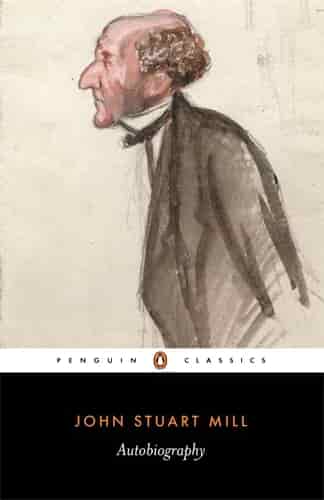
Of the evils most liable to attend on any sort of early proficiency, and which often fatally blights its promise, my father most anxiously guarded against. This was self-conceit. He kept me, with extreme vigilance, out of the way of hearing myself praised, or of being led to make self-flattering comparisons between myself and others. From his own intercourse with me I could derive none but a very humble opinion of myself; and the standard of comparison he always held up to me, was not what other people did, but what a man could and ought to do. He completely succeeded in preserving me from the sort of influences he so much dreaded. I was not at all aware that my attainments were anything unusual at my age.
p. 32
 Autobiography
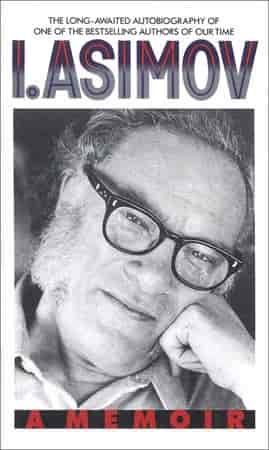
Of course, some people did not like my headnotes. They took them to represent an unhealthy, hypertrophied ego on my part. It’s not true, of course. I just like myself, that’s all, and I don’t think there’s anything wrong with that. One critic wrote something I’m willing to agree with. He said, “The man is very immodest, but he has much to be immodest about.”
p. 298
No one is so modest as not to believe himself a competent amateur sleuth.
p. 114
I was supremely confident my flair for atmosphere and characterization would sparkle alongside the numbing mulch ground out by studio hacks. Certainly the space atop my mantel might be better festooned by a gold statuette than by the plastic dipping bird that now bobbed there ad infinitum.
What really flatters a man is that you think him worth flattering.
I hate singers, a miserable crew who think that music exists only in their own throats.