Quotes
I headed toward home alone, really alone now, telling myself that in all the sprawling immensity of our mighty continent the least-known factor of living was the human heart, the least-sought goal of being was a way to live a human life. Perhaps, I thought, out of my tortured feelings I could fling a spark into this darkness. I would try, not because I wanted to but because I felt that I had to if I were to live at all.
Yes, the whites were as miserable as their black victims, I thought. If this country can’t find its way to a human path, if it can’t inform conduct with a deep sense of life, then all of us, black as well as white, are going down the same drain…
I picked up a pencil and held it over a sheet of white paper, but my feelings stood in the way of my words. Well, I would wait, day and night, until I knew what to say. Humbly now, with no vaulting dream of achieving a vast unity, I wanted to try to build a bridge of words between me and that world outside, that world which was so distant and elusive that it seemed unreal.
I would hurl words into this darkness and wait for an echo, and if an echo sounded, no matter how faintly, I would send other words to tell, to march, to fight, to create a sense of the hunger for life that gnaws in us all, to keep alive in our hearts a sense of the inexpressibly human.
Repeatedly I took stabs at writing, but the results were so poor that I would tear up the sheets. I was striving for a level of expression that matched those of the novels I read. But I always somehow failed to get onto the page what I thought and felt. Failing at sustained narrative, I compromised by playing with single sentences and phrases. Under the influence of Stein’s Three Lives, I spent hours and days pounding out disconnected sentences for the sheer love of words. I would write: “The soft melting hunk of butter trickled in gold down the stringy grooves of the split yam.” Or: “The child’s clumsy fingers fumbled in sleep, feeling vainly for the wish of its dream.” “The old man huddled in the dark doorway, his bony face lit by the burning yellow in the windows of distant skyscrapers.” My purpose was to capture a physical state or movement that carried a strong subjective impression, an accomplishment which seemed supremely worth struggling for. If I could fasten the mind of the reader upon words so firmly that he would forget words and be conscious only of his response, I felt that I would be in sight of knowing how to write narrative. I strove to master words, to make them disappear, to make them important by making them new, to make them melt into a rising spiral of emotional stimuli, each greater than the other, each feeding and reinforcing the other, and all ending in an emotional climax that would drench the reader with a sense of a new world. That was the single aim of my living.
I spent my nights reading Proust’s A Remembrance of Things Past, admiring the lucid, subtle but strong prose, stupefied by its dazzling magic, awed by the vast, delicate, intricate, and psychological structure of the Frenchman’s epic of death and decadence. But it crushed me with hopelessness, for I wanted to write of the people in my environment with an equal thoroughness, and the burning example before my eyes made me feel that I never could.
“And at last the darkness of the night descended and softly-kissed the surface of the watery grave and the only sound was the lonely rustle of the ancient trees,” I wrote as I penned the final line. I was excited; I read it over and saw that there was a yawning void in it. There was no plot, no action, nothing save atmosphere and longing and death. But I had never in my life done anything like it; I had made something, no matter how bad it was; and it was mine…Now, to whom could I show it?
My schoolmates could not understand why anyone would want to write a story; and, above all, they could not understand why I had called it The Voodoo of Hell’s Half-Acre. The mood out of which a story was written was the most alien thing conceivable to them.
The power of the pen is far greater than those people suppose who have not proved it by experience.
It is noble to write as we think; it is the privilege of humanity.
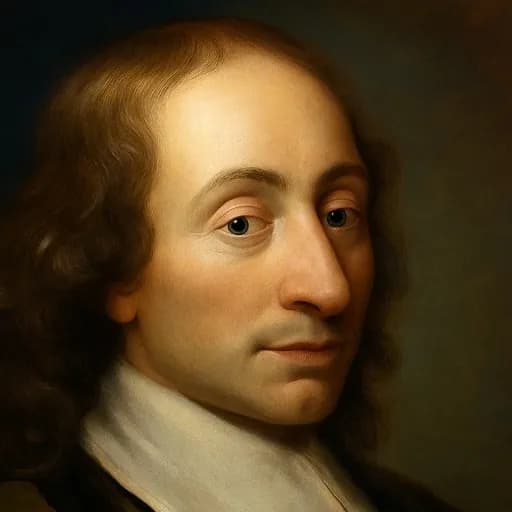
When we see a natural style, we are astonished and delighted; for we expected to see an author, and we find a man. Whereas those who have good taste, and who seeing a book expect to find a man, are quite surprised to find an author. Plus poetice quam humane locutus es. "You have spoken more poetically than humanly."
The last thing one settles in writing a book is what one should put in first.
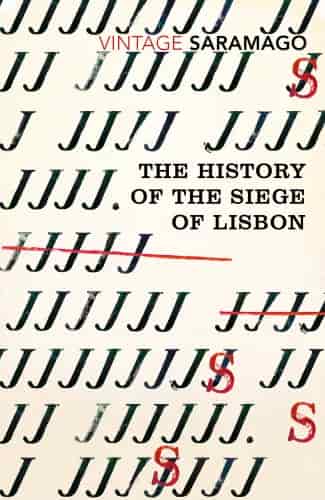
Every novel is like this, desperation, a frustrated attempt to save something of the past. Except that it still has not been established whether it is the novel that prevents man from forgetting himself or the impossibility of forgetfulness that makes him write novels.
p. 47
Reading maketh a full man, conference a ready man, and writing an exact man.