Quotes
Writers, especially when they act in a body and with one direction, have great influence on the public mind.
 Reflections on the Revolution in France
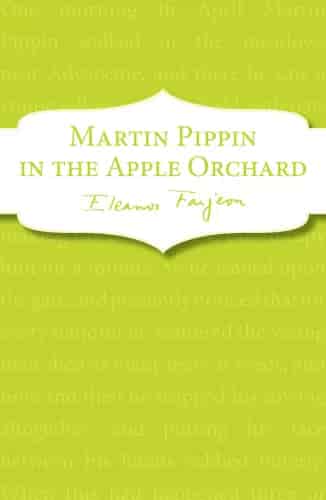
Romance gathers round an old story like lichen on an old branch. And the story of Martin Pippin in the Apple Orchard is so old now — some say a year old, some say even two. How can the children be expected to remember?
 Martin Pippin in the Apple Orchard
There is a second type of mind which produces satire with the quality of greatness. That is embodied in the satirist whose passions are released and let go by some intolerable sense of wrong. He is maddened by the sense of men being maddened; his tongue becomes an unruly member, and testifies against all mankind. Such a man was Swift, in whom the saeva indignatio was a bitterness to others, because it was a bitterness to himself.
The third type of great satire is that in which he satirist is enabled to rise superior to his victim in the only serious sense which superiority can bear, in that of pitying the sinner and respecting the man even while he satirises both. Such an achievement can be found in a thing like Pope's "Atticus" a poem in which the satirist feels that he is satirising the weaknesses which belong specially to literary genius. Consequently he takes a pleasure in pointing out his enemy's strength before he points out his weakness. That is, perhaps, the highest and most honourable form of satire.
A good novel tells us the truth about its hero; but a bad novel tells us the truth about its author.
The strong old literature is all in praise of the weak. The rude old tales are as tender to minorities as any modern political idealist. The rude old ballads are as sentimentally concerned for the under-dog as the Aborigines Protection Society. When men were tough and raw, when they lived amid hard knocks and hard laws, when they knew what fighting really was, they had only two kinds of songs. The first was a rejoicing that the weak had conquered the strong, the second a lamentation that the strong had, for once in a way, conquered the weak. For this defiance of the statu quo, this constant effort to alter the existing balance, this premature challenge to the powerful, is the whole nature and inmost secret of the psychological adventure which is called man. It is his strength to disdain strength.
Shakespeare is the happy hunting ground of all minds that have lost their balance.
Our national epic has yet to be written.
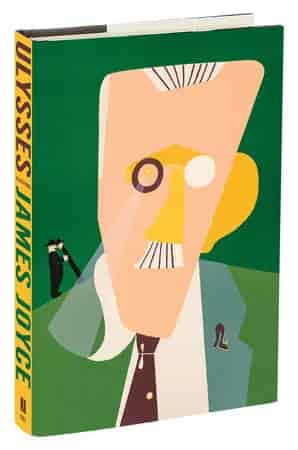
Coffined thoughts around me, in mummycases, embalmed in spice of words. Thoth, god of libraries, a birdgod, moonycrowned. And I heard the voice of that Egyptian highpriest. In painted chambers loaded with tilebooks.
They are still. Once quick in the brains of men. Still: but an itch of death is in them, to tell me in my ear a maudlin tale, urge me to wreak their will.
I believe that the early success and reputation of Carlyle's French Revolution, were considerably accelerated by what I wrote about it in the Review. Immediately on its publication, and before the commonplace critics, all whose rules and modes of judgment it set at defiance, had time to preoccupy the public with their disapproval of it, I wrote and published a review of the book, hailing it as one of those productions of genius which are above all rules, and are a law to themselves.
p. 217
 Autobiography
Compared with the greatest poets, he may be said to be the poet of unpoetical natures, possessed of quiet and contemplative tastes. But unpoetical natures are precisely those which require poetic cultivation. This cultivation Wordsworth is much more fitted to give, than poets who are intrinsically far more poets than he.
p. 149
AutobiographyIn the same year in which I began Latin, I made my first commencement in the Greek poet with the Iliad. After I had made some progress in this, my father put Pope's translation into my hands. It was the first English verse I had cared to read, and it became one of the books in which for many years I most delighted: I think I must have read it from twenty to thirty times through. I should not have thought it worth while to mention a taste apparently so natural to boyhood, if I had not, as I think, observed that the keen enjoyment of this brilliant specimen of narrative and versification is not so universal with boys, as I should have expected both à priori and from my individual experience.
p. 10
Autobiography