Quotes about poetry
15 quotes · 11 authors
Quotes
It takes a spasm of love to write a poem.
Do you know,
Considering the market, there are more
Poems produced than any other thing?
No wonder poets sometimes have to seem
So much more businesslike than businessmen.
Their wares are so much harder to get rid of.
He could not be captured,
He could not be bought,
His running was rhythm,
His standing was thought;
With one eye on sorrow
And one eye on mirth,
He galloped in heaven
And gambolled on earth. And only the poet
With wings to his brain
Can mount him and ride him
Without any rein,
The stallion of heaven,
The steed of the skies,
The horse of the singer
Who sings as he flies.
p. 181
 The New Book of Days
Compared with the greatest poets, he may be said to be the poet of unpoetical natures, possessed of quiet and contemplative tastes. But unpoetical natures are precisely those which require poetic cultivation. This cultivation Wordsworth is much more fitted to give, than poets who are intrinsically far more poets than he.
p. 149
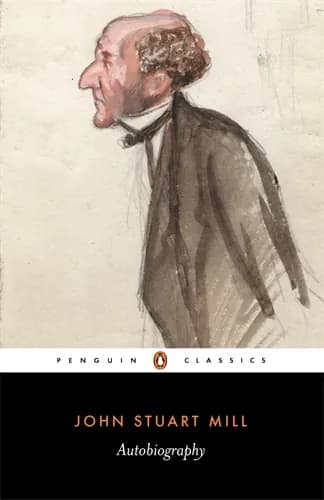 Autobiography
Scott does this still better than Wordsworth, and a very second-rate landscape does it more effectually than any poet. What made Wordsworth's poems a medicine for my state of mind, was that they expressed, not mere outward beauty, but states of feeling, and of thought coloured by feeling, under the excitement of beauty. They seemed to be the very culture of the feelings, which I was in quest of. In them I seemed to draw from a Source of inward joy, of sympathetic and imaginative pleasure, which could be shared in by all human beings; which had no connexion with struggle or imperfection, but would be made richer by every improvement in the physical or social condition of mankind. From them I seemed to learn what would be the perennial sources of happiness, when all the greater evils of life shall have been removed. And I felt myself at once better and happier as I came under their influence.
p. 147
AutobiographyIn the same year in which I began Latin, I made my first commencement in the Greek poet with the Iliad. After I had made some progress in this, my father put Pope's translation into my hands. It was the first English verse I had cared to read, and it became one of the books in which for many years I most delighted: I think I must have read it from twenty to thirty times through. I should not have thought it worth while to mention a taste apparently so natural to boyhood, if I had not, as I think, observed that the keen enjoyment of this brilliant specimen of narrative and versification is not so universal with boys, as I should have expected both à priori and from my individual experience.
p. 10
AutobiographyIf the English version is in what, in our youth, we used to speak of affectionately as dear old iambic pentameter, the actors mercifully abstain from reciting it that way; they speak their lines as good, hardy prose. p. 76
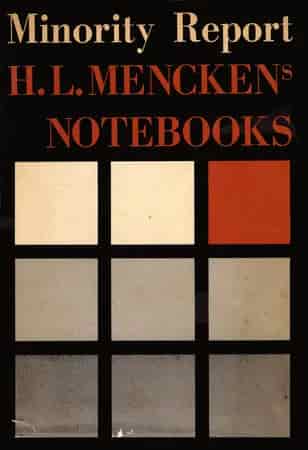
I resented much modern poetry, because I couldn’t understand it (and, worse yet, there was nothing about it that gave me the urge to try to understand it) and because I despised its freewheeling notions of what a poem should look like.
p. 303
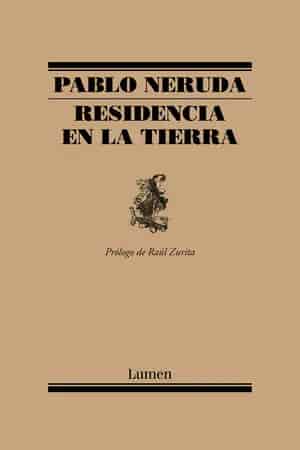
Preguntaréis: ¿Y dónde están las lilas?
¿Y la metafísica cubierta de amapolas?
¿Y la lluvia que a menudo golpeaba
sus palabras llenándolas
de agujeros y pájaros?
I have often argued that a poet more than thirty years old is simply an overgrown child. I begin to suspect that there may be some truth in it.
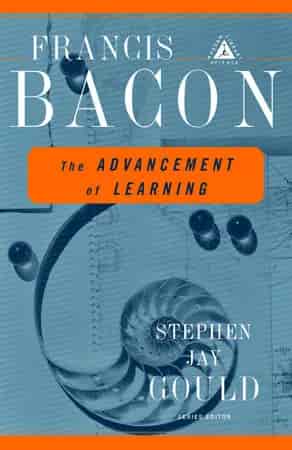
The use of this feigned history hath been to give some shadow of satisfaction to the mind of man in those points wherein the nature of things doth deny it, the world being in proportion inferior to the soul; by reason whereof there is, agreeable to the spirit of man, a more ample greatness, a more exact goodness, and a more absolute variety, than can be found in the nature of things. Therefore, because the acts or events of true history have not that magnitude which satisfieth the mind of man, poesy feigneth acts and events greater and more heroical: because true history propoundeth the successes and issues of actions not so agreeable to the merits of virtue and vice, therefore poesy feigns them more just in retribution, and more according to revealed providence: because true history representeth actions and events more ordinary, and less interchanged, therefore poesy endueth them with more rareness, and more unexpected and alternative variations: so as it appeareth that poesy serveth and conferreth to magnanimity, morality, and to delectation. And therefore it was ever thought to have some participation of divineness, because it doth raise and erect the mind, by submitting the shows of things to the desires of the mind; whereas reason doth buckle and bow the mind into the nature of things.
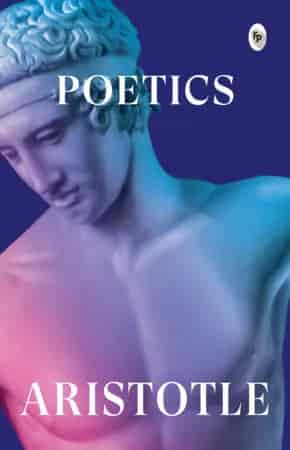
But the greatest thing by far is to have a command of metaphor. This alone cannot be imparted by another; it is the mark of genius, for to make good metaphors implies an eye for resemblances.