
Quotes
The true nature of being is magical and that the proper duty of the creatures, the land, and human beings is to live in harmony with what is.
The nature of the cosmos, of the human, the creaturely, and the supernatural universe is like water. It takes numerous forms; it evaporates and it gathers. Survival and continuance are contingent on its presence. Whether it is in a cup, a jar, or an underground river, it nourishes life. And whether the ritual traditions are in ceremony, myth, or novel, they nourish the people. They give meaning. They give life.
We are the land, and the land is mother to us all.
While lovelessness is not usually named by sociologists as an aspect of alienation, it may be the primary factor. For without relationships with significant others, meaning, self-esteem, a sense of belonging expressed in the establishment of norms and experienced as a sense of power cannot exist.
Reconciling the opposites of life and death, of celebration and grief, of laughter and rage is no simple task, yet it is one worthy of our best understanding and our best effort. If, in all these centuries of death, we have continued to endure, we must celebrate that fact and the fact of our vitality in the face of what seemed, to many, inevitable extinction. For however painful and futile our struggle becomes, we have but to look outside at the birds, the deer, and the seasons to understand that change does not mean destruction, that life, however painful and even elusive it is at times, contains much joy and hilarity, pleasure and beauty for those who live within its requirements with grace.
Literature must, of necessity, express and articulate the deepest perceptions, relationships, and attitudes of a culture, whether it does so deliberately or accidentally.
The power of imagination, of image, which is the fundamental power of literature, is the power to determine a people’s fate.
The oral tradition is more than a record of a people’s culture. It is the creative source of their collective and individual selves.
Acceptance is the better part of grief.
In the ancient bardic tradition the bards sang only of love and death. Certainly these twin themes encompass the whole of human experience. Loving, celebrating, and joining are the source of life, but they necessarily occur against a background of potential extinction. Thus, these themes become the spindle and loom of the poets’ weavings, for from the interplay of connection and disconnection come our most significant understandings of ourselves, our fellow creatures, and our tradition, our past.
The oral tradition is a living body. It is in continuous flux, which enables it to accommodate itself to the real circumstances of a people’s lives.
No people is broken until the heart of its women is on the ground. Then they are broken. Then will they die.
Perhaps the most destructive aspect of alienation is that: the loss of power, of control over one’s destiny, over one’s memories, thoughts, relationships, past, and future. For in a world where no normative understandings apply, where one is perceived as futile and unwanted, where one’s perceptions are denied by acquaintance and stranger alike, where pain is the single most familiar sensation, the loss of self is experienced continually and, finally, desperately.
Every tribe has a responsibility to the workings of the universe; today as yesterday, human beings play an intrinsic role in the ongoing creation.
The cultural bias of the translator inevitably shapes his or her perception of the materials being translated, often in ways that he or she is unaware of. Culture is fundamentally a shaper of perception, after all, and perception is shaped by culture in many subtle ways. In short, it’s hard to see the forest when you’re a tree.
I am Laguna, woman of the lake, daughter of the dawn, sunrise, kurena. I can see the light making the world anew. It is the nature of my blood and heritage to do this. There is surely cause to weep, to grieve; but greater than ugliness, the endurance of tribal beauty is our reason to sing, to greet the coming day and the restored life and hope it brings.
Indians endure—both in the sense of living through something so complete in its destructiveness that the mere presence of survivors is a testament to the human will to survive and in the sense of duration or longevity.
You can take the Indian out of Indian country but you can’t take the Indian out of the Indian.
One’s emotions are one’s own; to suggest that others should imitate them is to impose on the personal integrity of others.
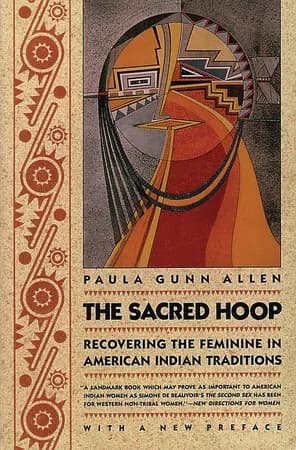
When I was small, my mother often told me that animals, insects, and plants are to be treated with the kind of respect one customarily accords to high-status adults. “Life is a circle, and everything has its place in it,” she would say. That’s how I met the sacred hoop, which has been an integral part of my life.
To address a person as “mother” is to pay the highest ritual respect.



That’s all the quotes.
21 quotes in the collection · come back when we add more