Quotes
Association with women is the basic element of good manners.
That’s the disgusting reality about the human ability to adapt. At first the shock, the repulsion, is all in 3D — sights and sounds and smells. You recoil and gag and wish for a bath and cry at the devastation. Time passes. You live in it. You spend time in it. You blend, and everything fizzles to normalcy, and that which once repulsed slowly becomes natural, acceptable if you do nothing.
That, I realize, is what culture is: doing things a certain way until you get used to it.
“Are you familiar with Wallader’s theory that every society is fundamentally organized around one or another of the cardinal sins?”
“I believe not,” I said.
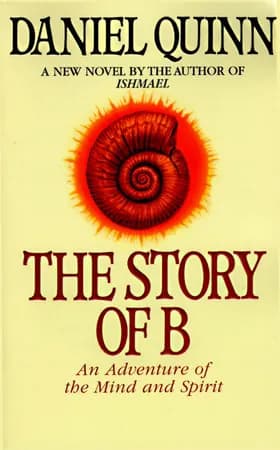
“He argues that the true seed of every culture, whatever the ideals to which it gives lip service, always turns out to be one of the seven mortal iniquities identified by the ancients: pride, greed, and anger are the most common; lust, gluttony, and envy less so; those based on sloth usually do not last.”
p. 70
Coming whence you do, you doubtless assume that the mores and customs of your own land arise from the workings of simple human nature. But human nature is far from simple, and what appears natural in your own milieu may seem chillingly alien when transported into some foreign sphere.
p. 30
What works, evidently, is cultural diversity. This should not come as a surprise. If culture is viewed as a biological phenomenon, then we should expect to see diversity favored over uniformity. A thousand designs—one for every locale and situation—always works better than one design for all locals and situations. Birds are more likely to survive in ten thousand nest patterns than in one. Mammals are more likely to survive in ten thousand social patterns that in one. And humans are more likely to survive in ten thousand cultures than in one—as we are in the process of proving right now. We’re in the process of making the world unlivable for ourselves—precisely because everyone is being forced to live a single way. There would be no problem if only one person in ten thousand lived the way we live. The problem appears only as we approach the point where only one person in ten thousand is permitted to live any other way than the way we live. In a world of ten thousand cultures, one culture can be completely mad and destructive, and little harm will be done. In a world of one culture—and that one culture completely mad and destructive—catastrophe is inevitable.
p. 219
Any culture will become an obscenity when blown up into a universal world culture to which all must belong.
p. 82
Literature must, of necessity, express and articulate the deepest perceptions, relationships, and attitudes of a culture, whether it does so deliberately or accidentally.
The cultural bias of the translator inevitably shapes his or her perception of the materials being translated, often in ways that he or she is unaware of. Culture is fundamentally a shaper of perception, after all, and perception is shaped by culture in many subtle ways. In short, it’s hard to see the forest when you’re a tree.
Losing a plant can threaten a culture in much the same way as losing a language. [...] The history of the plants is inextricably tied up with the history of the people, with the forces of destruction and creation.
p. 261
Old-growth cultures, like , have not been exterminated. The land holds their memory and the possibility of regeneration. They are not only a matter of ethnicity or history, but of relationships born out of reciprocity between land and people.
p. 291
This was always the hard part. If you knew what was normal to the enemy, then everything became easy: you could lull them to sleep by feeding them normal, and you could scare the hell out of them by suddenly taking normal away. But normal to Afghans and Chechens was so different from normal to Russians that it took a bit of work for a man like Sokolov to establish what it was.
"It's what we do now instead of bohemias," Harwood says.
"Instead of what?"
"Bohemias. Alternative subcultures. They were a crucial aspect of industrial civilization in the two previous centuries. They were where industrial civilization went to dream. A sort of unconscious R&D, exploring alternate societal strategies…And they did, frequently, have locales with which they became associated. But they became extinct."
"Extinct?"
"We started picking them before they could ripen…as marketing evolved and the mechanisms of recommodification became quicker, more rapacious. Authentic subcultures required backwaters, and time, and there are no more backwaters."