Quotes about hope
15 quotes · 9 authors
Quotes
Keeping a journal implies hope.
Human nature simply cannot subsist without a hope and aim of some kind; as the sanity of the Old Testament truly said, where there is no vision the people perisheth. But it is precisely because an ideal is necessary to man that the man without ideals is in permanent danger of fanaticism.
As long as matters are really hopeful, hope is a mere flattery or platitude; it is only when everything is hopeless that hope begins to be a strength at all. Like all the Christian virtues, it is as unreasonable as it is indispensable.
My general meaning touching the three virtues of which I have spoken will now, I hope, be sufficiently clear. They are all three paradoxical, they are all three practical, and they are all three paradoxical because they are practical. it is the stress of ultimate need, and a terrible knowledge of things as they are, which led men to set up these riddles, and to die for them. Whatever may be the meaning of the contradiction, it is the fact that the only kind of hope that is of any use in a battle is a hope that denies arithmetic. Whatever may be the meaning of the contradiction, it is the fact that the only kind of charity which any weak spirit wants, or which any generous spirit feels, is the charity which forgives the sins that are like scarlet. Whatever may be the meaning of faith, it must always mean a certainty about something we cannot prove. Thus, for instance, we believe by faith in the existence of other people.
Justice consists in finding out a certain thing due to a certain man and giving it to him. Temperance consists in finding out the proper limit of a particular indulgence and adhering to that. But charity means pardoning what is unpardonable, or it is no virtue at all. Hope means hoping when things are hopeless, or it is no virtue at all. And faith means believing the incredible, or it is no virtue at all.
Charity is a fashionable virtue in our time; it is lit up by the gigantic firelight of Dickens. Hope is a fashionable virtue to-day; our attention has been arrested for it by the sudden and silver trumpet of Stevenson. But faith is unfashionable, and it is customary on every side to cast against it the fact that it is a paradox. Everybody mockingly repeats the famous childish definition that faith is "the power of believing that which we know to be untrue." Yet it is not one atom more paradoxical than hope or charity. Charity is the power of defending that which we know to be indefensible. Hope is the power of being cheerful in circumstances which we know to be desperate. It is true that there is a state of hope which belongs to bright prospects and the morning; but that is not the virtue of hope. The virtue of hope exists only in earthquake and, eclipse. It is true that there is a thing crudely called charity, which means charity to the deserving poor; but charity to the deserving is not charity at all, but justice. It is the undeserving who require it, and the ideal either does not exist at all, or exists wholly for them. For practical purposes it is at the hopeless moment that we require the hopeful man, and the virtue either does not exist at all, or begins to exist at that moment. Exactly at the instant when hope ceases to be reasonable it begins to be useful. Now the old pagan world went perfectly straightforward until it discovered that going straightforward is an enormous mistake. It was nobly and beautifully reasonable, and discovered in its death-pang this lasting and valuable truth, a heritage for the ages, that reasonableness will not do. The pagan age was truly an Eden or golden age, in this essential sense, that it is not to be recovered.
The pagan, or rational, virtues are such things as justice and temperance, and Christianity has adopted them. The three mystical virtues which Christianity has not adopted, but invented, are faith, hope, and charity.
When, however, not more than half that duration of time had elapsed, a small ray of light broke in upon my gloom. I was reading, accidentally, Marmontel's "Mémoires," and came to the passage which relates his father's death, the distressed position of the family, and the sudden inspiration by which he, then a mere boy, felt and made them feel that he would be everything to them—would supply the place of all that they had lost. A vivid conception of the scene and its feelings came over me, and I was moved to tears. From this moment my been grew lighter. The oppression of the thought that all feeling was dead within me, was gone. I was no longer hopeless: I was not a stock or a stone. I had still, it seemed, some of the material out of which all worth of character, and all capacity for happiness, are made. ...Thus the cloud gradually drew off, and I again enjoyed life: and though I had several relapses, some of which lasted many months, I never again was as miserable as I had been.
p. 140
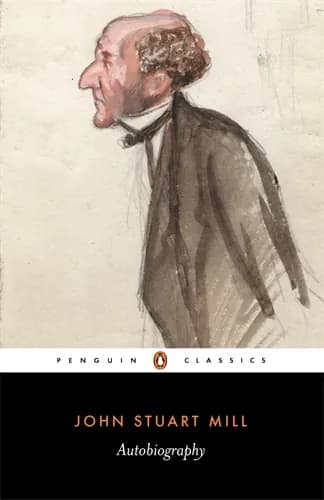 Autobiography
There is never no hope left. Remember.
p. 280
To Mankind
And the hope that the war against folly may someday be won, after all.
p. 5
If they destroy here, then somewhere else someone else is building. Surely there are still peaceful countries and men of good sense who know of God's love? If God had abandoned this unlucky town on the Drina, he had surely not abandoned the whole world that was beneath the skies? They would not do this for ever. But who knows?
It rained. The procession of weary soldiers became a bedraggled train, despondent and muttering, marching with churning effort in a trough of liquid brown mud under a low, wretched sky. Yet the youth smiled, for he saw that the world was a world for him, though many discovered it to be made of oaths and walking sticks. He had rid himself of the red sickness of battle. The sultry nightmare was in the past. He had been an animal blistered and sweating in the heat and pain of war. He turned now with a lover's thirst to images of tranquil skies, fresh meadows, cool brooks — an existence of soft and eternal peace.
Over the river a golden ray of sun came through the hosts of leaden rain clouds.