Quotes about cinema
24 quotes · 16 authors
Quotes
When Fortuna spins you downward, go out to a movie and get more out of life.
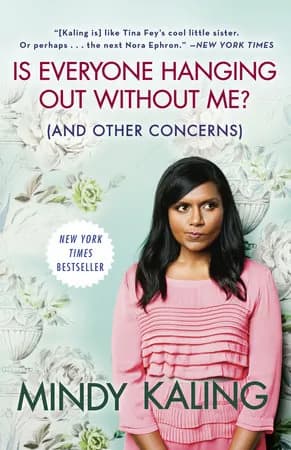
I simply regard romantic comedies as a subgenre of sci-fi, in which the world created therein has different rules than my regular human world. …. There is no difference between Ripley from Alien and any Katherine Heigl character.
I simply regard romantic comedies as a subgenre of sci-fi, in which the world created therein has different rules than my regular human world. …. There is no difference between Ripley from Alien and any Katherine Heigl character.
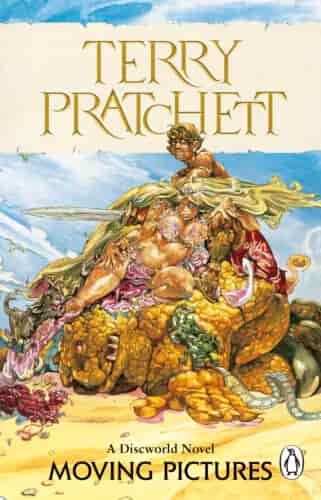
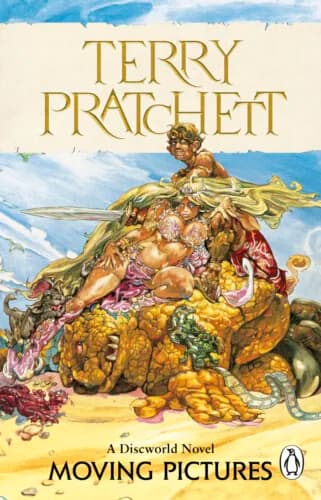
Supposing there was somewhere reality was a little thinner than usual? And supposing you did something there that weakened reality even more. Books wouldn't do it. Even ordinary theater wouldn't do it, because in your heart you knew it was just people in funny clothes on a stage. But Holy Wood went straight from the eye into the brain. In your heart you thought it was real. The clicks would do it. (p. 286)
I watched an old American submarine movie on television. The creaking plot had the captain and first officer constantly at each other’s throat. The submarine was a fossil, and one guy had claustrophobia. But all that didn’t stop everything from working out well in the end. It was an everything-works-out-in-the-end-so-maybe-war’s-not-so-bad-after-all sort of film. One of these days they’ll be making a film where the whole human race gets wiped out in a nuclear war, but everything works out in the end.
'The whole beauty of the Film is that it has a certain fixed speed. The way you see it is mechanically conditioned. I mean, take a painting - you can just glance at it, or you can stare at the left hand top corner for half an hour. Same thing with a book. The author can't stop you from skimming it, or staring at the last chapter and reading backwards. The point is, you choose your approach. When you go into a cinema it's different. There's the film, and you have to look at it as the director wants you to look at it. He makes his points, one after another, and he allows you a certain number of seconds or minutes to grasp each one. If you miss anything he won't repeat himself, and he won't stop to explain. He can't. He's started something and he has to go through with it.'
p. 24
Not everyone who wants to make a film is crazy, but almost everyone who is crazy wants to make a film. It is just one of the things that crazy people want to do, like starting a law suit or sending long, unsolicited letters to people in the public eye. A letter from a nutter has a recognisable format and orthography, as if all letter-writing nutters have to go through some kind of Top Gun nutter-letter-writing academy.
p. 93
"You were just babies then!" she said.
"What?" I said.
"You were just babies in the war — like the ones upstairs!"
I nodded that this was true. We had been foolish virgins in the war, right at the end of childhood.
"But you're not going to write it that way, are you." This wasn't a question. It was an accusation.
"I — I don't know," I said.
"Well I know," she said. "You'll pretend you were men instead of babies, and you'll be portrayed in the movies by Frank Sinatra and John Wayne or some of those other glamorous, war-loving, dirty old men. And war will look just wonderful, so we'll have a lot more of them. And they'll be fought by babies like the babies upstairs."
So then I understood. It was war that made her so angry. She didn't want her babies or anybody else's babies killed in wars. And she thought wars were partly encouraged by books and movies.
So I held up my right hand and I made her a promise: "Mary," I said, "I don't think this book of mine is ever going to be finished. I must have written five thousand pages by now, and thrown them all away. If I ever do finish it, though, I give you my word of honor: there won't be a part for Frank Sinatra or John Wayne.
"I tell you what," I said, "I'll call it The Children's Crusade."
She was my friend after that.
p. 14
NOBODY KNOWS ANYTHING. Not one person in the entire motion picture field knows for a certainty what's going to work. Every time out it's a guess—and, if you're lucky, an educated one.
In Hollywood in the fifties, a happy ending always involved marriage—the creation of an environment in which lovers could have sex legally.
p. 90
Science fiction films are not about science. They are about disaster, which is one of the oldest subjects of art.
p. 212
"It’s funny how the colours of the real world only seem really real when you viddy them on the screen."