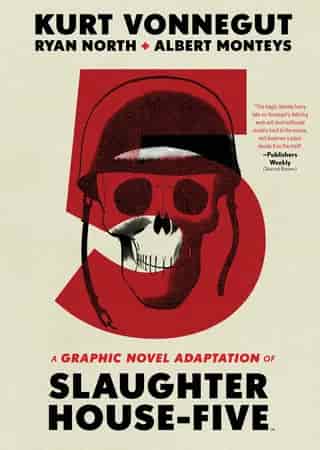
"You were just babies then!" she said. "What?" I said. "You were just babies in the war — like the ones… — Kurt Vonnegut
"You were just babies then!" she said.
"What?" I said.
"You were just babies in the war — like the ones upstairs!"
I nodded that this was true. We had been foolish virgins in the war, right at the end of childhood.
"But you're not going to write it that way, are you." This wasn't a question. It was an accusation.
"I — I don't know," I said.
"Well I know," she said. "You'll pretend you were men instead of babies, and you'll be portrayed in the movies by Frank Sinatra and John Wayne or some of those other glamorous, war-loving, dirty old men. And war will look just wonderful, so we'll have a lot more of them. And they'll be fought by babies like the babies upstairs."
So then I understood. It was war that made her so angry. She didn't want her babies or anybody else's babies killed in wars. And she thought wars were partly encouraged by books and movies.
So I held up my right hand and I made her a promise: "Mary," I said, "I don't think this book of mine is ever going to be finished. I must have written five thousand pages by now, and thrown them all away. If I ever do finish it, though, I give you my word of honor: there won't be a part for Frank Sinatra or John Wayne.
"I tell you what," I said, "I'll call it The Children's Crusade."
She was my friend after that.
p. 14Source: Wikiquote · CC BY-SA 4.0

More from this book
Billy had a framed prayer on his office wall which expressed his method for keeping going, even though he was unenthusiastic about living. A lot of patients who saw the prayer on Billy's wall told him that it helped them to keep going, too. It went like this: "God grant me the serenity to accept the things I cannot change, courage to change the things I can, and wisdom always to tell the difference."
Among the things Billy Pilgrim could not change were the past, the present, and the future. (p. 60)
As part of the gun crew, he had helped to fire one shot in anger — from a 57-millimeter antitank gun. The gun made a ripping sound like the opening of the zipper on the fly of God Almighty. The gun lapped up snow and vegetation with a blowtorch thirty feet long. The flame left a black arrow on the ground, showing the Germans exactly where the gun was hidden. The shot was a miss. (p. 34)
I have told my sons that they are not under any circumstances to take part in massacres, and that the news of massacres of enemies is not to fill them with satisfaction or glee.
I have also told them not to work for companies which make massacre machinery, and to express contempt for people who think we need machinery like that. (p. 19)