Quotes
You got very hungry when you did not eat enough in Paris because all the bakery shops had such good things in windows and people ate outside at tables on the sidewalk so that you saw and smelled the food. When you were skipping meals at a time when you had given up journalism and were writing nothing that anyone in America would buy, explaining at home that you were lunching out with someone, the best place to do it was the Luxembourg gardens... There you could always go into the Luxembourg museum and all the paintings were heightened and clearer and more beautiful if you were belly-empty, hollow-hungry. I learned to understand Cézanne much better and to see truly how he made landscapes when I was hungry.
Bullfighting is the only art in which the artist is in danger of death and in which the degree of brilliance in the performance is left to the fighter's honor.
The individual, the great artist when he comes, uses everything that has been discovered or known about his art up to that point, being able to accept or reject in a time so short it seems that the knowledge was born with him, rather than that he takes instantly what it takes the ordinary man a lifetime to know, and then the great artist goes beyond what has been done or known and makes something of his own.
Whistler could produce art; and in so far he was a great man. But he could not forget art; and in so far he was only a man with the artistic temperament. There can be no stronger manifestation of the man who is a really great artist than the fact that he can dismiss the subject of art; that he can, upon due occasion, wish art at the bottom of the sea.
The men who have really been the bold artists, the realistic artists, the uncompromising artists, are the men who have turned out, after all, to be writing "with a purpose."
Any man with a vital knowledge of the human psychology ought to have the most profound suspicion of anybody who claims to be an artist, and talks a great deal about art. Art is a right and human thing, like walking or saying one's prayers; but the moment it begins to be talked about very solemnly, a man may be fairly certain that the thing has come into a congestion and a kind of difficulty. The artistic temperament is a disease that afflicts amateurs. It is a disease which arises from men not having sufficient power of expression to utter and get rid of the element of art in their being. It is healthful to every sane man to utter the art within him; it is essential to every sane man to get rid of the art within him at all costs. Artists of a large and wholesome vitality get rid of their art easily, as they breathe easily, or perspire easily. But in artists of less force, the thing becomes a pressure, and produces a definite pain, which is called the artistic temperament. Thus, very great artists are able to be ordinary men—men like Shakespeare or Browning. There are many real tragedies of the artistic temperament, tragedies of vanity or violence or fear. But the great tragedy of the artistic temperament is that it cannot produce any art.
It need hardly be said that this is the real explanation of the thing which has puzzled so many dilettante critics, the problem of the extreme ordinariness of the behaviour of so many great geniuses in history. Their behaviour was so ordinary that it was not recorded; hence it was so ordinary that it seemed mysterious. Hence people say that Bacon wrote Shakespeare. The modern artistic temperament cannot understand how a man who could write such lyrics as Shakespeare wrote, could be as keen as Shakespeare was on business transactions in a little town in Warwickshire. The explanation is simple enough; it is that Shakespeare had a real lyrical impulse, wrote a real lyric, and so got rid of the impulse and went about his business. Being an artist did not prevent him from being an ordinary man, any more than being a sleeper at night or being a diner at dinner prevented him from being an ordinary man.
A man cannot be wise enough to be a great artist without being wise enough to wish to be a philosopher. A man cannot have the energy to produce good art without having the energy to wish to pass beyond it. A small artist is content with art; a great artist is content with nothing except everything.
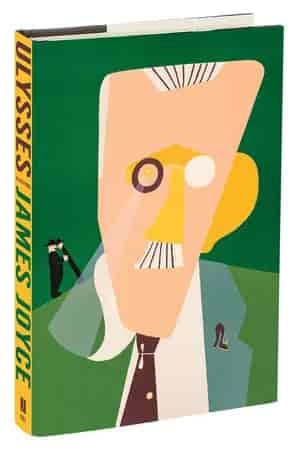
As we, or mother Dana, weave and unweave our bodies, Stephen said, from day to day, their molecules shuttled to and fro, so does the artist weave and unweave his image.
It is a symbol of Irish art. The cracked lookingglass of a servant.
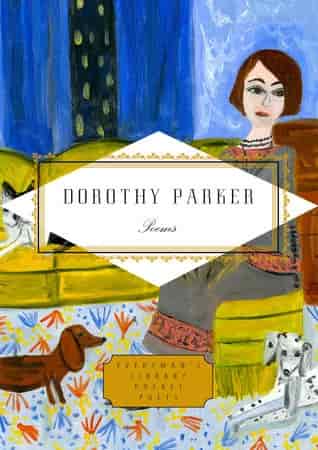
Bringing in a wounded soldier is getting to be rather like waving an American flag at the end of an act. One cannot harbor feelings of unmixed admiration for the playwright who will hide behind either of them. p. 250
You won’t be an artist if you live a thousand years. You’re merely an expert, and you know it. Those who can—do, those who can’t—criticise.
p. 294