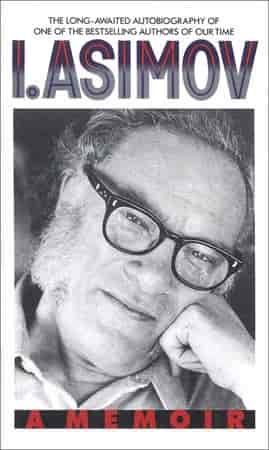
If I were not an atheist, I would believe in a God who would choose to save people on the basis of the… — Isaac Asimov
If I were not an atheist, I would believe in a God who would choose to save people on the basis of the totality of their lives and not the pattern of their words. I think he would prefer an honest and righteous atheist to a TV preacher whose every word is God, God, God, and whose every deed is foul, foul, foul.
I would also want a God who would not allow a Hell. Infinite torture can only be a punishment for infinite evil, and I don’t believe that infinite evil can be said to exist even in the case of Hitler. Besides, if most human governments are civilized enough to try to eliminate torture and outlaw cruel and unusual punishments, can we expect anything less of an all-merciful God?
I feel that if there were an afterlife, punishment for evil would be reasonable and of a fixed term. And I feel that the longest and worst punishment should be reserved for those who slandered God by inventing Hell.
But all that is just playing. I am firm in my beliefs. I am an atheist and, in my opinion, death is followed by an eternal and dreamless sleep.
p. 338Source: Wikiquote · CC BY-SA 4.0
More from this book
Nor did I learn about sex from any reasoned source of instruction. I learned about it from the distorted and imperfect knowledge of other boys. This is the usual fate enforced upon youngsters by a society that is too prim and too hypocritical to have sex taught like any other branch of knowledge.
Considering how important sex is, how great a source of joy, how enormous a source of misery and disease, how is permeates the workings of courtship and marriage, isn’t it strange that we go to great lengths to teach our children to play football and make no effort whatever to teach them to play sex?
p. 93
There are no nations! There is only humanity. And if we don’t come to understand that right soon, there will be no nations, because there will be no humanity.
p. 421
Publishers, with their usual bravery, dumbed down their books in order to make money at the expense of leaving American children undereducated or, worse, miseducated.
p. 306