Quotes about knowledge
38 quotes · 15 authors
Quotes
Learning will be cast into the mire and trodden down under the hoofs of a swinish multitude.
p. 335
 Reflections on the Revolution in France
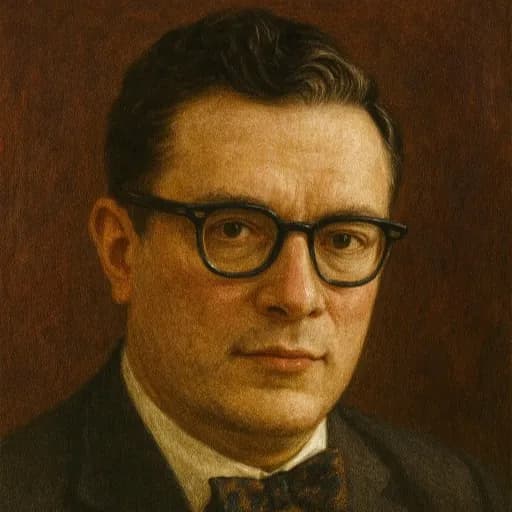
There is no such thing on earth as an uninteresting subject; the only thing that can exist is an uninterested person.
The notion that truths external to the mind may be known by intuition or consciousness, independently of observation and experience, is, I am persuaded, in these times, the great intellectual support of false doctrines and bad institutions. By the aid of this theory, every inveterate belief and every intense feeling, of which the origin is not remembered, is enabled to dispense with the obligation of justifying itself by reason, and is erected into its own all-sufficient voucher and justification. There never was such an instrument devised for consecrating all deep-seated prejudices.
p. 225
 Autobiography
[My father] impressed upon me from the first, that the manner in which the world came into existence was a subject on which nothing was known: that the question, "Who made me?" cannot be answered, because we have no experience or authentic information from which to answer it; and that any answer only throws the difficulty a step further back, since the question immediately presents itself, "Who made God?"
p. 42
AutobiographyMost boys or youths who have had much knowledge drilled into them, have their mental capacities not strengthened, but over-laid by it. They are crammed with mere facts, and with the opinions or phrases of other people, and these are accepted as a substitute for the power to form opinions of their own: and thus the sons of eminent fathers, who have spared no pains in their education, so often grow up mere parroters of what they have learnt, incapable of using their minds except in the furrows traced for them. Mine, however, was not an education of cram. My father never permitted anything which I learnt to degenerate into a mere exercise of memory. He strove to make the understanding not only go along with every step of the teaching, but, if possible, precede it. Anything which could be found out by thinking I never was told, until I had exhausted my efforts to find it out for myself.
p. 31
AutobiographyHe who knows only his own side of the case, knows little of that. His reasons may be good, and no one may have been able to refute them. But if he is equally unable to refute the reasons on the opposite side; if he does not so much as know what they are, he has no ground for preferring either opinion.
 On Liberty
In the course of instruction which I have partially retraced, the point most superficially apparent is the great effort to give, during the years of childhood an amount of knowledge in what are considered the higher branches of education, which is seldom acquired (if acquired at all) until the age of manhood.
p. 30
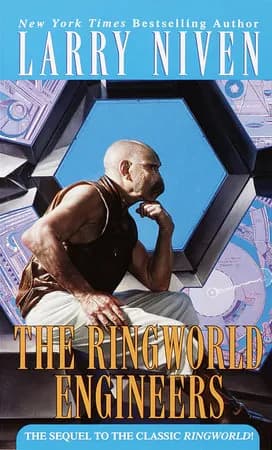
Autobiography“For letting us examine their silly records they want to charge us a flat million marks!”
“Pay it.”
“It’s robbery.”
“A Belter says that? Why don’t you have records on Mars?”
“We were never interested. What for?”
“What about abstract knowledge?”
“Another word for useless.”
“Then what makes you want useless knowledge enough to pay a million marks for it?”
Slowly Nick matched his grin. “It’s still robbery. How in Finagle’s name did Earth know they’d need to know about Mars?”
“That’s the secret of abstract knowledge. You get in the habit of finding out everything you can about everything. Most of it gets used sooner or later.”
p. 45
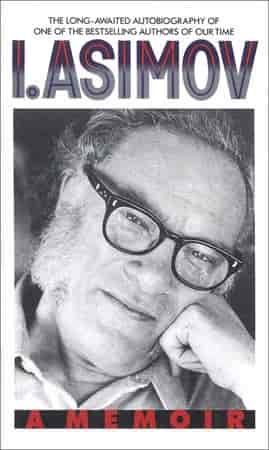
We learn only to ask more questions.
p. 59
They say a little knowledge is a dangerous thing, but it is not one half so bad as a lot of ignorance.
Publishers, with their usual bravery, dumbed down their books in order to make money at the expense of leaving American children undereducated or, worse, miseducated.
p. 306
I know nothing of that directly; I only know what I have been told by other young ones who couldn't have known directly either. I want to find out the truth about them and the wanting has grown until there is more of curiosity in me than fear.
p. 104