Quotes about freedom
641 quotes · 303 authors
Quotes
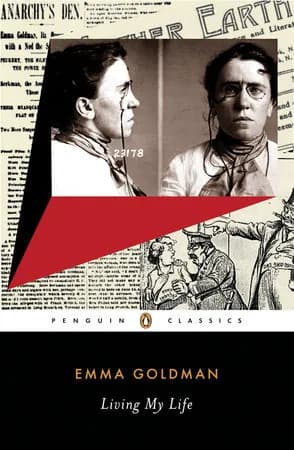
I spoke after Sasha, for an hour. I discussed the farce of a government undertaking to carry democracy abroad by suppressing the last vestiges of it at home. I took up the contention of Judge Mayer that only such ideas are permissible as are "within the law." Thus he had instructed the jurymen when he had asked them if they were prejudiced against those who propagate unpopular ideas. I pointed out that there had never been an ideal, however humane and peaceful, which in its time had been considered "within the law." I named Jesus, Socrates, Galileo, Giordano Bruno. "Were they 'within the law"?" I asked. "And the men who set America free from British rule, the Jeffersons and the Patrick Henrys? The William Lloyd Garrisons, the John Browns, the David Thoreaus and Wendell Phillipses-were they within the law?" (chapter 45)
At the dances I was one of the most untiring and gayest. One evening a cousin of Sasha, a young boy, took me aside. With a grave face, as if he were about to announce the death of a dear comrade, he whispered to me that it did not behoove an agitator to dance. Certainly not with such reckless abandon, anyway. It was undignified for one who was on the way to become a force in the anarchist movement. My frivolity would only hurt the Cause.
I grew furious at the impudent interference of the boy. I told him to mind his own business. I was tired of having the Cause constantly thrown into my face. I did not believe that a Cause which stood for a beautiful ideal, for anarchism, for release and freedom from convention and prejudice, should demand the denial of life and joy. I insisted that our Cause could not expect me to become a nun and that the movement would not be turned into a cloister. If it meant that, I did not want it. "I want freedom, the right to self-expression, everybody's right to beautiful, radiant things." Anarchism meant that to me, and I would live it in spite of the whole world — prisons, persecution, everything. Yes, even in spite of the condemnation of my own closest comrades I would live my beautiful ideal. (p. 56)
They fought because they were paid for it; they were not interested very much in the conquest of Greece. The Athenians on the other hand, fought for their freedom. They preferred to die rather than lose their freedom, and those who are prepared to die for any cause are seldom defeated.
p. 14
The free expression of the hopes and aspirations of a people is the greatest and only safety in a sane society.
It isn't at all a matter of being optimistic, but rather of continuing to have faith in the ongoing and literally unending process of emancipation and enlightenment that, in my opinion, frames and gives direction to the intellectual vocation.
While fame impedes and constricts, obscurity wraps about a man like a mist; obscurity is dark, ample, and free; obscurity lets the mind take its way unimpeded. Over the obscure man is poured the merciful suffusion of darkness. None knows where he goes or comes. He may seek the truth and speak it; he alone is free; he alone is truthful, he alone is at peace.
Lock up your libraries if you like; but there is no gate, no lock, no bolt that you can set upon the freedom of my mind.
p. 90
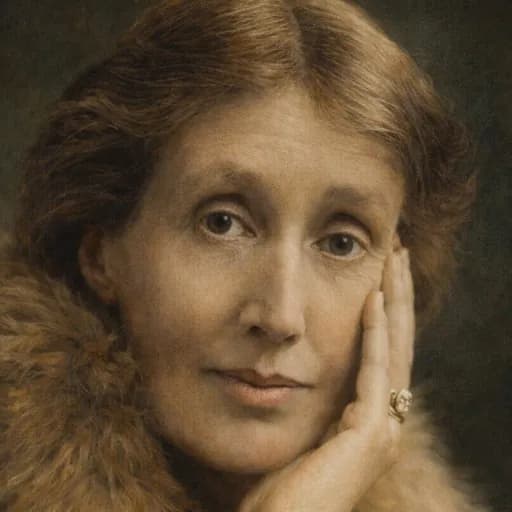
My belief is that if we live another century or so — I am talking of the common life which is the real life and not of the little separate lives which we live as individuals — and have five hundred a year each of us and rooms of our own; if we have the habit of freedom and the courage to write exactly what we think; if we escape a little from the common sitting-room and see human beings not always in their relation to each other but in relation to reality; and the sky, too, and the trees or whatever it may be in themselves; if we look past Milton's bogey, for no human being should shut out the view; if we face the fact, for it is a fact, that there is no arm to cling to, but that we go alone and that our relation is to the world of reality and not only to the world of men and women, then the opportunity will come and the dead poet who was Shakespeare's sister will put on the body which she has so often laid down. Drawing her life from the lives of the unknown who were her forerunners, as her brother did before her, she will be born. As for her coming without that preparation, without that effort on our part, without that determination that when she is born again she shall find it possible to live and write her poetry, that we cannot expect, for that would be impossible. But I maintain that she would come if we worked for her, and that so to work, even in poverty and obscurity, is worth while.
p. 117
“To be free from convention is not to spurn it but not to be deceived by it. It is to be able to use it as an instrument instead of being used by it.”
p. 11
They think they are free because they have never been free, and do not know what it means.
The church of my choice is the free, open world.
p. 124
I believe in limited government. I believe that government should be limited in many ways, and what I am going to emphasize is only an intellectual thing. I don't want to talk about everything at the same time. Let's take a small piece, an intellectual thing.No government has the right to decide on the truth of scientific principles, nor to prescribe in any way the character of the questions investigated. Neither may a government determine the aesthetic value of artistic creations, nor limit the forms of literary or artistic expression. Nor should it pronounce on the validity of economic, historic, religious, or philosophical doctrines. Instead it has a duty to its citizens to maintain the freedom, to let those citizens contribute to the further adventure and the development of the human race.