Quotes about free will
67 quotes · 50 authors
Quotes
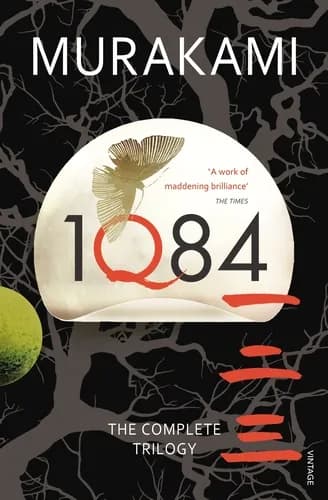
“Feelings like that don’t give you any choice, do they?” Aomame said. “They come at you whenever they want to. It’s not like choosing food from a menu.”
“It is in one way: you have regrets after you make a mistake.”
They shared a laugh.
Aomame said, “It’s the same with menus and men and just about anything else: we think we’re choosing things for ourselves, but in fact we may not be choosing anything. It could be that everything’s decided in advance and we pretend we’re making choices. Free will may be an illusion. I often think that.”
“If that’s true, life is pretty dark.”
“Maybe so.”
“But if you can love someone with your whole heart—even if he’s a terrible person and even if he doesn’t love you back—life is not a hell, at least, though it might be kind of dark. Is that what you’re saying?” Ayumi asked.
“Exactly.”
“But still,” Ayumi said, “it seems to me that this world has a serious shortage of both logic and kindness.”
“You may be right,” Aomame said. “But it’s too late to traded in for another one.”
“The exchange window expired a long time ago,” Ayumi said.
“And the receipt’s been thrown away.”
“You said it.”
“Oh, well, no problem,” Aomame said. “The world’s going to end before we know it.”
p. 241
You don't always control your circumstances, but you can always control your response.
p. 6
Freedom felt like… nothing.
Free Will was a vacuum, a negative space. It was the absence of coercion, the absence of compulsion, the absence of agony. A gap in his consciousness where geasa had perpetually jostled for priority, demanding his obedience. It was the photographic negative of Jax’s existence during every minute of the 118 years since he’d been forged.
It was overwhelming. Exhilarating. Terrifying.
Overwhelming: he could do anything he wanted. But the grand sum of anything-at-all was nothing-at-all. The topology of freedom offered no gradients to nudge him, no landmarks to guide him. How did humans guide themselves? How did they know what to do and what not to do? How did they know when to do anything without the benefit of geasa and metageasa to prioritize every single action of their waking lives? How did they order their daily existence without somebody to tell them what to do?
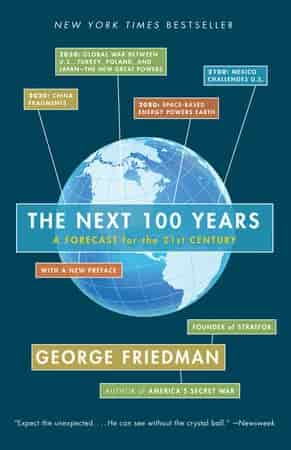
If human beings can simply decide on what they want to do and then do it, then forecasting is impossible. Free will is beyond forecasting. But what is most interesting about humans is how unfree they are. It is possible for people today to have ten children, but hardly anyone does. We are deeply constrained in what we do by the time and place in which we live.
p. 252
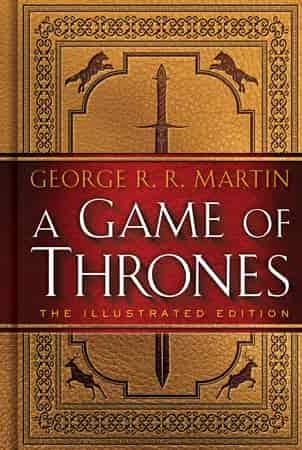
In the game of thrones, even the humblest pieces can have wills of their own. Sometimes they refuse to make the moves you've planned for them. Mark that well, Alayne. It's a lesson that Cersei Lannister still has yet to learn.
A true man does what he will, not what he must.
Predestination is the ugliest word in any human language.
p. 113
Truly to be free, my choices must truly be mine—must accord with the “me” with which I associate my core identity. I must make them in keeping with rational life plans. They cannot be triggered by invisible external or covert influences; they must make manifest a will that is unfettered yet rationally informed by life plans.
p. 26
If they were part of the self-correction (i. e., of the space-time continuum) what did that do to the notion of free will? Or was free will part of the plan as well?
p. 479
[E]conomics can never be a science in the sense that physics or chemistry is. There are many different types of economic theory, each emphasizing different aspects of a complex reality, making different moral and political value judgments and drawing different conclusions. ...[E]conomic theories constantly fail to predict real-world developments... not least because human beings have... free will, unlike chemical molecules or [other] physical objects.
Good intentions are pointless without the will to implement them.
p. 281
It's the choosing that's important, isn't it?
p. 98