Quotes about freedom
641 quotes · 303 authors
Quotes
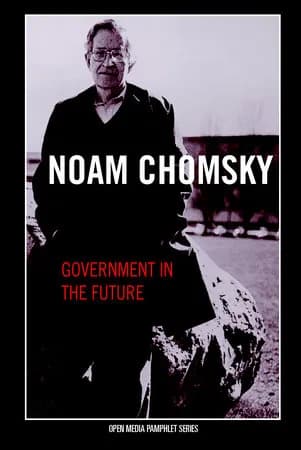
So I have just one wish for you—the good luck to be somewhere where you are free to maintain the kind of integrity I have described, and where you do not feel forced by a need to maintain your position in the organization, or financial support, or so on, to lose your integrity. May you have that freedom.
p. 346
At all times, day by day, we have to continue fighting for freedom of religion, freedom of speech, and freedom from want — for these are things that must be gained in peace as well as in war. (15 April 1943)
Will people ever be wise enough to refuse to follow bad leaders or to take away the freedom of other people? (16 October 1939)
What is going on in the Un-American Activities Committee worries me primarily because little people have become frightened and we find ourselves living in the atmosphere of a police state, where people close doors before they state what they think or look over their shoulders apprehensively before they express an opinion.
I have been one of those who have carried the fight for complete freedom of information in the United Nations. And while accepting the fact that some of our press, our radio commentators, our prominent citizens and our movies may at times be blamed legitimately for things they have said and done, still I feel that the fundamental right of freedom of thought and expression is essential. If you curtail what the other fellow says and does, you curtail what you yourself may say and do.
In our country we must trust the people to hear and see both the good and the bad and to choose the good. The Un-American Activities Committee seems to me to be better for a police state than for the USA. (29 October 1947)
Seek freedom and become captive of your desires. Seek discipline and find your liberty.
When I am weaker than you, I ask you for freedom because that is according to your principles; when I am stronger than you, I take away your freedom because that is according to my principles.
Beyond a critical point within a finite space, freedom diminishes as numbers increase. This is as true of humans as it is of gas molecules in a sealed flask. The human question is not how many can possibly survive within the system, but what kind of existence is possible for those who do survive.
Any training school for free citizens must begin by teaching distrust, not trust. It must teach questioning, not acceptance of stock answers.
Once, men turned their thinking over to machines in the hope that this would set them free. But that only permitted other men with machines to enslave them.
Let us not rail about justice as long as we have arms and the freedom to use them.
Those who want to face their responsibilities with a genuine commitment to democracy and freedom - even to decent survival - should recognize the barriers that stand in the way. In violent states these are not concealed. In more democratic societies barriers are more subtle. While methods differ sharply from more brutal to more free societies, the goals are in many ways similar: to ensure that the "great beast," as Alexander Hamilton called the people, does not stray from its proper confines.
Two hundred years ago Rousseau denounced the sophistic politicians and intellectuals “who search for ways to obscure the fact,” so he maintained, “that the essential and the defining property of man is his freedom. They attribute to man a natural inclination to servitude, without thinking that it is the same for freedom as for innocence and virtue. Their value is felt only as long as one enjoys them oneself, and the taste for them is lost as soon as one has lost them.” As proof of this doctrine he refers to the marvels done by all free peoples to guard themselves from oppression. “True” he says “those who have abandoned the life of a free man do nothing but boast incessantly of the peace, the repose they enjoy in their chains. But when I see the others sacrifice pleasures, repose, wealth, power and life itself for the preservation of this sole good which is so disdained by those who have lost it, when I see multitudes of entirely naked savages scorn European voluptuousness and endure hunger, fire, the sword and death to preserve only their independence, I feel it does not behoove slaves to reason about freedom.” A comment to which we can perhaps give a contemporary interpretation.
p. 136