Quotes
Q: If you find so much that is unworthy of reverence in the United States, then why do you live here?
A: Why do men go to zoos?
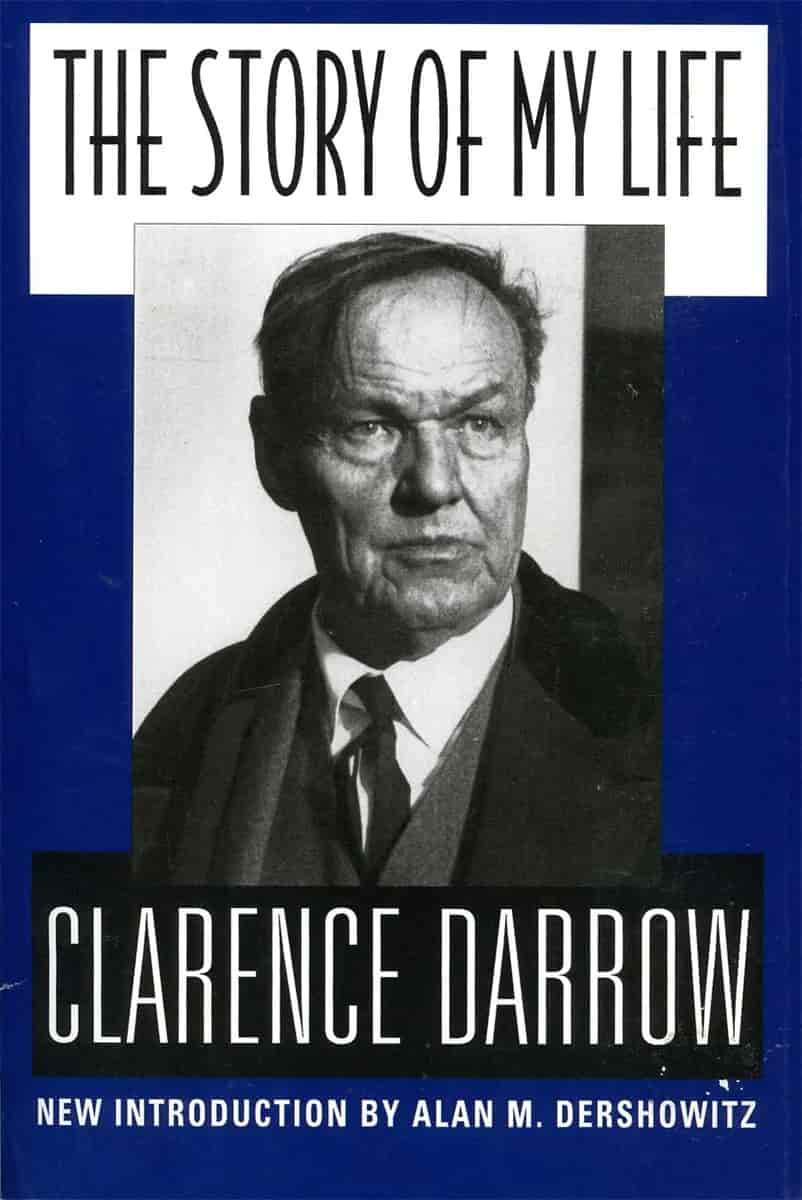
My guess is that well over eighty per cent of the human race goes through life without ever having a single original thought. That is to say, they never think anything that has not been thought before, and by thousands.
A society made up of individuals who were all capable of original thought would probably be unendurable. The pressure of ideas would simply drive it frantic. The normal human society is very little troubled by them. Whenever a new one appears the average man displays signs of dismay and resentment. The only way he can take in such a new idea is by translating it crudely into terms of more familiar ideas. That translation is one of the chief functions of politicians, not to mention journalists. They devote themselves largely to debasing the ideas launched by their betters. This debasement is intellectually reprehensible, but probably necessary to carry on the business of the world.
Equality before the law is probably forever inattainable. It is a noble ideal, but it can never be realized, for what men value in this world is not rights but privileges.
Civilization is an enormous improvement on the lack thereof.
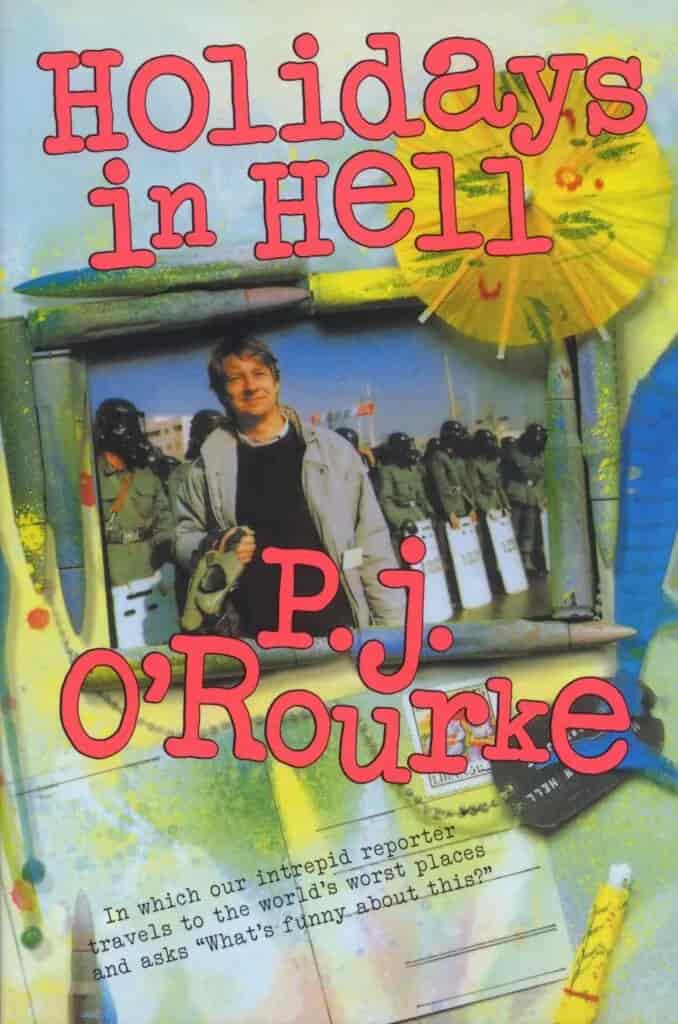
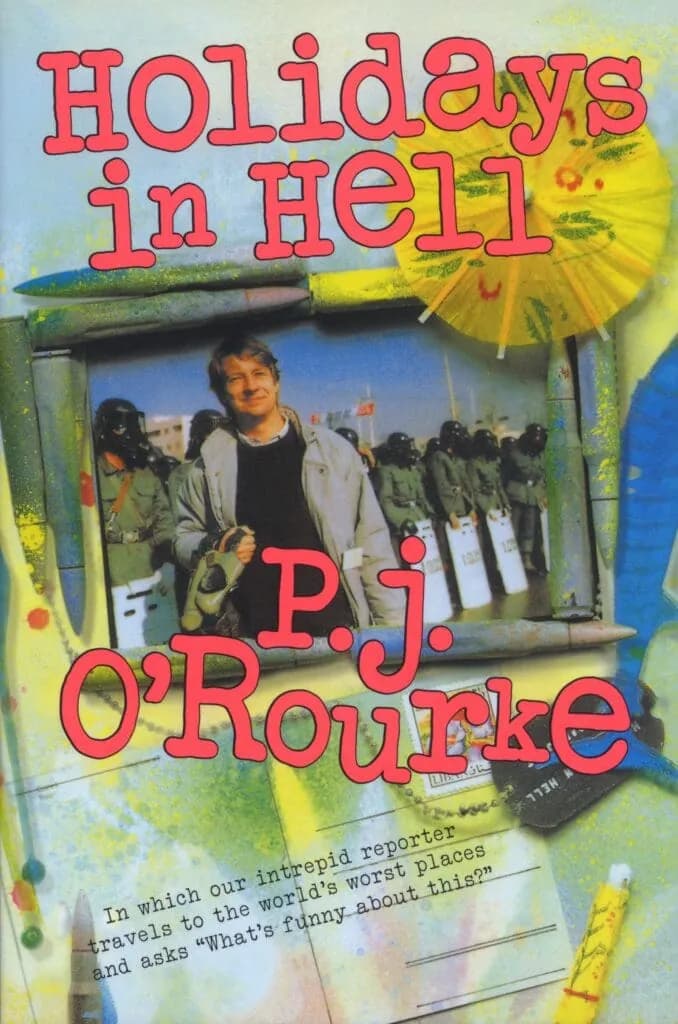
The real slums are another matter. The bad parts of Tondo are as bad as any place I've seen, ancient, filthy houses swarmed with the poor and stinking of sewage and trash. But there are worse parts— squatter areas where people live under cardboard, in shipping crates, behind tacked-up newspapers. Dad would march you straight to the basement with a hairbrush in his hand if he caught you keeping your hamster cage like this.
Something is happening to America, not something dangerous but something all too safe. I see it in my lifelong friends. I am a child of the "baby boom," a generation not known for its sane or cautious approach to things. Yet suddenly my peers are giving up drinking, giving up smoking, cutting down on coffee, sugar, and salt. They will not eat red meat and go now to restaurants whose menus have caused me to stand on a chair yelling, "Flopsy, Mopsy, Cottontail, dinner is served!" This from the generation of LSD, Weather Underground, and Altamont Rock Festival! And all in the name of safety! Our nation has withstood many divisions—North and South, black and white, labor and management—but I do not know if the country can survive division into smoking and non-smoking sections.
I am a humanist because I think humanity can, with constant moral guidance, create reasonably decent societies. I think that young people who want to understand the world can profit from the works of Plato and Socrates, the behaviour of the three Thomases, Aquinas, More and Jefferson — the austere analyses of Immanuel Kant and the political leadership of Abraham Lincoln and Franklin Roosevelt.
In every province, the chief occupations, in order of importance, are lovemaking, malicious gossip, and talking nonsense.
He who gives himself entirely to his fellow-men appears to them useless and selfish; but he who gives himself partially to them is pronounced a benefactor and philanthropist.
I had grown tired of standing in the lean and lonely front line facing the greatest enemy that ever confronted man — public opinion.
p. 232
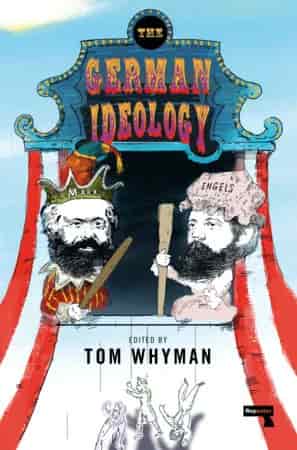
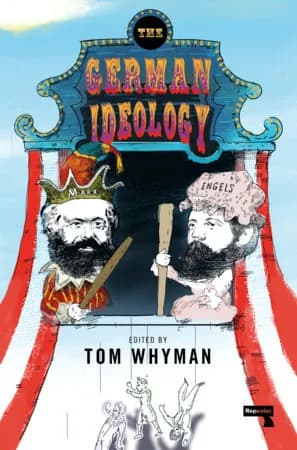
For each new class which puts itself in the place of one ruling before it, is compelled, merely in order to carry through its aim, to represent its interests the common interest of all the members of society, that is, sality, and represent them as the only rational, universally valid ones. The class making a revolution appears from the very start, if only because it is opposed to a class, not as a class but as the representative of the whole of society; it appears as the whole mass of society confronting the one ruling class.
Communism differs from all previous movements in that it overturns the basis of all earlier relations of production and intercourse, and for the first time consciously treats all natural premises as the creatures of hitherto existing men, strips them of their natural character and subjugates them to the power of the united individuals. Its organisation is, therefore, essentially economic, the material production of the conditions of this unity; it turns existing conditions into conditions of unity. The reality, which communism is creating, is precisely the true basis for rendering it impossible that anything should exist independently of individuals, insofar as reality is only a product of the preceding intercourse of individuals themselves.