Quotes about racism
105 quotes · 59 authors
Quotes
I believe that one or two charges simply must retain their face value and not become debauched or devalued. “Racist” is one such. It is an accusation that must either be made good upon, or fully retracted.
p. 398
Because of the insolence of all the white race he was afraid to lose his dignity in friendliness.
In Southern Africa, the black writer talks best about the ghetto life he knows; the white writer best about his own ghetto life. We see each other, black and white, as it were through a keyhole.
The Black man must enter the white man’s house through the back door. The Black man does most of the dirty work… Black man cleans the streets but mustn’t walk freely on the pavement; Black man must build houses for the white man but cannot live in them; Black man cooks the white man’s food but eats what is left over.
p. 6
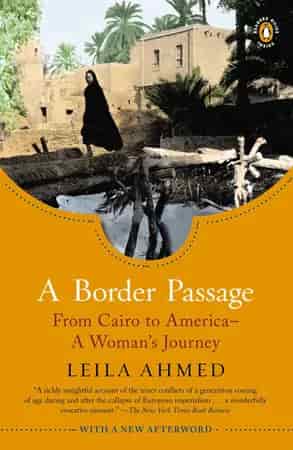
“One is not born but rather becomes a woman,” goes Simone de Beauvoir’s famous dictum. I obviously was not born but became black when I went to England. Similarly, of course, I was not born but became a woman of color when I went to America.
Racism does not diminish with brains, it's a disease, a sickness, it may incubate in ignorance but it doesn't necessarily disappear with the gaining of wisdom!
We rolled on, down Highway 25 and through the bluegrass hills of Kentucky. Soon we began to see signs. Signs that read: WHITE ONLY, COLORED NOT ALLOWED. Hours later, we left the Bluegrass State and crossed into Tennessee. Now we saw even more of the signs saying WHITE ONLY, COLORED NOT ALLOWED. We saw the signs above water fountains and in restaurant windows. We saw them in ice cream parlors and at hamburger stands. We saw them in front of hotels and motels, and on the restroom doors of filling stations. I didn't like the signs. I felt as if we were in a foreign land.
p. 29
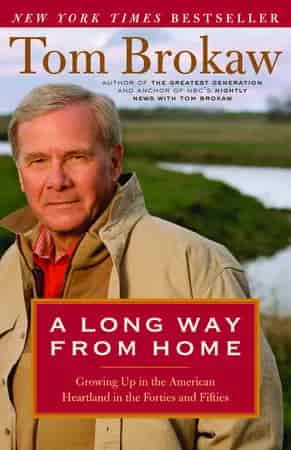
It is not lost on me that all of my good fortune in life and my career would have been neutralized at the outset if my skin had been a few shades darker. I would not have gotten that first job in Omaha or the second one in Atlanta two and a half years later. There were no people of color working in the newsrooms of either city in the early and mid-1960s. In the network newsrooms, where the battle for civil rights was the defining issue in the early days of Huntley-Brinkley and Walter Cronkite, racial diversity was at best a notion.
When America first began to seriously confront racial inequalities in the sixties, mobilized by the courage and eloquence of Dr. Martin Luther King, Jr., and his equally brave and determined followers, I naively believed we would cure the cancerous effects of racism in my lifetime. I now know that is not true. Race remains a central issue in the evolution of our political, economic, and cultural environment. It continues to haunt me personally; I am grateful that my formative years in the mostly white environment of the upper Midwest sharpened my sensibilities about the inequities and complexities of race for the rest of my life.
p. 206
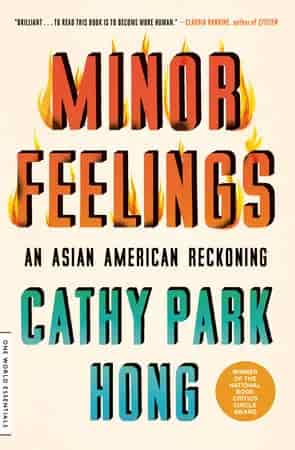
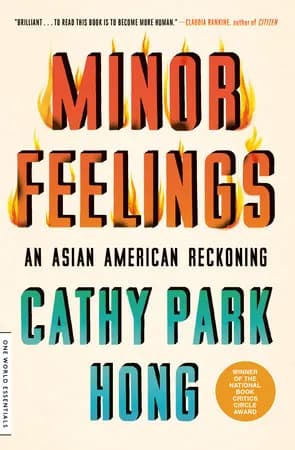
One characteristic of racism is that children are treated like adults and adults are treated like children. Watching a parent being debased like a child is the deepest shame. I cannot count the number of times I have seen my parents condescended to or mocked by white adults. This was so customary that when my mother had any encounter with a white adult, I was always hypervigilant, ready to mediate or pull her away. To grow up Asian in America is to witness the humiliation of authority figures like your parents and to learn not to depend on them: they cannot protect you.
[...] Smart'n'Civ'lize ain't nothin' to do with the color o' the skin, nay.
p. 258
Because of 'Porgy' people often compared me to Billie Holiday, which I hated. That was just one song out of my repertoire, and anybody who saw me perform could see we were entirely different. What made me mad was that it meant people couldn't get past the fact we were both black: if I had happened to be white nobody would have made the connection. And I didn't like to be put in a box with other jazz singers because my musicianship was totally different, and in its own way superior. Calling me a jazz singer was a way of ignoring my musical background because I didn't fit into white ideas of what a black performer should be. It was a racist thing; 'If she's black she must be a jazz singer.' It diminished me, exactly like Langston Hughes was diminished when people called him a 'great black poet'. Langston was a great poet period, and it was up to him and him alone to say what part the colour of his skin had to do with that.
Racist assumptions of white superiority have been so deeply engrained into the fiber of the society that they infuse the entire functioning of the national subconscious. They are taken for granted and frequently not even recognized.
p. 31