Quotes
In every country in the world a huge tribe of party-hacks and sleek little professors are busy 'proving' that Socialism means no more than a planned state—capitalism with the grab-motive left intact. But fortunately there also exists a vision of Socialism quite different from this. The thing that attracts ordinary men to Socialism and makes them willing to risk their skins for it, the 'mystique' of Socialism, is the idea of equality; to the vast majority of people Socialism means a classless society, or it means nothing at all.
Human beings were behaving as human beings and not as cogs in the capitalist machine.
The revolutionary atmosphere remained as I had first known it. General and private, peasant and militiaman, still met as equals; everyone drew the same pay, wore the same clothes, ate the same food, and called everyone else 'thou' and 'comrade'; there was no boss-class, no menial-class, no beggars, no prostitutes, no lawyers, no priests, no boot-licking, no cap-touching. I was breathing the air of equality, and I was simple enough to imagine that it existed all over Spain. I did not realize that more or less by chance I was isolated among the most revolutionary section of the Spanish working class.
One's got to change the system, or one changes nothing.
Hermione always yawned at the mention of Socialism, and refused even to read Antichrist. 'Don't talk to me about the lower classes,' she used to say. 'I hate them. They smell.' And Ravelston adored her.
It is fatal to look hungry. It makes people want to kick you.
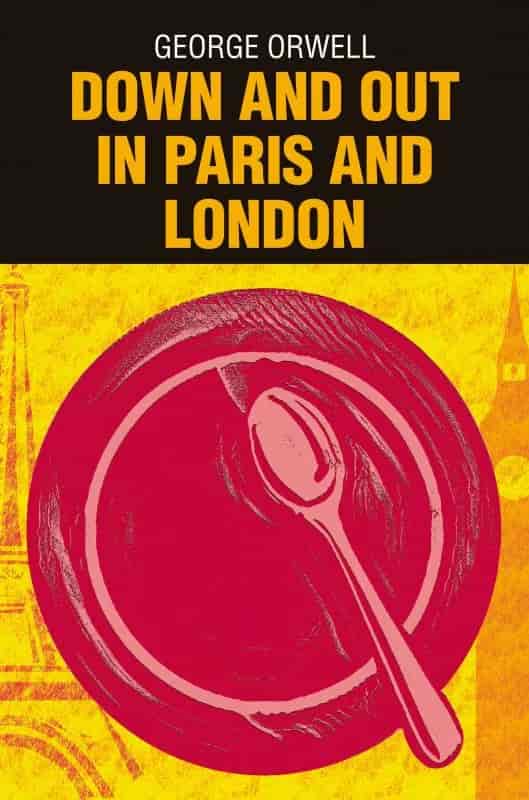
Beggars do not work, it is said; but then, what is work? A navvy works by swinging a pick. An accountant works by adding up figures. A beggar works by standing out of doors in all weathers and getting varicose veins, bronchitis etc. It is a trade like any other; quite useless, of course — but, then, many reputable trades are quite useless. And as a social type a beggar compares well with scores of others. He is honest compared with the sellers of most patent medicines, high-minded compared with a Sunday newspaper proprietor, amiable compared with a hire-purchase tout-in short, a parasite, but a fairly harmless parasite. He seldom extracts more than a bare living from the community, and, what should justify him according to our ethical ideas, he pays for it over and over in suffering.
It is curious how people take it for granted that they have a right to preach at you and pray over you as soon as your income falls below a certain level.
I am trying to describe the people in our quarter, not for the mere curiosity, but because they are all part of the story. Poverty is what I am writing about, and I had my first contact with poverty in this slum. The slum, with its dirt and its queer lives, was first an object-lesson in poverty, and then the background of my own experiences. It is for that reason that I try to give some idea of what life was like there.
My story ends here. It is a fairly trivial story, and I can only hope that it has been interesting in the same way as a trivial diary is interesting. ... At present I do not feel I have seen more than the fringe of poverty.
Still, I can point to one or two things I have definitely learned by being hard up. I shall never again think that all tramps are drunken scoundrels, nor expect a beggar to be grateful when I give him a penny, nor be surprised if men out of work lack energy, nor subscribe to the Salvation Army, nor pawn my clothes, nor refuse a handbill, nor enjoy a meal at a smart restaurant. That is a beginning.
Being a beggar, he said, was not his fault, and he refused either to have any compunction about it or to let it trouble him. He was the enemy of society, and quite ready to take to crime if he saw a good opportunity. He refused on principle to be thrifty. In the summer he saved nothing, spending his surplus earnings on drink, as he did not care about women. If he was penniless when winter came on, then society must look after him. He was ready to extract every penny he could from charity, provided that he was not expected to say thank you for it. He avoided religious charities, however, for he said it stuck in his throat to sing hymns for buns. He had various other points of honour; for instance, it was his boast that never in his life, even when starving, had he picked up a cigarette end. He considered himself in a class above the ordinary run of beggars, who, he said, were an abject lot, without even the decency to be ungrateful.
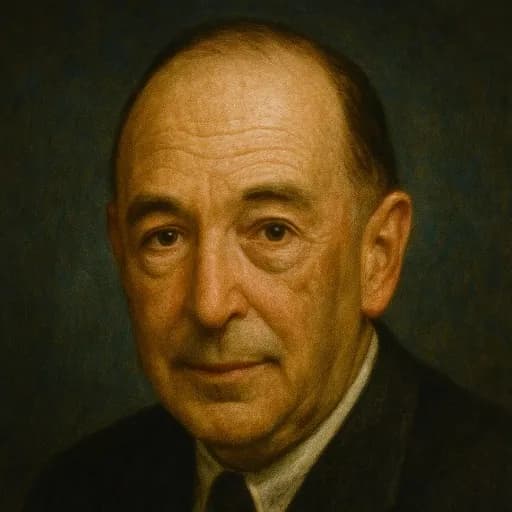
What I want to fix your attention on is the vast, overall movement towards the discrediting, and finally the elimination, of every kind of human excellence — moral, cultural, social, or intellectual. And is it not pretty to notice how Democracy (in the incantatory sense) is now doing for us the work that was once done by the most ancient Dictatorships, and by the same methods? You remember how one of the Greek Dictators (they called them ‘tyrants’ then) sent an envoy to another Dictator to ask his advice about the principles of government. The second Dictator led the envoy into a field of corn, and there he snicked off with his cane the top of every stalk that rose an inch or so above the general level. The moral was plain. Allow no pre-eminence among your subjects. Let no man live who is wiser, or better, or more famous, or even handsomer than the mass. Cut them all down to a level; all slaves, all ciphers, all nobodies. All equals. Thus Tyrants could practise, in a sense, ‘democracy’. But now ‘democracy’ can do the same work without any other tyranny than her own. No one need now go through the field with a cane. The little stalks will now of themselves bite the tops off the big ones. The big ones are beginning to bite off their own in their desire to Be Like Stalks.”