Quotes
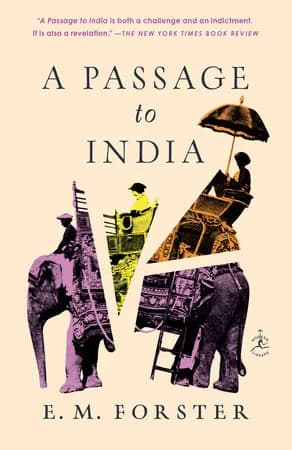
'Why can't we be friends now?' said the other, holding him affectionately. 'It's what I want. It's what you want.' But the horses didn't want it — they swerved apart: the earth didn't want it, sending up rocks through which riders must pass single file; the temple, the tank, the jail, the palace, the birds, the carrion, the Guest House, that came into view as they emerged from the gap and saw Mau beneath: they didn't want it, they said in their hundred voices 'No, not yet,' and the sky said 'No, not there.'
We do not want dictators, we do not want oligarchic parties or class rule, we want a widespread world intelligence conscious of itself. To work out a way to that world brain organization is therefore our primary need in this age of imperative construction.
There has been ... an enormous waste of human mental and physical resources in premature revolutionary thrusts, ill-planned, dogmatic, essentially unscientific reconstructions and restorations of the social order, during the past hundred years. This was the inevitable first result of the discrediting of those old and superseded mental adaptations which were embodied in the institutions and education of the past. They discredited themselves and left the world full of problems.
Every citizen knows his place. He is born to that place, and the elaborate discipline of training and education and surgery he undergoes fits him at last so completely to it that he has neither ideas nor organs for any purpose beyond it.
For crude classifications and false generalisations are the curse of all organised human life.
Crime and bad lives are the measure of a State's failure, all crime in the end is the crime of the community.
I believe that the civilization India evolved is not to be beaten in the world. Nothing can equal the seeds sown by our ancestors, Rome went, Greece shared the same fate; the might of the Pharaohs was broken; Japan has become Westernized; of China nothing can be said; but India is still, somehow or other, sound at the foundation. The people of Europe learn their lessons from the writings of the men of Greece or Rome, which exist no longer in their former glory. In trying to learn from them, the Europeans imagine that they will avoid the mistakes of Greece and Rome. Such is their pitiable condition. In the midst of all this India remains immovable and that is her glory. It is a charge against India that her people are so uncivilized, ignorant and stolid, that it is not possible to induce them to adopt any changes. It is a charge really against our merit. What we have tested and found true on the anvil of experience, we dare not change. Many thrust their advice upon India, and she remains steady. This is her beauty: it is the sheet-anchor of our hope.
Civilization is that mode of conduct which points out to man the path of duty. Performance of duty and observance of morality are convertible terms. To observe morality is to attain mastery over our mind and our passions. So doing, we know ourselves. The Gujarati equivalent for civilization means “good conduct”.
One of the objects of a newspaper is to understand popular feeling and to give expression to it; another is to arouse among the people certain desirable sentiments; and the third is fearlessly to expose popular defects.
"“The death of your daughter would have been a blessing in comparison of this … They agree with me in apprehending that this false step in one daughter will be injurious to the fortunes of all the others; for who, as Lady Catherine herself condescendingly says, will connect themselves with such a family?”
"And this," cried Darcy, as he walked with quick steps across the room, "is your opinion of me! This is the estimation in which you hold me! I thank you for explaining it so fully. My faults, according to this calculation, are heavy indeed! But perhaps," added he, stopping in his walk, and turning towards her, "these offenses might have been overlooked, had not your pride been hurt by my honest confession of the scruples that had long prevented my forming any serious design. These bitter accusations might have been suppressed, had I, with greater policy, concealed my struggles, and flattered you into the belief of my being impelled by unqualified, unalloyed inclination; by reason, by reflection, by everything. But disguise of every sort is my abhorrence. Nor am I ashamed of the feelings I related. They were natural and just. Could you expect me to rejoice in the inferiority of your connections?—to congratulate myself on the hope of relations, whose condition in life is so decidedly beneath my own?"
"If Mr. Darcy is neither by honour nor inclination confined to his cousin, why is not he to make another choice? And if I am that choice, why may not I accept him?"
"Because honour, decorum, prudence, nay, interest, forbid it. Yes, Miss Bennet, interest; for do not expect to be noticed by his family or friends, if you wilfully act against the inclinations of all. You will be censured, slighted, and despised, by everyone connected with him. Your alliance will be a disgrace; your name will never even be mentioned by any of us."
"These are heavy misfortunes," replied Elizabeth. "But the wife of Mr. Darcy must have such extraordinary sources of happiness necessarily attached to her situation, that she could, upon the whole, have no cause to repine."
"He is a gentleman; I am a gentleman’s daughter; so far we are equal"