Quotes
I did not know the way in which, among the ordinary English, the absence of interest in things of an unselfish kind, except occasionally in a special thing here and there, and the habit of not speaking to others, nor much even to themselves, about the things in which they do feel interest, causes both their feelings and their intellectual faculties to remain undeveloped, or to develope themselves only in some single and very limited direction; reducing them, considered as spiritual beings, to a kind of negative existence.
p. 59
But Bentham's subject was Legislation, of which Jurisprudence is only the formal part: and at every page he seemed to open a clearer and broader conception of what human opinions and institutions ought to be, how they might be made what they ought to be, and how far removed from it they now are. When I laid down the last volume of the Traité, I had become a different being. The "principle of utility" understood as Bentham understood it, and applied in the manner in which he applied it through these three volumes, fell exactly into its place as the keystone which held together the detached and fragmentary component parts of my knowledge and beliefs. It gave unity to my conceptions of things. I now had opinions; a creed, a doctrine, a philosophy; in one among the best senses of the word, a religion; the inculcation and diffusion of which could be made the principal outward purpose of a life. And I had a grand conception laid before me of changes to be effected in the condition of mankind through that doctrine. The Traité de Législation wound up with what was to me a most impressive picture of human life as it would be made by such opinions and such laws as were recommended in the treatise.
p. 66
I thought the predominance of the aristocratic classes, the noble and the rich, in the English Constitution, an evil worth any struggle to get rid of; not on account of taxes, or any such comparatively small inconvenience, but as the great demoralizing agency in the country. Demoralizing, first, because it made the conduct of the government an example of gross public immorality, through the predominance of private over public interests in the State, and the abuse of the powers of legislation for the advantage of classes. Secondly, and in a still greater degree, because the respect of the multitude always attaching itself principally to that which, in the existing state of society, is the chief passport to power; and under English institutions, riches, hereditary or acquired, being the almost exclusive source of political importance; riches, and the signs of riches, were almost the only things really respected, and the life of the people was mainly devoted to the pursuit of them. I thought, that while the higher and richer classes held the power of government, the instruction and improvement of the mass of the people were contrary to the self-interest of those classes, because tending to render the people more powerful for throwing off the yoke: but if the democracy obtained a large, and perhaps the principal, share in the governing power, it would become the interest of the opulent classes to promote their education, in order to ward off really mischievous errors, and especially those which would lead to unjust violations of property. On these grounds I was not only as ardent as ever for democratic institutions, but earnestly hoped that Owenite, St. Simonian, and all other anti-property doctrines might spread widely among the poorer classes; not that I thought those doctrines true, or desired that they should be acted on, but in order that the higher classes might be made to see that they had more to fear from the poor when uneducated, than when educated.
p. 171
M. Comte soon left the St. Simonians, and I lost sight of him and his writings for a number of years. But the St. Simonians I continued to cultivate. I was kept au courant of their progress by one of their most enthusiastic disciples, M. ... I was introduced to their chiefs, Bazard and Enfantin, in 1830; and as long as their public teachings and proselytism continued, I read nearly everything they wrote. Their criticisms on the common doctrines of Liberalism seemed to me full of important truth; and it was partly by their writings that my eyes were opened to the very limited and temporary value of the old political economy, which assumes private property and inheritance as indefeasible facts, and freedom of production and exchange as the dernier mot of social improvement. The scheme gradually unfolded by the St. Simonians, under which the labour and capital of society would be managed for the general account of the community every individual being required to take a share of labour either as thinker, teacher, artist, or producer, all being classed according to their capacity, and remunerated according to their works, appeared to me a far superior description of Socialism to Owen's.
p. 166
Society can and does execute its own mandates: and if it issues wrong mandates instead of right, or any mandates at all in things with which it ought not to meddle, it practises a social tyranny more formidable than many kinds of political oppression, since, though not usually upheld by such extreme penalties, it leaves fewer means of escape, penetrating much more deeply into the details of life, and enslaving the soul itself. Protection, therefore, against the tyranny of the magistrate is not enough: there needs protection also against the tyranny of the prevailing opinion and feeling; against the tendency of society to impose, by other means than civil penalties, its own ideas and practices as rules of conduct on those who dissent from them; to fetter the development, and, if possible, prevent the formation, of any individuality not in harmony with its ways, and compel all characters to fashion themselves upon the model of its own.
New technologies create new customs, new laws, new ethics, new crimes.
p. 28
Putting a monkey wrench in machinery is often the only way to force somebody to repair, replace, or redesign the machinery. Especially legal or social machinery.
p. 97
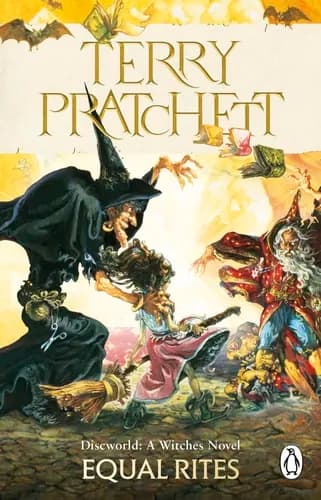
The Shades, in brief, were an abode of discredited gods and unlicensed thieves, ladies of the night and peddlers in exotic goods, alchemists of the mind and strolling mummers; in short, all the grease on civilization's axle.
A hint was to Esk what a mosquito bite was to the average rhino because she was already learning that if you ignore the rules people will, half the time, quietly rewrite them so that they don't apply to you.
They called themselves the Munrungs. It meant The People, or The True Human Beings.
It's what most people call themselves, to begin with. And then one day the tribe meets some other People or, if it's not been a good day, The Enemy. If only they'd think up a name like Some More True Human Beings, it'd save a lot of trouble later on.
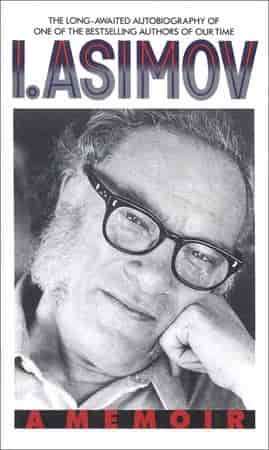
Nor did I learn about sex from any reasoned source of instruction. I learned about it from the distorted and imperfect knowledge of other boys. This is the usual fate enforced upon youngsters by a society that is too prim and too hypocritical to have sex taught like any other branch of knowledge.
Considering how important sex is, how great a source of joy, how enormous a source of misery and disease, how is permeates the workings of courtship and marriage, isn’t it strange that we go to great lengths to teach our children to play football and make no effort whatever to teach them to play sex?
p. 93
There are no nations! There is only humanity. And if we don’t come to understand that right soon, there will be no nations, because there will be no humanity.
p. 421