Quotes
Thus every Part was full of Vice,
Yet the whole Mass a Paradise;
Flatter'd in Peace, and fear'd in Wars,
They were th' Esteem of Foreigners,
And lavish of their Wealth and Lives,
The Balance of all other Hives.
p. 9
If laying aside all worldly Greatness and Vain-Glory, I should be ask'd where I thought it was most probable that Men might enjoy true Happiness, I would prefer a small peaceable Society, in which Men, neither envy'd nor esteem'd by Neighbours, should be contented to live upon the Natural Product of the Spot they inhabit, to a vast Multitude abounding in Wealth and Power, that should always be conquering others by their Arms Abroad, and debauching themselves by Foreign Luxury at Home.
The worst of all the Multitude
Did something for the Common Good.
p. 9
It’s okay to be a responsible member of society if only you know what you’re going to be held responsible for.
p. 100
The shared idea in the mind of society, the great big unstated assumptions, constitute that society's paradigm, or deepest beliefs about how the world works. [...] people who have managed to intervene in systems at the level of paradigm have hit a leverage point that totally transforms systems.
Society is not just the product of its individual members; it is also the product of its constituent groups. The aggregate relations among individuals and groups, among individuals within groups, and among groups forms a network of astonishing complexity.
p. 14
'Oh, everybody exploits somebody,' says Howard, 'in this social order it's part of the human lot.'
p. 10
Naturals felt best in groups of a hundred or so, and better if only a few dozen were involved. Hunting parties had been about that size, for the long-extinct big game. Many important institutions were of the same rough scale: the ancient village, governing councils of nations, commanding elites of vast armies, teams playing games, orchestras, family fests. All human enterprises that worked were of that size, and nearly everything that failed was not.
p. 30
The "control mechanism" view of culture begins with the assumption that human thought is basically both social and public — that its natural habitat is the house yard, the market place, and the town square.
p. 45
Returning, Smiley approached the pavilion through the trees...earnest moral statements enlivened the flaking green paint. "Punk is destructive. Society does not need it." The assertion caused him a moment's indecision. "Oh, but society does," he wanted to reply; "society is an association of minorities."
In my classroom, I tried to impress on the students that reality is a consensus. Objects, from diamonds to bubble gum, only have value because we all agree they do. Laws like speed limits are only laws because most people agree to respect them. "
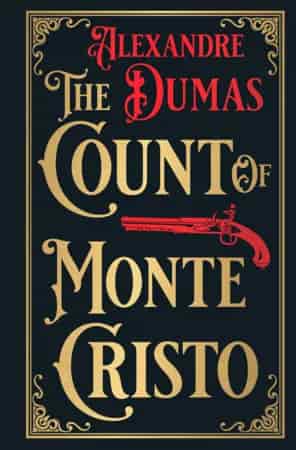
“No, monsieur,” returned Monte Cristo “upon the simple condition that they should respect myself and my friends. Perhaps what I am about to say may seem strange to you, who are socialists, and vaunt humanity and your duty to your neighbor, but I never seek to protect a society which does not protect me, and which I will even say, generally occupies itself about me only to injure me; and thus by giving them a low place in my esteem, and preserving a neutrality towards them, it is society and my neighbor who are indebted to me.” “Bravo,” cried Chateau–Renaud; “you are the first man I ever met sufficiently courageous to preach egotism. Bravo, count, bravo!”