Quotes
Philosophy is the microscope of thought.
Thales remained motionless for four years. He founded philosophy.
To make light of philosophy is to be a true philosopher.
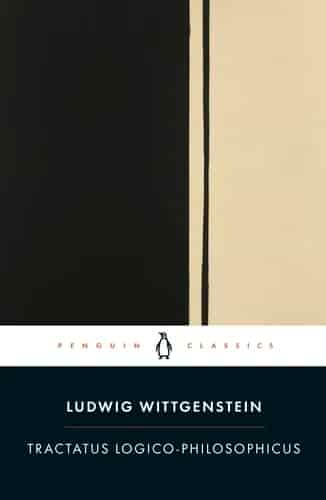
Philosophy aims at the logical clarification of thoughts. Philosophy is not a body of doctrine but an activity. A philosophical work consists essentially of elucidations. Philosophy does not result in 'philosophical propositions', but rather in the clarification of propositions. Without philosophy thoughts are, as it were, cloudy and indistinct: its task is to make them clear and to give them sharp boundaries.
Teppic stared into his wine mug. These men are philosophers, he thought. They had told him so. So their brains must be so big that they have room for ideas that no one else would consider for five seconds. On the way to the tavern Xeno had explained to him, for example, why it was logically impossible to fall out of a tree. (p. 213)
“That’s assuming that the Singularity hasn’t already happened,” said Victor. “And we’re not sentient virtual personalities inhabiting a simulation of reality.”
“How would we know?” I said.
p. 78
[A]ll philosophers must surrender to the poet when they arrive at the end of their intellectual exploration. Only the universe that the poet intuits far above the common senses is the true metaphysical reality.
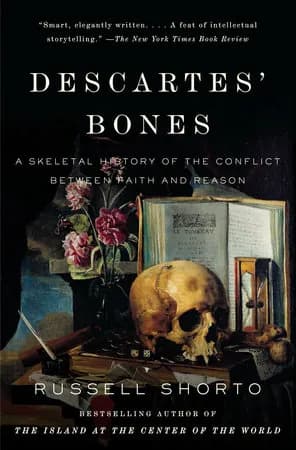
The irony is that in shifting the focus onto the individual human mind, which everyone agrees can be a pretty flimsy and wayward organ, Descartes had arrived at the closest thing to a certain basis for knowledge. If my own thoughts are the only indubitable ground I can stand on, apparently they aren’t so flimsy after all, at least not all the time. As an earlier follower of Descartes put it, “doubt is the beginning of an undoubtable philosophy.” Therefore the mind and its “good sense”—that is to say, human reason—are the only basis for judging whether a thing is true. With the “cogito,” as philosophers abbreviate it, and with the theory of knowledge that arises from it, which Descartes outlined in the Discourse on the Method and later works, human reason supplanted received wisdom. Once Descartes had established the base, he and others could rebuild the edifice of knowledge. But it would be different from what it had been. Everything would be different.
p. 20
'Ingenious you certainly were - like monkeys. But you neglected your philosophers - to your own ruin. Each new discovery was a toy. You never considered its true worth. You just pushed it into your system - a system already suffering from hardening of the arteries. And you were a greedy people. You took each discovery as if it were a bright new garment, but when you put it on you wore it over your old, verminous rags. You had grave need of disinfectants.'
p. 159
Whether you take the doughnut hole as a blank space or as an entity unto itself is a purely metaphysical question and does not affect the taste of the doughnut one bit.
There were these deep, serious thoughts I sometimes had to drive from my head like flocks of pesky starlings. I was too pragmatic and impatient to let such thoughts flog me into impotence, yet I sincerely needed a working philosophy on which to hang my hat. After the Halloween trip, one began to form and crystallize without my knowledge, and when I finally acknowledged its presence, it was already a part of me: simply, that life was good, but it was hard; we would prepare to meet it head on, but we would enjoy the preparation.
p. 158
Well, I suppose we have to have young intellectuals, if we’re ever to survive to be middle-aged philosophers.
p. 84