Quotes
As for the philosophers, whose role might have been to instruct me, I had long known what to expect of them; mathematicians or neo-Kantians, they kept as far as possible from troublesome reality, and were no more concerned with life than the algebrist with the existence of the quantities he is measuring.
p. 90
Between the philosopher's attitude towards the issue of reality and that of the mathematician there is this essential difference: for the philosopher the issue is paramount; the mathematician's love for reality is purely platonic.
All the principles of skeptics, stoics, atheists, etc., are true. But their conclusions are false, because the opposite principles are also true.
We trolls say: “Make Philosophy your evening guest, but do not let her stay the night.”
p. 260
The pragmatist regards any theory as a mere mathematical machine for generating numbers which he then compares with experiment. A pragmatist is concerned with results, not reality. The pragmatist refuses on principle to speculate about deep reality, such a concept being meaningless from his point of view. Pragmatism is an intelectually safe but ultimately sterile philosophy.
p. 159
Where there is no bread, there is no philosophy.
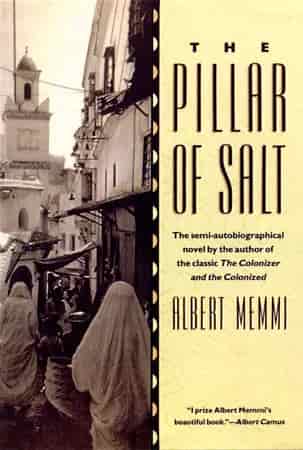
How vain and futile are all theoretical and philosophical constructions of the mind when compared to the brutal realities of the world of men! The European philosophers build the most rigorous and virtuous moral codes, and their politicians, brought up by these teachers, foment murders as a means of government.
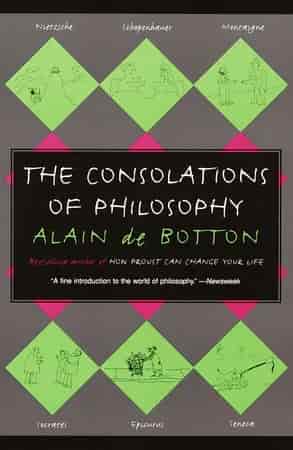
In their different ways, art and philosophy help us, in Schopenhauer's words, to turn pain into knowledge.
p. 199
Socrates compared living without thinking systematically to practicing an activity like pottery or shoemaking without following or even knowing of technical procedures. One would never imagine that a good pot or shoe would result from intuition alone; why then assume that the more complex task of directing one’s life could be undertaken without any sustained reflection on premises or goals? Perhaps because we don’t believe that directing our lives is in fact complicated. Certain difficult activities look very difficult from the outside, while other equally difficult activities look very easy. Arriving at sound views on how to live falls into the second category, making a pot or a shoe into the first.
p. 21
Philosophy had supplied Socrates with convictions in which he had been able to have rational, as opposed to hysterical, confidence when faced with disapproval.
p. 7
Someone who has thought rationally and deeply about how the body works is likely to arrive at better ideas about how to be healthy than someone who has followed a hunch. Medicine presupposes a hierarchy between the confusion the layperson will be in about what is wrong with him, and the more accurate knowledge available to doctors reasoning logically. … At the heart of Epicureanism is the thought that we are as bad at answering the question “What will make me happy?” as “What will make me healthy?” … Our souls do not spell out their troubles.
p. 53
Paradox is thus a much deeper and universal concept than the ancients would have dreamed. Rather than an oddity, it is a mainstay of the philosophy of science.
p. 23