Quotes
What is there to say? Purely and simply this: When a bachelor of philosophy from Antilles refuses to apply for certification as a teacher on the ground of his color. I say that philosophy has never saved anyone. Wren one else strives and strains to prove to me that black men are as intelligent as white men, I say that intelligence has never saved anyone; and that is true, for, if philosophy and intelligence are invoked to proclaim the equality of men, they have also been employed to justify the extermination of men .
p. 28
Philosophy is the science of estimating values. The superiority of any state or substance over another is determined by philosophy. By assigning a position of primary importance to what remains when all that is secondary has been removed, philosophy thus becomes the true index of priority or emphasis in the realm of speculative thought.
p. 4
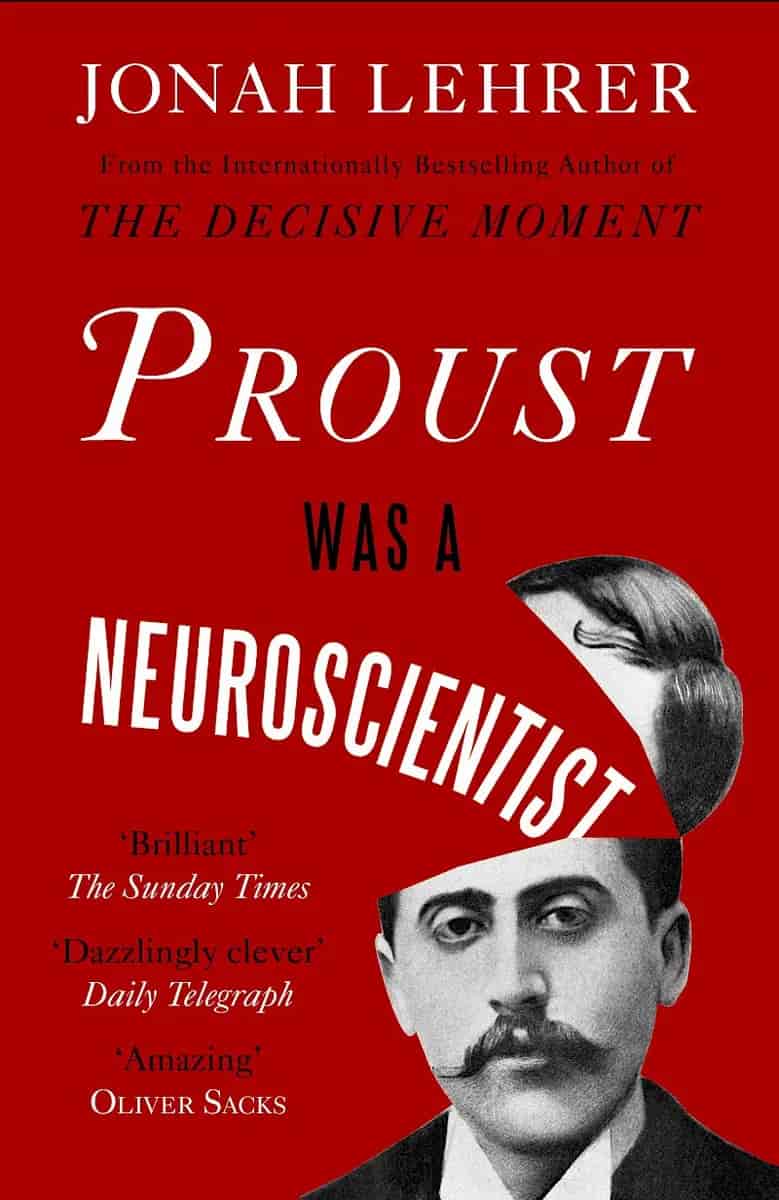
The story of the brain's separation from the body begin with Rene Descartes. The most influential philosopher of the seventeenth century, Descartes divided being into two distinct substances: a holy soul and a mortal carcass. The soul was the source of reason, science, and everything nice. Our flesh, on the other hand, was "clock-like," just a machine that bleeds. With this schism, Descartes condemned the body to a life of subservience, a power plant for the brain's light bulbs.
p. 3
“I was thinking philosophy,” Jasnah said.
Shallan blinked. “Philosophy? What good is that?” Isn’t it the art of saying nothing with as many words as possible?
“Philosophy is an important field of study,” Jasnah said sternly. “Particularly if you’re going to be involved in court politics. The nature of morality must be considered, and preferably before one is exposed to situations where a moral decision is required.”
p. 528
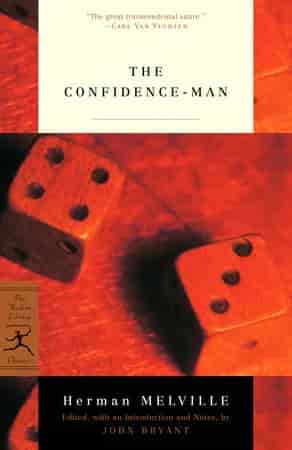
You speak of a certain philosophy, and a more or less occult one it may be, and hint of its bearing upon practical life; pray, tell me, if the study of this philosophy tends to the same formation of character with the experiences of the world?"
"It does; and that is the test of its truth; for any philosophy that, being in operation contradictory to the ways of the world, tends to produce a character at odds with it, such a philosophy must necessarily be but a cheat and a dream."
The traditional disputes of philosophers are, for the most part, as unwarranted as they are unfruitful. The surest way to end them is to establish beyond question what should be the purpose and method of a philosophical enquiry. And this is by no means so difficult a task as the history of philosophy would lead one to suppose. For if there are any questions which science leaves it to philosophy to answer, a straightforward process of elimination must lead to their discovery.
I walked a long way that night, thinking many philosophic thoughts which, fortunately, I don’t remember.
p. 61
A myth is, of course, not a fairy story. It is the presentation of facts belonging to one category in the idioms appropriate to another. To explode a myth is accordingly not to deny the facts but to re-allocate them.
For us scientists, on the other wing, life is not quite so simple. Because we learn the unknown. Unlike, hah-hah, our esteemed friends the philosophers, who learn the unknowable.
p. 51
I'm a bit of a deconstructionist myself. It's kind of exciting – the last intellectual thrill left. Like sawing through the branch you're sitting on.
p. 118
Death, who had once lived in a fairy-tale forest where a fairy-tale wolf was creeping up on a fairy-tale goat, was no longer confined to the pages of a book. For the first time David felt very clearly that he himself was mortal, not just in a fairy-tale way, but in actual fact. ' He understood that one day his mother would die. And it wasn’t from the fairy-tale forest and the dim light of its fir-trees that Death would come for him and his mother – it would come from this very air, from these walls, from life itself, and there was no way they would be able to hide from it. ' He sensed Death with a depth and clarity of which only small children or great philosophers are capable, philosophers who are themselves almost childlike in the power and simplicity of their thinking.
p. 193
What is real? Is there more to reality than meets the eye? Yes! was Plato’s answer over two millennia ago. In his famous cave analogy, he likened us to people who’d lived their entire lives shackled in a cave, facing a blank wall, watching the shadows cast by things passing behind them, and eventually coming to mistakenly believe that these shadows were the full reality. Plato argued that what we humans call our everyday reality is similarly just a limited and distorted representation of the true reality, and that we must free ourselves from our mental shackles to begin comprehending it.