Quotes about childhood
163 quotes · 111 authors
Quotes
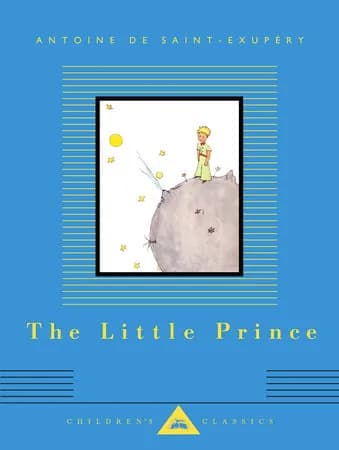
Grown-ups never understand anything by themselves, and it is tiresome for children to be always and forever explaining things to them.
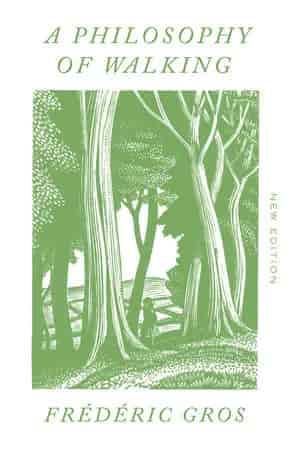
You’re doing nothing when you walk, nothing but walking. But having nothing to do but walk makes it possible to recover the pure sensation of being, to rediscover the simple joy of existing, the joy that permeates the whole of childhood. So that walking, by unburdening us, prising us from the obsession with doing, puts us in touch with that childhood eternity once again. I mean that walking is so to speak child’s play. To marvel at the beauty of the day, the brightness of the sun, the grandeur of the trees, the blue of the sky: to do that takes no experience, no ability.
The great man is the one who does not lose his child's heart.
I was reading even before I could spell properly, even though I couldn't necessarily understand what I was reading. Being able to identify a word I knew was like finding a signpost on the road telling me I was on the right path, heading in the right direction. And so it was, in this rather unusual way, Diário by Diário, month by month, pretending not to hear the jokey comments made by the adults in the house, who were amused by the way I would stare at the newspaper as if at a wall, that my moment to astonish them finally came, when, one day, nervous but triumphant, I read out loud, in one go, without hesitation, several consecutive lines of print.
p. 87
So strong is habit in tender years.
There was often a great deal of grown-up fuss that seemed disproportionate to causes.
The ways of the world were very puzzling. . . .
p. 391
I felt before I thought: this is the common lot of humanity. I experienced it more than others. I do not know what I did until I was five or six years old. I do not know how I learned to read; I only remember my earliest reading, and the effect it had upon me; from that time I date my uninterrupted self-consciousness. My mother had left some romances behind her, which my father and I began to read after supper. At first it was only a question of practising me in reading by the aid of amusing books; but soon the interest became so lively, that we used to read in turns without stopping, and spent whole nights in this occupation. We were unable to leave off until the volume was finished. Sometimes, my father, hearing the swallows begin to twitter in the early morning, would say, quite ashamed, ‘Let us go to bed; I am more of a child than yourself.’ In a short time I acquired, by this dangerous method, not only extreme facility in reading and understanding what I read, but a knowledge of the passions that was unique in a child of my age. I had no idea of things in themselves, although all the feelings of actual life were already known to me. I had conceived nothing, but felt everything. These confused emotions, which I felt one after the other, certainly did not warp the reasoning powers which I did not as yet possess; but they shaped them in me of a peculiar stamp, and gave me odd and romantic notions of human life, of which experience and reflection have never been able wholly to cure me.
That first feeling of violence and injustice has remained so deeply graven on my soul, that all the ideas connected with it bring back to me my first emotion; and this feeling, which, in its origin, had reference only to myself, has become so strong in itself and so completely detached from all personal interest, that, when I see or hear of any act of injustice – whoever is the victim of it, and wherever it is committed – my heart kindles with rage, as if the effect of it recoiled upon myself. When I read of the cruelties of a ferocious tyrant, the crafty atrocities of a rascally priest, I would gladly set out to plunge a dagger into the heart of such wretches, although I had to die for it a hundred times. I have often put myself in a perspiration, pursuing or stoning a cock, a cow, a dog, or any animal which I saw tormenting another merely because it felt itself the stronger. This impulse may be natural to me, and I believe that it is; but the profound impression left upon me by the first injustice I suffered was too long and too strongly connected with it, not to have greatly strengthened it.
It may be that nothing in the world is so hard to comprehend as a terror whose time has come and gone - which may be why parents can scold their children for their fear of the boogeyman, when as children themselves they had to cope with exactly the same fears (and the same sympathetic but uncomprehending parents). That may be why one generation's nightmare becomes the next generation's sociology, and even those who have walked through the fire have trouble remembering exactly what those burning coals felt like.
p. 158
Before drifting away entirely, he found himself reflecting — not for the first time — on the peculiarity of adults. They took laxatives, liquor, or sleeping pills to drive away their terrors so that sleep would come, and their terrors were so tame and domestic: the job, the money, what the teacher will think if I can't get Jennie nicer clothes, does my wife still love me, who are my friends. They were pallid compared to the fears every child lies cheek and jowl with in his dark bed, with no one to confess to in hope of perfect understanding but another child. There is no group therapy or psychiatry or community social services for the child who must cope with the thing under the bed or in the cellar every night, the thing which leers and capers and threatens just beyond the point where vision will reach. The same lonely battle must be fought night after night and the only cure is the eventual ossification of the imaginary faculties, and this is called adulthood.
And you couldn't explain that to your mother and father, who were creatures of the light. No more than you could explain to them how, at the age of three, the spare blanket at the foot of the crib turned into a collection of snakes that lay staring at you with flat and lidless eyes. No child ever conquers those fears, he thought. If a fear cannot be articulated, it can't be conquered. And the fears locked in small brains are much too large to pass through the orifice of the mouth. Sooner or later you found someone to walk past all the deserted meeting houses you had to pass between grinning babyhood and grunting senility. Until tonight. Until tonight when you found out that none of the old fears had been staked— only tucked away in their tiny, child-sized coffins with a wild rose on top.
“It was not fair, it was not fair, it was not fair. So cried his child's heart, and then his child's heart died a little. For that is also the way of the world.”