Quotes
"You must teach me a small part of what you know," said Dantes, "if only to prevent your growing weary of me. I can well believe that so learned a person as yourself would prefer absolute solitude to being tormented with the company of one as ignorant and uninformed as myself. If you will only agree to my request, I promise you never to mention another word about escaping." The abbe smiled. "Alas, my boy," said he, "human knowledge is confined within very narrow limits; and when I have taught you mathematics, physics, history, and the three or four modern languages with which I am acquainted, you will know as much as I do myself. Now, it will scarcely require two years for me to communicate to you the stock of learning I possess."
"Two years!" exclaimed Dantes; "do you really believe I can acquire all these things in so short a time?"
"Not their application, certainly, but their principles you may; to learn is not to know; there are the learners and the learned. Memory makes the one, philosophy the other."
Those innumerable and immense questions about time and space, argued over from the beginnings of metaphysics onward, by metaphysicians of every century, are none other than wars of words, caused by misunderstandings, and imprecision of thought, and limited ability to understand our mind, which is the only place where time and space, like many other abstract things, exist independently and for themselves, and are something.
The majority of species, too, could scrape together some sort of metaphysical framework, a form of earlier speculation – semi-deranged or otherwise – regarding the way things worked at a fundamental level which could later be held up as a philosophy, life-rule system or genuine religion, especially if one used the excuse that it was really only a metaphor, no matter how literally true it had declared itself to be originally.
p. 122
This inseparableness of everything in the world from language has intrigued modern thinkers, most notably Ludwig Wittgenstein... If its limits—that is, the precise point at which sense becomes nonsense—could somehow be defined, then speakers would not attempt to express the inexpressible. Therefore, said Wittgenstein, do not put too great a burden upon language. Learn its limitations and try to accommodate yourself to them, for language offers all the reality you can ever hope to know.
Myself when young did eagerly frequent
Doctor and Saint, and heard great argument
About it and about: but evermore
Came out by the same door as in I went.
"He [Hegel] is perfect... Unlike Kant, who makes sense only in German, this man doesn't make sense in any language.
A philosopher is a lover of wisdom, not of knowledge, which for all its great uses ultimately suffers from the crippling effect of ephemerality. All knowledge is transient, linked to the world around it and subject to change as the world changes, whereas wisdom, true wisdom is eternal, immutable. To be philosophical one must love wisdom for its own sake, accept its permanent validity and yet its perpetual irrelevance. It is the fate of the wise to understand the process of history and yet never to shape it.
In this precise sense, Kant was "the inventor of the philosophical history of philosophy": there are necessary stages in the development of philosophy, that is, one cannot directly get at the truth, one cannot begin wit it, philosophy necessarily began with metaphysical illusions. The path from illusion to its critical denunciation is the very core of philosophy, which means that successful ("true") philosophy is no longer defined by its truthful explanation of the totality of being, but by successfully accounting for the illusions, that is, by explaining not only why illusions are illusions, but also why they are structurally necessary, unavoidable, and not just accidents.
p. 10
Methods Used
1. Marxist: You decide you're the vanguard of the proletariat and then you can do whatever you want because history will back you up.
2. Stoic: Stay very calm.
3. Positivist: Yes, I'm positive I want to rob this bank.
p. 97
Pah-bodh (literally stuff and nonsense-knowledge) is their term for futile and false philosophy, and applied to a species of metaphysical or speculative ratiocination formerly in vogue, which consisted in making inquiries that could not be answered, and were not worth making (Chapter XII)
Demons were like genies or philosophy professors—if you didn't word things exactly right, they delighted in giving you absolutely accurate and completely misleading answers.
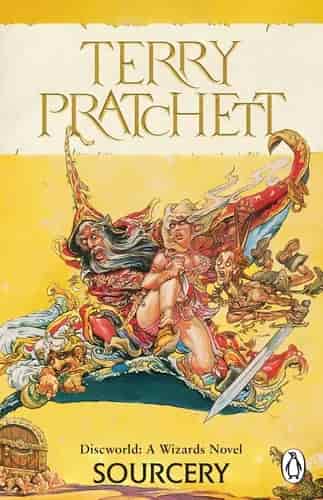
Wizards don't like philosophy very much. As far as they are concerned, one hand clapping makes a sound like 'cl'.