Quotes
I think I have already said somewhere that mathematics is the art of giving the same name to different things.
p. 31
The principal aim of mathematical education is to develop certain faculties of the mind, and among these intuition is not the least precious. It is through it that the mathematical world remains in touch with the real world, and even if pure mathematics could do without it, we should still have to have recourse to it to fill up the gulf that separates the symbol from reality.
p. 128
Mighty is the charm
Of those abstractions to a mind beset
With images, and haunted by herself,
And specially delightful unto me
Was that clear synthesis built up aloft
So gracefully; even then when it appeared
Not more than a mere plaything, or a toy
To sense embodied: not the thing it is
In verity, an independent world,
Created out of pure intelligence.
The natural world is full of irregularity and random alteration, but in the antiseptic, dust-free, shadowless, brightly lit, abstract realm of the mathematicians they like their cabbages spherical, please.
My hero was J. S. Bach. It was from his works that I came to understand mathematics and, through a greater understanding of math, came to a greater understanding of Bach—the golden ratio, the rise of complexity through the reiteration of simple elements, the presence of the cosmic in the common.
p. 58
“Tao, I don’t understand why I need to know this.”
Advanced mathematics opens doors to many fields of study. More importantly, it expands the way you think.
p. 112
It's not for nothing that advanced mathematics tends to be invented in hot countries. It's because of the morphic resonance of all the camels, who have that disdainful expression and famous curled lip as a natural result of an ability to do quadratic equations. (p. 171)
A mathematical argument, once understood, is in its capacity to compel belief a miracle of enlightened life.
“Any idiot,” he said calmly but with immense conviction, “can learn anything in mathematics. It requires only patience.”
p. 281
Hungary, severed from half of the population and most of the natural resources that it had once claimed, had now to practice a sort of economic acupuncture, striving to know the magic nodes in the global energy flow where a pinprick could alter the workings of a major organ. Mathematics was one of the few disciplines where it was possible to exert that degree of leverage, and so the Hungarians had become phenomenally good at teaching it to their children.
Mathematics gave Tengo an effective means of retreat. By fleeing into a world of numerical expression, he was able to escape from the troublesome cage of reality.
p. 221
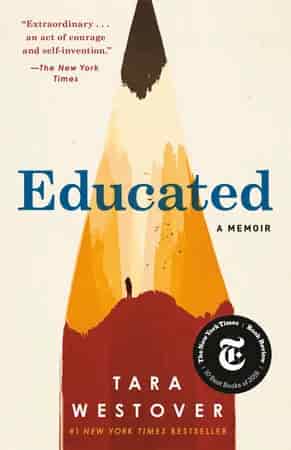
I began to study trigonometry. There was solace in its strange formulas and equations. I was drawn to the Pythagorean theorem and its promise of a universal—the ability to predict the nature of any three points containing a right angle, anywhere, always. What I knew of physics I had learned in the junkyard, where the physical world often seemed unstable, capricious. But here was a principal through which the dimensions of life could be defined, captured. Perhaps reality was not wholly volatile. Perhaps it could be explained, predicted. Perhaps it could be made to make sense.
p. 124