Quotes
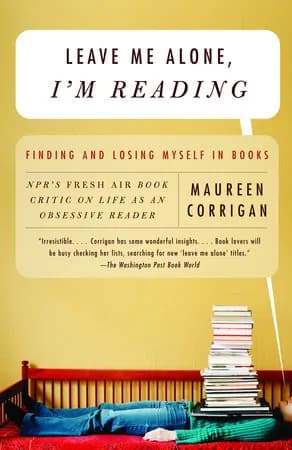
I don’t believe in identity politics in literature—or in life much, either. Indeed the current scholarly enchantment with identity politics strikes me as a more intellectual version of the warning oft heard around Sunnyside when I was growing up: “Stick with your own kind.” Family and cultural origins are crucial to self-definition, but they’re not the end of the story. I certainly don’t think that we readers only or even chiefly enjoy or understand books whose main characters mirror us. In fact, the opportunity to become who we are decidedly not—whether it’s Amis’s Dixon or Philip Roth’s Portnoy or Ellison’s Invisible Man or Kafka’s beetle—is one of the greatest gifts reading offers. Women readers get to serve on that floating boy’s club, the Pequod; male readers get to step into Elizabeth Bennet’s shoes and teach Mr. Darcy the dance of humility; readers of either gender who are not African American get to crawl toward freedom alongside Toni Morrison’s Sethe. One of the most magical and liberating things about literature is that it can transport us readers into worlds totally unlike our own.
p. 70
Works that have a certain imperfection to them have an appeal for that you're attracted to Soseki's The Miner. There's something in it that draws you in, more than more fully realized novels like Kokoro or Sanshiro. You discover something about that work that tugs at your heart-or maybe we should say that work discovers you.
Why did people ask "What is it about?" as if a novel had to be about only one thing.
What these Tales shall have been to the young readers, that and much more it is the writers' wish that the true Plays of Shakespeare may prove to them in older years—enrichers of the fancy, strengtheners of virtue, a withdrawing from all selfish and mercenary thoughts, a lesson of all sweet and honourable thoughts and actions, to teach courtesy, benignity, generosity, humanity: for of examples, teaching these virtues, his pages are full.
Kester wrote about people and since human nature doesn't change his observations hadn't dated.
Half of all the great art and literature in existence went unrecognised during the lifetimes of its creators.
p. 109
Well, I left the fairy tales lying on the floor of the nursery, and I have not found any books so sensible since.
When a natural discourse paints a passion or an effect, one feels within oneself the truth of what one reads, which was there before, although one did not know it. Hence one is inclined to love him who makes us feel it, for he has not shown us his own riches, but ours. ...such community of intellect that we have with him necessarily inclines the heart to love.
Fiction is the great lie that tells the truth about how the world lives!
Sometimes Old Nan would tell the same story she’d told before, but we never minded, if it was a good story. Old stories are like old friends, she used to say. You have to visit them from time to time.
In , Dad found a literature of himself. He'd read and , but from Wright he learned that there was an entire shadow canon, a tradition of writers who grabbed the pen, not out of leisure but to break the chain.
p. 72
It is the nature of the writer to question the validity of his world and yet rely on his senses to describe it. From what other tension can great literature be born?
p. 196