Quotes
"Death is more than love or is it. Art is more than love or is it. Love is more than death and art, or not. This is the subject. This is the subject. This is it."
In a nation that has developed to a high art advertising, the creator who refuses to advertise himself is immediately suspected of having no product worth selling.
Michelangelo worked from within. He described not the excitements of touching or seeing a man but the excitement of being Man.
But an artist, he realized. Or rather so-called artist. Bohemian. That’s closer to it. The artistic life without the talent.
p. 168
That is the artist's job: take mineral rock from dark silent earth, transform it into shining light-reflecting form from sky.
Life is short. Art, or something not life, is long, stretching out endless, like concrete worm. Flat, white, unsmoothed by any passage over or across it. Here I stand. But no longer.
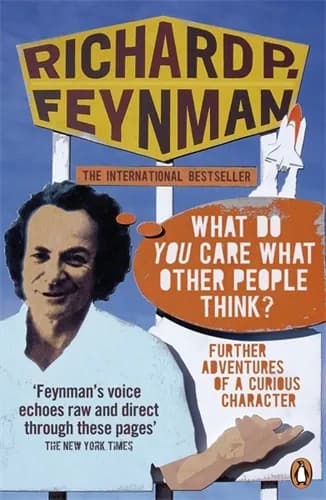
I wanted very much to learn to draw, for a reason that I kept to myself: I wanted to convey an emotion I have about the beauty of the world. It's difficult to describe because it's an emotion. It's analogous to the feeling one has in religion that has to do with a god that controls everything in the whole universe: there's a generality aspect that you feel when you think about how things that appear so different and behave so differently are all run "behind the scenes" by the same organization, the same physical laws. It's an appreciation of the mathematical beauty of nature, of how she works inside; a realization that the phenomena we see result from the complexity of the inner workings between atoms; a feeling of how dramatic and wonderful it is. It's a feeling of awe — of scientific awe — which I felt could be communicated through a drawing to someone who had also had this emotion. It could remind him, for a moment, of this feeling about the glories of the universe.
p. 261
I have a friend who's an artist, and he sometimes takes a view which I don't agree with. He'll hold up a flower and say, "Look how beautiful it is," and I'll agree. But then he'll say, "I, as an artist, can see how beautiful a flower is. But you, as a scientist, take it all apart and it becomes dull." I think he's kind of nutty. ... There are all kinds of interesting questions that come from a knowledge of science, which only adds to the excitement and mystery and awe of a flower. It only adds. I don't understand how it subtracts.
p. 11
I like the saying "The world is as you are." And I think films are as you are. That's why, although the frames of a film are always the same — the same number, in the same sequence, with the same sounds — every screening is different. The difference is sometimes subtle but it's there. It depends on the audience. There is a circle that goes from the audience to the film and back. Each person is looking and thinking and feeling and coming up with his or her own sense of things. And it's probably different from what I fell in love with.
So you don’t know how it's going to hit people. But if you thought about how it's going to hit people, or if it's going to hurt someone, or if it's going to do this or do that, then you would have to stop making films. You just do these things that you fall in love with, and you never know what's going to happen.
p. 21
People have asked me why — if meditation is so great and gives you so much bliss — are my films so dark, and there's so much violence?
There are many, many dark things flowing around in this world right now, and most films reflect the world in which we live. They're stories. Stories are always going to have conflict. They're going to have highs and lows, and good and bad.
I fall in love with certain ideas. And I am where I am. Now, if I told you I was enlightened, and this is enlightened filmmaking, that would be another story. But I'm just a guy from Missoula, Montana, doing my thing, going down the road like everybody else.
We all reflect the world we live in. Even if you make a period film, it will reflect your times. You can see the way period films differ, depending on when they were made. It's a sensibility — how they talk, certain themes — and those things change as the world changes.
And so, even though I'm from Missoula, Montana, which is not the surrealistic capital of the world, you could be anywhere and see a kind of strangeness in how the world is these days, or have a certain way of looking at things.
p. 91
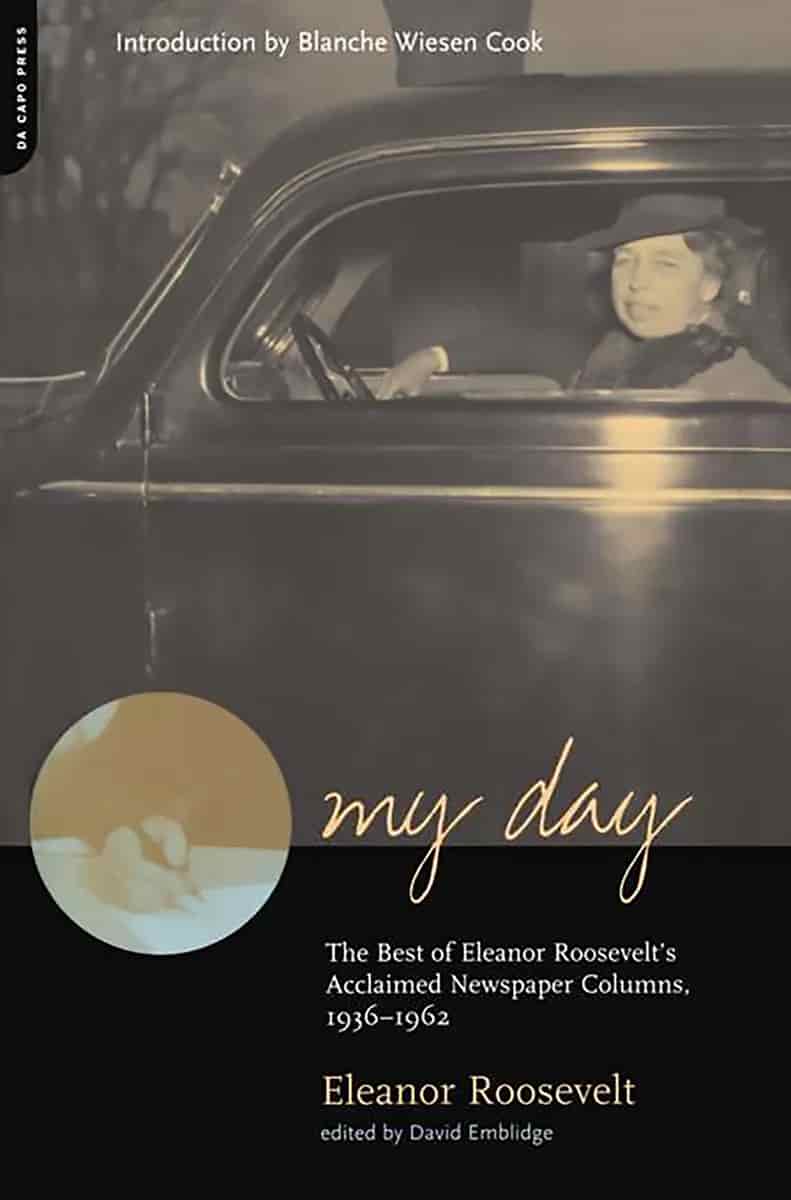
The arts in every field — music, drama, sculpture, painting — we can learn to appreciate and enjoy. We need not be artists, but we should be able to appreciate the work of artists. (5 November 1958)
I have waited a while before saying anything about the Un-American Activities Committee's current investigation of the Hollywood film industry. I would not be very much surprised if some writers or actors or stagehands, or what not, were found to have Communist leanings, but I was surprised to find that, at the start of the inquiry, some of the big producers were so chicken-hearted about speaking up for the freedom of their industry.
One thing is sure — none of the arts flourishes on censorship and repression. And by this time it should be evident that the American public is capable of doing its own censoring. Certainly, the Thomas Committee is growing more ludicrous daily. (29 October 1947)