Leafy Quotes
Recently added
The newest book quotes in the Leafy Quotes collection — passages readers have just added, each with its author, book and the page it came from.
It takes an intellectual and physical effort to shove aside the comfortably worn neural pathways and go in a different direction.
the sadness of a lost childhood feels like yearning, impossible desire. It feels like a hollow, insatiable hunger.
Being healed isn’t about feeling nothing. Being healed is about feeling the appropriate emotions at the appropriate times and still being able to come back to yourself. That’s just life.
Forgiveness is this act of love where you say to someone, ‘You’re an imperfect being and I still love you.’ You want to have this energy of ‘We’re not giving up on each other; we’re in this for the long haul. You hurt me. And, yes, I hurt you. And I’m sorry, but you’re still mine.’
Punishment excludes and excises. It demolishes relationships and community. I could not believe it had taken me this long to realize that punishment is not love. In fact, it is the opposite of love. Forgiveness is love. Spaciousness is love.
Dr. Ham would tell me that PTSD is only a mental illness in times of peace. The whole point of PTSD is to prepare you for being on the verge of death at any moment. My parents prepared me to face a vicious world with danger around every corner. (Chapter 43)
there are two main differences now: I have hope, and I have agency. I know my feelings, no matter how disconsolate they are, are temporary. I know that regardless of how unruly it is, I am the beast's master, and at the end of each battle I stand strong and plant my flag: I am alive, I am proud, I am joyful, still. (Chapter 43)
Every villain's redemption arc begins with their origin story. (prologue)
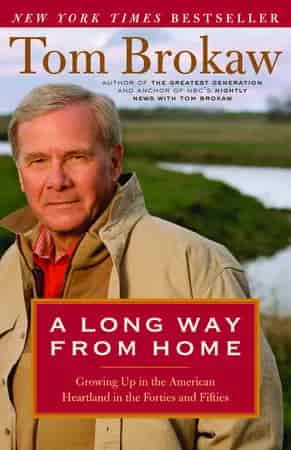
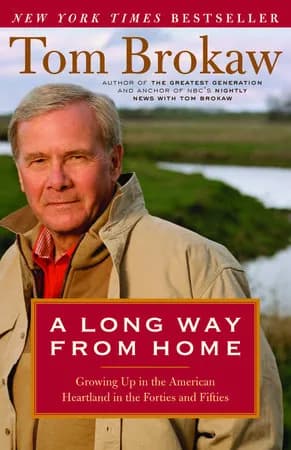
If we are to heed the past to prepare for the future, we should listen to these voices of a generation that speaks to us of duty and honor, sacrifice and accomplishment. I hope more of their stories will be preserved and cherished as reminders of all that we owe them and all that we can learn from them.
On those trips back to the Great Plains I always try to imagine the land before it was touched by rails and plows, fences and roads. I can still drive off the pavement of South Dakota highways, find a slight elevation in the prairie flatness, and look to a distant horizon, across untilled grassland, and with no barbed wire or telephone poles or dwellings to break the plane of earth and sky. It is at once majestic and intimidating. More than a century after the first white settlers began to arrive, the old Dakota Territory remains a place where nature rules.
p. 5
It is not lost on me that all of my good fortune in life and my career would have been neutralized at the outset if my skin had been a few shades darker. I would not have gotten that first job in Omaha or the second one in Atlanta two and a half years later. There were no people of color working in the newsrooms of either city in the early and mid-1960s. In the network newsrooms, where the battle for civil rights was the defining issue in the early days of Huntley-Brinkley and Walter Cronkite, racial diversity was at best a notion.
When America first began to seriously confront racial inequalities in the sixties, mobilized by the courage and eloquence of Dr. Martin Luther King, Jr., and his equally brave and determined followers, I naively believed we would cure the cancerous effects of racism in my lifetime. I now know that is not true. Race remains a central issue in the evolution of our political, economic, and cultural environment. It continues to haunt me personally; I am grateful that my formative years in the mostly white environment of the upper Midwest sharpened my sensibilities about the inequities and complexities of race for the rest of my life.
p. 206
When I sent this book to my mother for her comments and corrections, she wrote back to say, "In some parts your ego is showing, bu mostly it's fine." Forty years after I left home for the last time, she still has my number.