


Quotes about slavery
118 quotes · 64 authors
Quotes
Who aint a slave? Tell me that. Well, then, however the old sea-captains may order me about—however they may thump and punch me about, I have the satisfaction of knowing that it is all right; that everybody else is one way or other served in much the same way—either in a physical or metaphysical point of view, that is; and so the universal thump is passed round, and all hands should rub each other's shoulder-blades, and be content.
p. 5
You may set the Negro free, but you cannot make him otherwise than an alien to the European. Nor is this all we scarcely acknowledge the common features of humanity in this stranger whom slavery has brought among us. His physiognomy is to our eyes hideous, his understanding weak, his tastes low; and we are almost inclined to look upon him as a being intermediate between man and the brutes.
I am obliged to confess that I do not regard the abolition of slavery as a means of warding off the struggle of the two races in the Southern states. The Negroes may long remain slaves without complaining; but if they are once raised to the level of freemen, they will soon revolt at being deprived of almost all their civil rights; and as they cannot become the equals of the whites, they will speedily show themselves as enemies.
Uncle Tom's Cabin was no literary masterpiece but it was a culture-bearing book. It came at a time when the entire culture was about to reject slavery. People seized upon it as a portrayal of their own new values and it became an overwhelming success.
The success of Zen and the Art of Motorcycle Maintenance seems the result of this culture-bearing phenomenon. The involuntary shock treatment described here is against the law today. It is a violation of human liberty. The culture has changed.
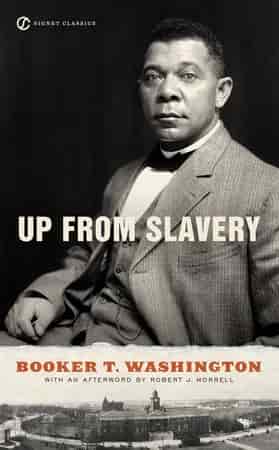
I pity from the bottom of my heart any nation or body of people that is so unfortunate as to get entangled in the net of slavery. I have long since ceased to cherish any spirit of bitterness against the Southern white people on account of the enslavement of my race. No one section of our country was wholly responsible for its introduction, and, besides, it was recognized and protected for years by the General Government. Having once got its tentacles fastened on to the economic and social life of the Republic, it was no easy matter for the country to relieve itself of the institution. Then, when we rid ourselves of prejudice, or racial feeling, and look facts in the face, we must acknowledge that, notwithstanding the cruelty and moral wrong of slavery, the ten million Negroes inhabiting this country, who themselves or whose ancestors went through the school of American slavery, are in a stronger and more hopeful condition, materially, intellectually, morally, and religiously, than is true of an equal number of black people in any other portion of the globe. This is so to such an extend that Negroes in this country, who themselves or whose forefathers went through the school of slavery, are constantly returning to Africa as missionaries to enlighten those who remained in the fatherland. This I say, not to justify slavery — on the other hand, I condemn it as an institution, as we all know that in America it was established for selfish and financial reasons, and not from a missionary motive — but to call attention to a fact, and to show how Providence so often uses men and institutions to accomplish a purpose.
From some things that I have said one may get the idea that some of the slaves did not want freedom. This is not true. I have never seen one who did not want to be free, or one who would return to slavery.
It was in North Carolina, when she had seen the food for the slave children and the dogs poured into the same trough, and she had seen her little children scrabbling with the dogs for the scraps. She saw that happen one day—and she had seen it before, every day on that plantation, and she would see it again many times before she left—she saw it that one day and it broke her heart.
The slaves on the sugar plantations of St. Domingue rarely lived more than a decade. The free time they were given—two hours in the heat of noon and five hours in the dark of the night (from eleven until four)—was also the only time they had to grow and tend the food they would eat (for they were not fed by their masters, merely given small plots of land to cultivate, with which to feed themselves), and it was also the time they had to sleep and to dream. Even so, they would take that time and they would gather and dance, and sing and worship.
... in the commissary as it should have been, not the heart perhaps but certainly the solar-plexus of the repudiated and relinquished: the square, galleried, wooden building squatting like a portent above the fields whose laborers it still held in thrall ‘65 or no and placarded over with advertisements for snuff and cures for chills and salves and potions manufactured and sold by white men to bleach the pigment and straighten the hair of negroes that they might resemble the very race which for two hundred years had held them in bondage and from which for another hundred years not even a bloody civil war would have set them completely free.
p. 244
“Dont you see?” he cried. “Dont you see? This whole land, the whole South, is cursed, and all of us who derive from it, whom it ever suckled, white and black both, lie under the curse? Granted that my people brought the curse onto the land: maybe for that reason their descendants alone can—not resist it, not combat it—maybe just endure and outlast it until the curse is lifted. Then your peoples’ turn will come because we have forfeited ours. But not now. Not yet. Dont you see?”
p. 266










That’s all the quotes.
10 quotes in the collection · come back when we add more