Quotes
A French or English writer has thousands of years of written tradition behind him…We on the other hand are heirs to an oral tradition.
But if he is going to write prose then he may have to go the whole hog and become a Jamesian. Henry James shows one how to rise above mere nationality. [...] People in James do not have to pay the rent; they certainly do not have to hold down jobs; all they are required to do is to have super-subtle conversations whose effect is to bring about tiny shifts of power, shifts so minute as to be invisible to all but the practised eye. When enough such shifts have taken place, the balance of power between the personages of the story is (Voilà!) revealed to have suddenly and irreversibly changed. And that is that: the story has fulfilled its charge and can be brought to an end. — Chapter 8, page 64.
I am a free woman who asserts her freedom by telling her story.
We can bring [the island] to life only by setting it within a larger story.
There is, in short no end to the story of life. There are merely pauses. The end is the arbitrary intervention of the teller, but there can be no finality about the choice. Today’s end is, after all tomorrow’s beginning.
the great, irreplaceable potentiality of fiction is that it makes possible the imagining of possibilities.
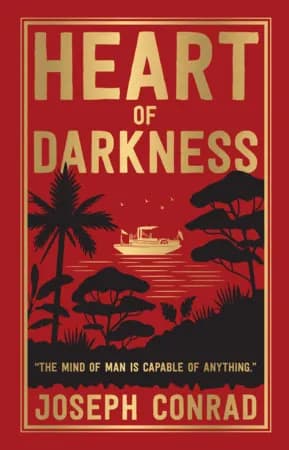
He was just a word for me. I did not see the man in the name any more than you do. Do you see him? Do you see the story? Do you see anything? It seems to me I am trying to tell you a dream — making a vain attempt, because no relation of a dream can convey the dream-sensation, that commingling of absurdity, surprise, and bewilderment in a tremor of struggling revolt, that notion of being captured by the incredible which is of the very essence of dreams.
The yarns of seamen have a direct simplicity, the whole meaning of which lies within the shell of a cracked nut. But Marlow was not typical (if his propensity to spin yarns be excepted), and to him the meaning of an episode was not inside like a kernel but outside, enveloping the tale which brought it out only as a glow brings out a haze, in the likeness of one of these misty halos that sometimes are made visible by the spectral illumination of moonshine.
Digressions, incontestably, are the sunshine; —& they are the life, the soul of reading; — take them out of this book for instance, — you might as well take the book along with them.
"I'm looking for the novelists whose writing is an extension of their intellect rather than an extension of their neurosis."
The public of this country is so youthful, not to say simple-minded, that it cannot understand the meaning of a fable unless the moral is set forth at the end. Unable to see a joke, insensible to irony, it has, in a word, been badly brought up. It has not yet learned that in a decent book, as in decent society, open invective can have no place; that our present-day civilisation has invented a keener weapon, none the less deadly for being almost invisible, which, under the cloak of flattery, strikes with sure and irresistible effect.
The trouble with life (the novelist will feel) is its amorphousness, its ridiculous fluidity. Look at it: thinly plotted, largely themeless, sentimental and ineluctably trite. The dialogue is poor, or at least violently uneven. The twists are either predictable or sensationalist. And it's always the same beginning; and the same ending ...