Quotes
Bujak spoke of Einstein as if he were God's literary critic, God being a poet. I, more stolidly, tend to suspect that God is a novelist — a garrulous and deeply unwholesome one too.
A novel is an impression, not an argument.
A lawyer without history or literature is a mechanic, a mere working mason; if he possesses some knowledge of these, he may venture to call himself an architect.
Most first novels are disguised autobiographies. This autobiography is a disguised novel.
p. 9
Herzen was closer to the truth when he said that every memory calls up a dozen others. The real miracle of Proust is the discipline with which he stemmed the flow. Everything is a Madeleine.
p. 56
There isn’t any particular relationship between the messages, except that the author has chosen them carefully, so that, when seen all at once, they produce an image of life that is beautiful and surprising and deep. There is no beginning, no middle, no end, no suspense, no moral, no causes, no effects. What we love in our books are the depths of many marvelous moments seen all at one time.
p. 88
[Eliot] Rosewater said an interesting thing to Billy [Pilgrim] one time … He said that everything there was to know about life is in "The Brothers Karamazov," by Fyodor Dostoevsky. "But that isn't enough anymore," said Rosewater. (p. 101)
It is so short and jumbled and jangled, Sam, because there is nothing intelligent to say about a massacre. Everybody is supposed to be dead, to never say anything or want anything ever again. Everything is supposed to be very quiet after a massacre, and it always is, except for the birds.
And what do the birds say? All there is to say about a massacre, things like "Poo-tee-weet?"
p. 19
"The person, be it gentleman or lady, who has not pleasure in a good novel, must be intolerably stupid." - Henry Tilney, in: en:s:Northanger Abbey/Chapter 14.
Let us leave it to the reviewers to abuse such effusions of fancy at their leisure, and over every new novel to talk in threadbare strains of the trash with which the press now groans. Let us not desert one another; we are an injured body. Although our productions have afforded more extensive and unaffected pleasure than those of any other literary corporation in the world, no species of composition has been so much decried. From pride, ignorance, or fashion, our foes are almost as many as our readers. And while the abilities of the nine-hundredth abridger of the History of England, or of the man who collects and publishes in a volume some dozen lines of Milton, Pope, and Prior, with a paper from the Spectator, and a chapter from Sterne, are eulogized by a thousand pens — there seems almost a general wish of decrying the capacity and undervaluing the labour of the novelist, and of slighting the performances which have only genius, wit, and taste to recommend them. "I am no novel-reader — I seldom look into novels — Do not imagine that I often read novels — It is really very well for a novel." Such is the common cant. "And what are you reading, Miss — ?" "Oh! It is only a novel!" replies the young lady, while she lays down her book with affected indifference, or momentary shame. "It is only Cecilia, or Camilla, or Belinda"; or, in short, only some work in which the greatest powers of the mind are displayed, in which the most thorough knowledge of human nature, the happiest delineation of its varieties, the liveliest effusions of wit and humour, are conveyed to the world in the best-chosen language.
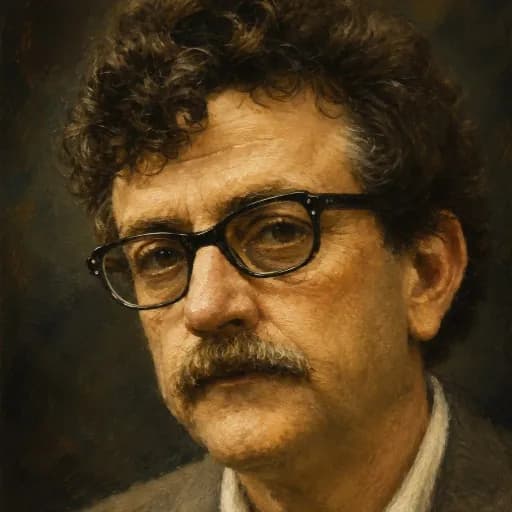
I am learning my business. Literature nowadays is a trade. Putting aside men of genius, who may succeed by mere cosmic force, your successful man of letters is your skilful tradesman. He thinks first and foremost of the markets; when one kind of goods begins to go off slackly, he is ready with something new and appetising. He knows perfectly all the possible sources of income. Whatever he has to sell he'll get payment for it from all sorts of various quarters; none of your unpractical selling for a lump sum to a middleman who will make six distinct profits.
p. 8
I maintain that we people of brains are justified in supplying the mob with the food it likes. We are not geniuses, and if we sit down in a spirit of long-eared gravity we shall produce only commonplace stuff. Let us use our wits to earn money, and make the best we can of our lives. If only I had the skill, I would produce novels out-trashing the trashiest that ever sold fifty thousand copies. But it needs skill, mind you; and to deny it is a gross error of the literary pedants. To please the vulgar you must, one way or another, incarnate the genius of vulgarity.
p. 17