Quotes
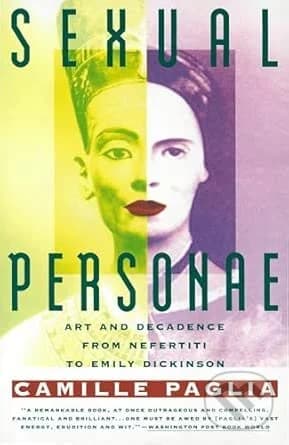
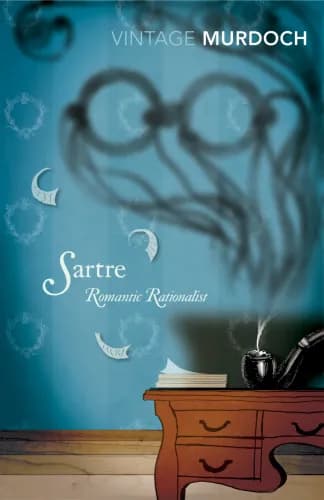
The English language was created by poets, a five-hundred year enterprise of emotion and metaphor, the richest dialogue in world literature. French rhetorical models are too narrow for the English tradition. Most pernicious of French imports is the notion that there is no person behind a text. Is there anything more affected, aggressive, and relentlessly concrete than a Parisian intellectual behind his/her turgid text? The Parisian is a provincial when he pretends to speak for the universe.
p. 34
Many writers lay very great stress upon some definite moral purpose, at which they profess to aim their works. Not to be deficient in this particular, the author has provided himself with a moral, — the truth, namely, that the wrong-doing of one generation lives into the successive ones, and, divesting itself of every temporary advantage, becomes a pure and uncontrollable mischief; and he would feel it a singular gratification if this romance might effectually convince mankind — or, indeed, any one man — of the folly of tumbling down an avalanche of ill-gotten gold, or real estate, on the heads of an unfortunate posterity, thereby to maim and crush them, until the accumulated mass shall be scattered abroad in its original atoms. In good faith, however, he is not sufficiently imaginative to flatter himself with the slightest hope of this kind. When romances do really teach anything, or produce any effective operation, it is usually through a far more subtile process than the ostensible one. The author has considered it hardly worth his while, therefore, relentlessly to impale the story with its moral as with an iron rod, — or, rather, as by sticking a pin through a butterfly, — thus at once depriving it of life, and causing it to stiffen in an ungainly and unnatural attitude. A high truth, indeed, fairly, finely, and skilfully wrought out, brightening at every step, and crowning the final development of a work of fiction, may add an artistic glory, but is never any truer, and seldom any more evident, at the last page than at the first.
It may happen in the next hundred years that the English novelists of the present day will come to be valued as we now value the artists and craftsmen of the late eighteenth century.
What can place not give? Theme. It can present theme, show it to the last detail — but place is forever illustrative: it is a picture of what man has done and imagined, it is his visible past, result. Human life is fiction’s only theme. ("Place in Fiction")
Great fiction shows us not how to conduct our behavior but how to feel. Eventually, it may show us how to face our feelings and face our actions and to have new inklings about what they mean. A good novel of any year can initiate us into our own new experience.
The novelist works neither to correct nor to condone, not at all to comfort, but to make what's told alive.
I have changed my definition of tragedy. I now think tragedy is not foul deeds done to a person... but rather that tragedy is irresolvable conflict. Both sides/ideas are right. Plot involves fragmentary reality, and it might involve composite reality. Fragmentary reality is the view of the individual. Composite reality is the community or state view. Fragmentary reality is always set against composite reality. Virginia Woolf did this by creating fragmentary monologues and for a while this was all the rage in literature. She was a genius. In the hands of the merely talented it came off like gibberish.
The novel, the novel proper that is, is about people's treatment of each other, and so it is about human values.
p. 138
Technically our novelists (for instance) are shrewd enough, and publishers and reviewers seem, as never before, eager to be of use. Nevertheless, wherever we look it's the same: commercial slickness, misplaced cleverness, posturing, wild floundering -- dullness. Though not widely advertised, this is general knowledge. When one talks with editors of serious fiction, they all sound the same: they speak of their pleasure and satisfaction in their work, but more often than not the editor cannot think, under the moment's pressure, of a single contemporary writer he really enjoys reading. Some deny, even publicly, that any first-rate American novelists now exist. The ordinary reader has been saying that for years...
p. 56
When I was a young writer there had been a stage where Camus, almost more than any other contemporary literary figure, radically set the tone for my own view of life and history. I read his novel The Stranger somewhat later than I should have — I was in my early thirties — but after finishing it I received the stab of recognition that proceeds from reading the work of a writer who has wedded moral passion to a style of great beauty and whose unblinking vision is capable of frightening the soul to its marrow. The cosmic loneliness of Meursault, the hero of that novel, so haunted me that when I set out to write The Confessions of Nat Turner I was impelled to use Camus’s device of having the story flow from the point of view of a narrator isolated in his jail cell during the hours before his execution. For me there was a spiritual connection between Meursault’s frigid solitude and the plight of Nat Turner — his rebel predecessor in history by a hundred years — likewise condemned and abandoned by man and God. Camus’s essay “Reflections on the Guillotine” is a virtually unique document, freighted with terrible and fiery logic; it is difficult to conceive of the most vengeful supporter of the death penalty retaining the same attitude after exposure to scathing truths expressed with such ardor and precision. I know my thinking was forever altered by that work, not only turning me around completely, convincing me of the essential barbarism of capital punishment, but establishing substantial claims on my conscience in regard to matters of responsibility at large. Camus was a great cleanser of my intellect, ridding me of countless sluggish ideas, and through some of the most unsettling pessimism I had ever encountered causing me to be aroused anew by life’s enigmatic promise.
It often seems to me that of all the good things in the world, the only ones humanity can claim for itself are stories and music; the rest, mercy, beauty, sleep, clean water and hot food [...] are all the work of the Increate. Thus, stories are small things indeed in the scheme of the universe, but it is hard not to love best what is our own.
Bear in mind that the novel—no matter how intimate, psychological, or subjective—is always a historical projection of its own time.
p. 116