
But if he is going to write prose then he may have to go the whole hog and become a Jamesian. Henry James… — J. M. Coetzee
But if he is going to write prose then he may have to go the whole hog and become a Jamesian. Henry James shows one how to rise above mere nationality. [...] People in James do not have to pay the rent; they certainly do not have to hold down jobs; all they are required to do is to have super-subtle conversations whose effect is to bring about tiny shifts of power, shifts so minute as to be invisible to all but the practised eye. When enough such shifts have taken place, the balance of power between the personages of the story is (Voilà!) revealed to have suddenly and irreversibly changed. And that is that: the story has fulfilled its charge and can be brought to an end. — Chapter 8, page 64.
Source: Wikiquote · CC BY-SA 4.0

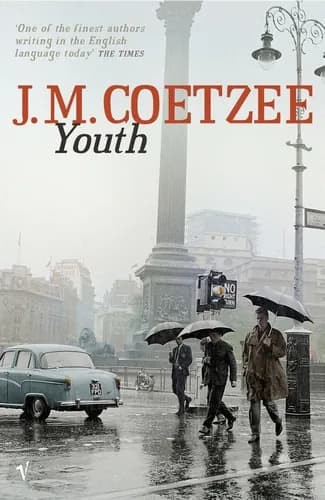
More from this book
How can anyone in England understand what brings people from the far corners of the earth to die on a wet, miserable island which they detest and to which they have no ties? — Chapter 18, page 148.
Once upon a time, when he was still an innocent child, he believed that cleverness was the only yardstick that mattered, that as long as he was clever enough he would attain everything he desired. Going to university put him in his place. The university showed him he was not the cleverest, not by a long chalk. — Chapter 8, page 65.
He would like to believe there is enough pity in the air for black people and their lot, enough of a desire to deal honourably with them, to make up for the cruelty of the laws. But he knows it is not so. Between black and white there is a gulf fixed. Deeper than pity, deeper than honourable dealings, deeper even than goodwill, lies an awareness on both sides that people like Paul and himself, with their pianos and violins, are here on this earth, the earth of South Africa, on the shakiest of pretexts. [...] In fact, from Africans in general, even from Coloured people, he feels a curious, amused tenderness emanating: a sense that he must be a simpleton, in need of protection, if he imagined he can get by on the basis of straight looks and honourable dealings when the ground beneath his feet is soaked with blood and the vast backward depth of history rings with shouts of anger. — Chapter 2, page 17.

