Quotes
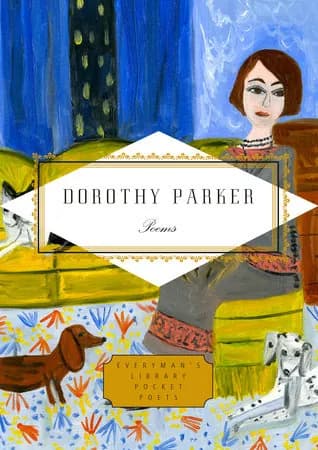
Almost overnight, Dorothy Parker was transformed from a woman of letters into a gin-soaked quote machine, with a martini in one hand and a dagger in the other. p. xiii
The novels I have been writing lately are the kind I wrote in the 1950s. (I have been criticized for this by some critics, but the day I pay attention to critics is the day the sky will fall.)
p. 77
In writing a science fiction novel, you must invent a futuristic social structure which is complex enough to be interesting in itself apart from the story and which is self-consistent. You must also invent a plot that works only within that social structure. The plot must develop without unduly obscuring the description of the social structure, and the social structure must be described without unduly slowing the plot.
Making a science fiction novel fulfill this double purpose is difficult even for an experienced and talented old hand such as myself. Every other kind of writing is easier than science fiction.
p. 265
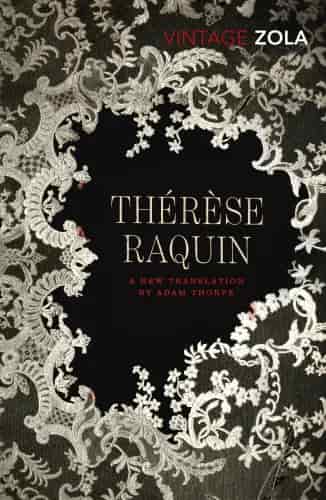
The critics greeted this book with a churlish and horrified outcry. Certain virtuous people, in newspapers no less virtuous, made a grimace of disgust as they picked it up with the tongs to throw it into the fire. Even the minor literary reviews, the ones that retail nightly the tittle-tattle from alcoves and private rooms, held their noses and talked of filth and stench. I am not complaining about this reception; on the contrary I am delighted to observe that my colleagues have such maidenly susceptibilities.
 Thérèse Raquin
A character is never the author who created him. It is quite likely, however, that an author may be all his characters simultaneously.
p. 86
Fools have a habit of believing that everything written by a famous author is admirable. For my part I read only to please myself and like only what suits my taste.
Many of my friends are under the impression that I write these humorous nothings in idle moments when the wearied brain is unable to perform the serious labours of the economist. My own experience is exactly the other way. The writing of solid, instructive stuff fortified by facts and figures is easy enough. There is no trouble in writing a scientific treatise on the folk-lore of Central China, or a statistical enquiry into the declining population of Prince Edward Island. But to write something out of one's own mind, worth reading for its own sake, is an arduous contrivance only to be achieved in fortunate moments, few and far between. Personally, I would sooner have written "Alice in Wonderland" than the whole Encyclopaedia Britannica.
Persons attempting to find a motive in this narrative will be prosecuted; persons attempting to find a moral in it will be banished; persons attempting to find a plot in it will be shot.
BY ORDER OF THE AUTHOR.
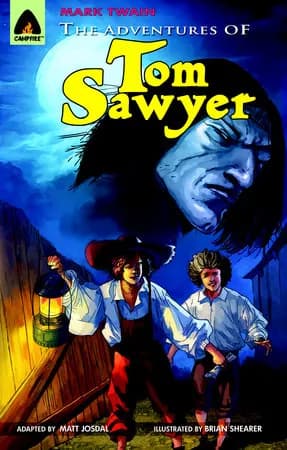
When one writes a novel about grown people, he knows exactly where to stop—that is, with a marriage; but when he writes of juveniles, he must stop where he best can.
All men have heard of the Mormon Bible, but few except the "elect" have seen it, or, at least, taken the trouble to read it. I brought away a copy from Salt Lake. The book is a curiosity to me, it is such a pretentious affair, and yet so "slow," so sleepy; such an insipid mess of inspiration. It is chloroform in print. If Joseph Smith composed this book, the act was a miracle — keeping awake while he did it was, at any rate. If he, according to tradition, merely translated it from certain ancient and mysteriously-engraved plates of copper, which he declares he found under a stone in an out-of-the-way locality, the work of translating was equally a miracle, for the same reason.
p. 127
A whole is that which has beginning, middle, and end.
A tragedy, then, is the imitation of an action that is serious and also, as having magnitude, complete in itself; in language ... not in a narrative form; with incidents arousing pity and fear, wherewith to accomplish its catharsis of such emotions.