Quotes
It is not that love sometimes makes mistakes, but that it is, essentially, a mistake. We fall in love when our imagination projects nonexistent perfections on to another person. One day the phantasmagoria vanishes, and with it love dies.
Imagination should be used for something other than pondering murder, don’t you think?
They did not realize that reality must prove itself again and again to questioners, and that it is the fantasy which goes on without contradiction, without having to prove itself under logical rigour. The idea of asking questions was almost impossible; but only almost.
p. 275
“I came," she said, "hoping you could talk me out of a fantasy. "Cherish it!" cried Hilarious, fiercely. "What else do any of you have? Hold it tightly by it's little tentacle, don't let the Freudians coax it away or the pharmacists poison it out of you. Whatever it is, hold it dear, for when you lose it you go over by that much to the others. You begin to cease to be.”
Maybe we should develop a Crayola bomb as our next secret weapon. A happiness weapon. A Beauty Bomb. And every time a crisis developed, we would launch one. It would explode high in the air — explode softly — and send thousands, millions, of little parachutes into the air. Floating down to earth — boxes of Crayolas. And we wouldn't go cheap either — not little boxes of eight. Boxes of sixty-four, with the sharpener built right in. With silver and gold and copper, magenta and peach and lime, amber and umber and all the rest. And people would smile and get a little funny look on their faces and cover the world with imagination instead of death. A child who touched one wouldn't have his hand blown off.
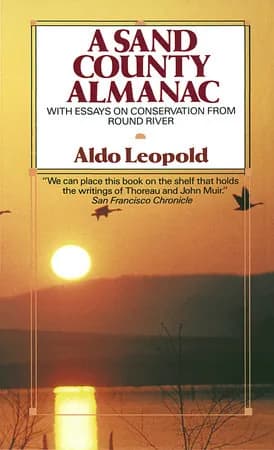
The trophy-recreationist has peculiarities that contribute in subtle ways to his own undoing. To enjoy he must possess, invade, appropriate. Hence the wilderness that he cannot personally see has no value to him. Hence the universal assumption that an unused hinterland is rendering no service to society. To those devoid of imagination a blank place on the map is a useless waste; to others, the most valuable part.
p. 176
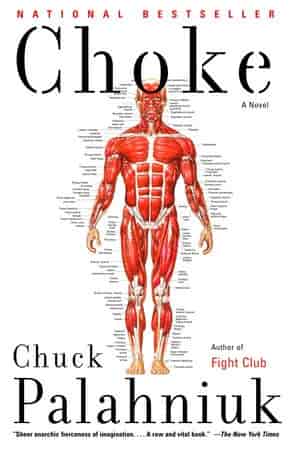
Nothing is as perfect as you can imagine it.
Here in your mind you have complete privacy. Here there's no difference between what is and what could be.
The unreal is more powerful than the real. Because nothing is as perfect as you can imagine it. Because it's only intangibles, ideas, concepts, beliefs, fantasies that last. Stone crumbles. Wood rots. People, well, they die. But things as fragile as a thought, a dream, a legend, they can go on and on. If you can change the way people think. The way they see themselves. The way they see the world. You can change the way people live their lives. That’s the only lasting thing you can create.
I’ll make my report as if I told a story, for I was taught as a child on my homeworld that Truth is a matter of the imagination. The soundest fact may fail or prevail in the style of its telling: like that singular organic jewel of our seas, which grows brighter as one woman wears it and, worn by another, dulls and goes to dust. Facts are no more solid, coherent, round, and real than pearls are. But both are sensitive.
p. 1
You just think lovely wonderful thoughts and they lift you up in the air.
Culture is the attempt by man to realize the conceivable in the possible. Man’s consciousness of himself within his environment distinguishes him from the lower animals, and turns him into the only animal capable of culture. This consciousness, his highest faculty, allows him to project mentally states of being that do not exist at the moment. Able to construct a past and future, he becomes a creature of time – a historian and a prophet. More than this, he can imagine objects and states of being that have never existed and may never exist in the real world – he becomes a maker of art. Thus, for example, though the ancient Greeks did not know how to fly, still they could imagine it. The myth of Icarus was the formulation in fantasy of their conception of the state ‘flying’. But man was not only able to project the conceivable into fantasy. He also learned to impose it on reality: by accumulating knowledge, learning experience, about that reality and how to handle it, he could shape it to his liking. This accumulation of skills for controlling the environment, technology, is another means to reaching the same end, the realization of the conceivable in the possible.
p. 172