Quotes about home
84 quotes · 65 authors
Quotes
Home is collecting stories, writing them down, and retelling them. Home is writing, and it grounds, sustains, and nourishes me. Home is the page. The one place I always, always come back to.
Home became the liminal space in between-between identities, between cultures, between languages- and I was content claiming that space as my own, pleased to be different.
Every time she kissed him, every time he opened his arms and she crawled into them, felt like a miracle. Coming to her made him feel perfectly welcomed, perfectly at home, as he had never in his life felt before. (p40)
The hero's home has its own magic. (p81)
That’s all that was left of the life I’d had here: a puzzle whose rules I would never understand, because they were not rules at all but a kind of cage meant to enclose me. I could stay, and search for what had been home, or I could go, now, before the walls shifted and the way out was shut.
p. 310
The house kept its own time, like the old-fashioned grandfather clock in the living room. People who happened by raised the weights, and as long as the weights were wound, the clock continued ticking away. But with people gone and the weights unattended, whole chunks of time were left to collect in deposits of faded life on the floor.
My troubles are all over, and I am at home; and often before I am quite awake, I fancy I am still in the orchard at Birtwick, standing with my old friends under the apple trees.
p. 247
In the deserts, however arid, I have never felt homesick for green fields and woods in spring, but now that I was in England I longed with an ache that was almost physical to be back in Arabia.
p. 187
Home is a damaged word, bruisable as fruit, in the cruel glossaries of the language I choose to describe the long, fearful march of my childhood.
p. 45
Home was a dream she’d had yesterday. A place where children used to play. Among towers near the mountains, by a river, on curving sweeps of white or golden sand beside a palace at the edge of the sea.
p. 225
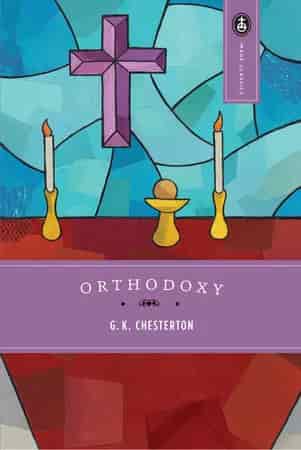
This at least seems to me the main problem for philosophers, and is in a manner the main problem of this book. How can we contrive to be at once astonished at the world and yet at home in it? How can this queer cosmic town, with its many-legged citizens, with its monstrous and ancient lamps, how can this world give us at once the fascination of a strange town and the comfort and honour of being our own town? To show that a faith or a philosophy is true from every standpoint would be too big an undertaking even for a much bigger book than this; it is necessary to follow one path of argument; and this is the path that I here propose to follow. I wish to set forth my faith as particularly answering this double spiritual need, the need for that mixture of the familiar and the unfamiliar which Christendom has rightly named romance. For the very word "romance" has in it the mystery and ancient meaning of Rome. Any one setting out to dispute anything ought always to begin by saying what he does not dispute. Beyond stating what he proposes to prove he should always state what he does not propose to prove. The thing I do not propose to prove, the thing I propose to take as common ground between myself and any average reader, is this desirability of an active and imaginative life, picturesque and full of a poetical curiosity, a life such as western man at any rate always seems to have desired. If a man says that extinction is better than existence or blank existence better than variety and adventure, then he is not one of the ordinary people to whom I am talking. If a man prefers nothing I can give him nothing. But nearly all people I have ever met in this western society in which I live would agree to the general proposition that we need this life of practical romance; the combination of something that is strange with something that is secure. We need so to view the world as to combine an idea of wonder and an idea of welcome. We need to be happy in this wonderland without once being merely comfortable.
For years I have lived in the flats, rooms and garrets of this city, the drawers in the human filing-cabinets that stand in blank rows down the streets of Kensington and Notting Hill. Yet when I talk of home I think of that damp green valley near Stroud where I was brought up. The boys I went to school with have long since grown and fattened, got married and gone bald, and they would probably have to give me a very long look before they recognized me if I turned up there again. But that is my home, and the image of it the day I left it is still more real to me than long years in this crowded capital city.
p. 43