Quotes about children
263 quotes · 149 authors
Quotes
Within the Veil was he born, said I; and there within shall he live, — a Negro and a Negro's son. Holding in that little head — ah, bitterly! — the unbowed pride of a hunted race, clinging with that tiny dimpled hand — ah, wearily! — to a hope not hopeless but unhopeful, and seeing with those bright wondering eyes that peer into my soul a land whose freedom is to us a mockery and whose liberty is a lie.
In the little world in which children have their existence whosoever brings them up, there is nothing so finely perceived and so finely felt, as injustice. It may be only small injustice that the child can be exposed to; but the child is small, and its world is small, and its rocking-horse stands as many hands high, according to scale, as a big-boned Irish hunter.
…not an orphan in the wide world can be so deserted as the child who is an outcast from a living parent’s love.
In the United States, we can see such collisions everywhere... but... most clearly in the schools, where two great technologies confront each other in uncompromising aspect for the control of students' minds. On the one hand, there is the world of the printed word with its emphasis on logic, sequence, history, exposition, objectivity, detachment, and discipline. On the other there is the world of television with its emphasis on imagery, narrative, presentness, simultaneity, intimacy, immediate gratification, and quick emotional response. Children come to school having been deeply conditioned by the biases of television. ...children who cannot organize their thought into logical structure even in a simple paragraph, children who cannot attend to lectures or oral explanations for more than a few minutes at a time... They are failures because there is a media war going on, and they are on the wrong side — at least for the moment.
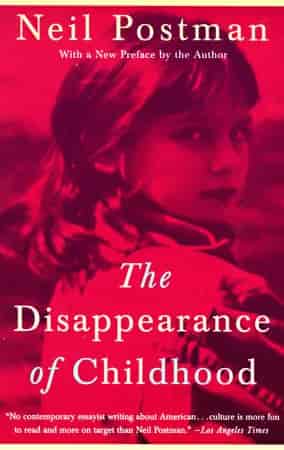
Children are the living messages we send to a time we will not see. From a biological point of view it is inconceivable that any culture will forget that it needs to reproduce itself. But it is quite possible for a culture to exist without a social idea of children. Unlike infancy, childhood is a social artifact, not a biological category.
Somewhere, always, a child is being beaten.
p. 88
As previously announced, we are already studying how to remedy the problems with your schools. The causes of their failures are many, ramified, and deeply entrenched in local politics. The most amazing thing about the situation is that fifty years ago, a century ago, your schools were far better than they are now! They taught fewer subjects and taught the better, with far more success and far less jargon. Everyone agreed then that children were children, that is, impulsive, naive, and ignorant creatures in need of training. No one suggested then that schools or teachers had to put up with hostility or violence or that students had “rights” to such behavior or that freedom of speech included rudeness in the classroom. Persons could be expelled from school and sometimes were. Children were expected to be good citizens and mannerly, and the schools taught citizenship and manners. A necessary adjunct to the school was the truant officer, who sought out and detained any child under eighteen who was not in school, and children did not get out of school until they could read and write and do arithmetic. As is true on so many worlds, the theoreticians and politicians have ruined a good thing.
p. 236
If the children die, well, say they, it is the will of their gods. I do not like such ways; certainly I would not follow such gods.
p. 201
All kids think some other family is perfect.
p. 103
Many children who grow up in our cities are surrounded by the artifacts of science but have good reason to see them as belonging to "the others"; in many cases they are perceived as belonging to the social enemy.
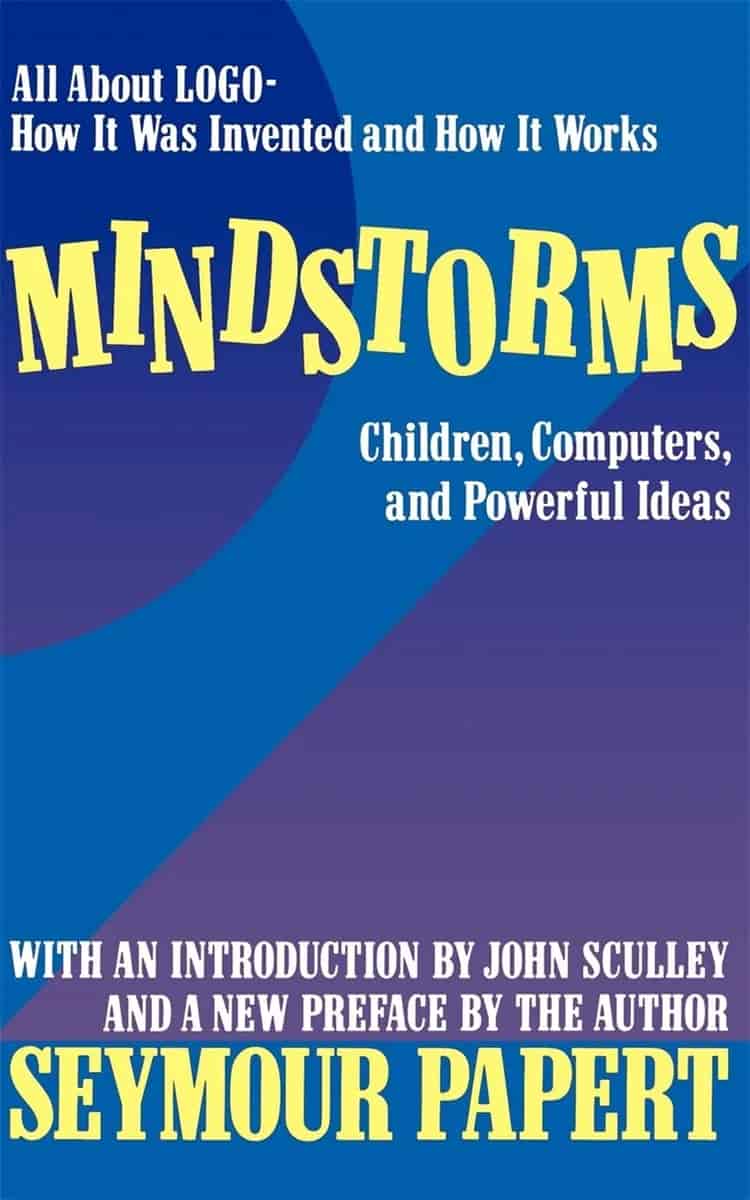
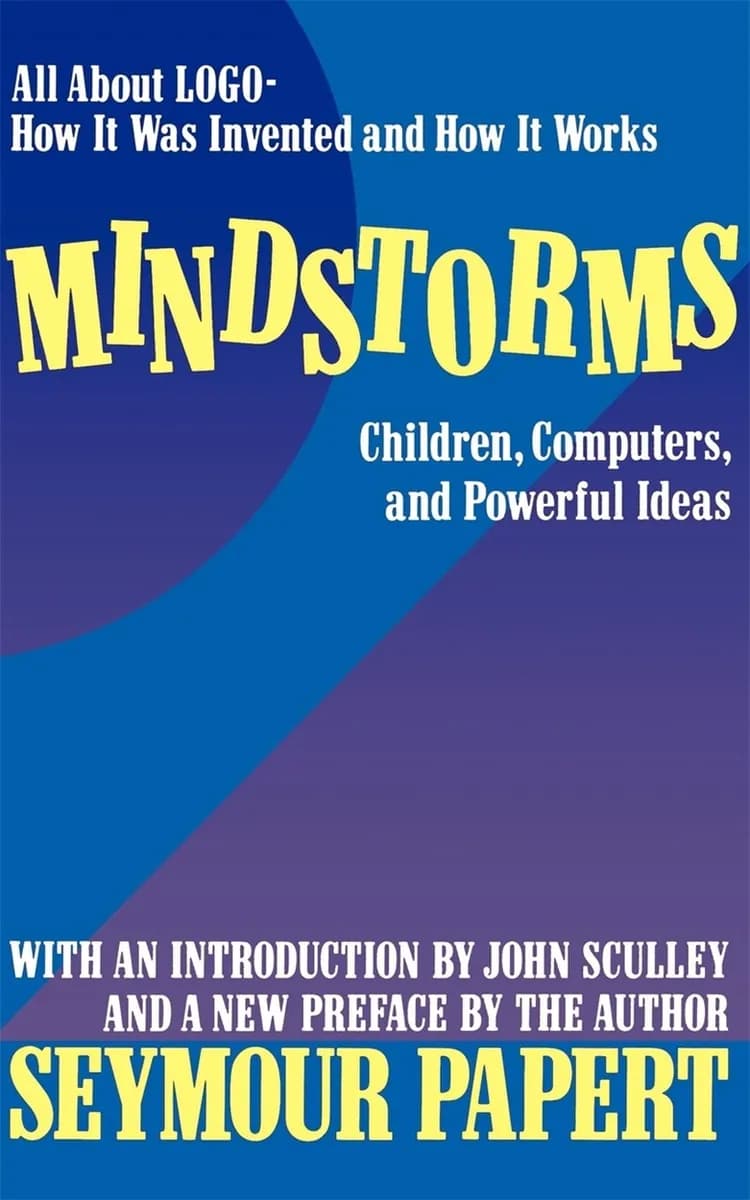
The kind of mathematics foisted on children in schools is not meaningful, fun, or even very useful. This does not mean that an individual child cannot turn it into a valuable and enjoyable personal game. For some the game is scoring grades; for others it is outwitting the teacher and the system. For many, school math is enjoyable in its repetitiveness, precisely because it is so mindless and dissociated that it provides a shelter from having to think about what is going on in the classroom. But all this proves is the ingenuity of children. It is not a justifications for school math to say that despite its intrinsic dullness, inventive children can find excitement and meaning in it.
Our children grow up in a culture permeated with the idea that there are "smart people" and "dumb people". The social construction of the individual is as a bundle of aptitudes. There are people who are "good at math" and people who "can't do math." Everything is set up for children to attribute their first unsuccessful or unpleasant learning experiences to their own disabilities. As a result, children perceive failure as relegating them either to the group of "dumb people" or, more often, to a group of people "dumb at x" (where, as we have pointed out, x often equals mathematics). Within this framework children will define themselves in terms of their limitations, and this definition will be consolidated and reinforced throughout their lives. Only rarely does some exceptional event lead people to reorganize their intellectual self-image in such a way as to open up new perspectives on what is learnable.