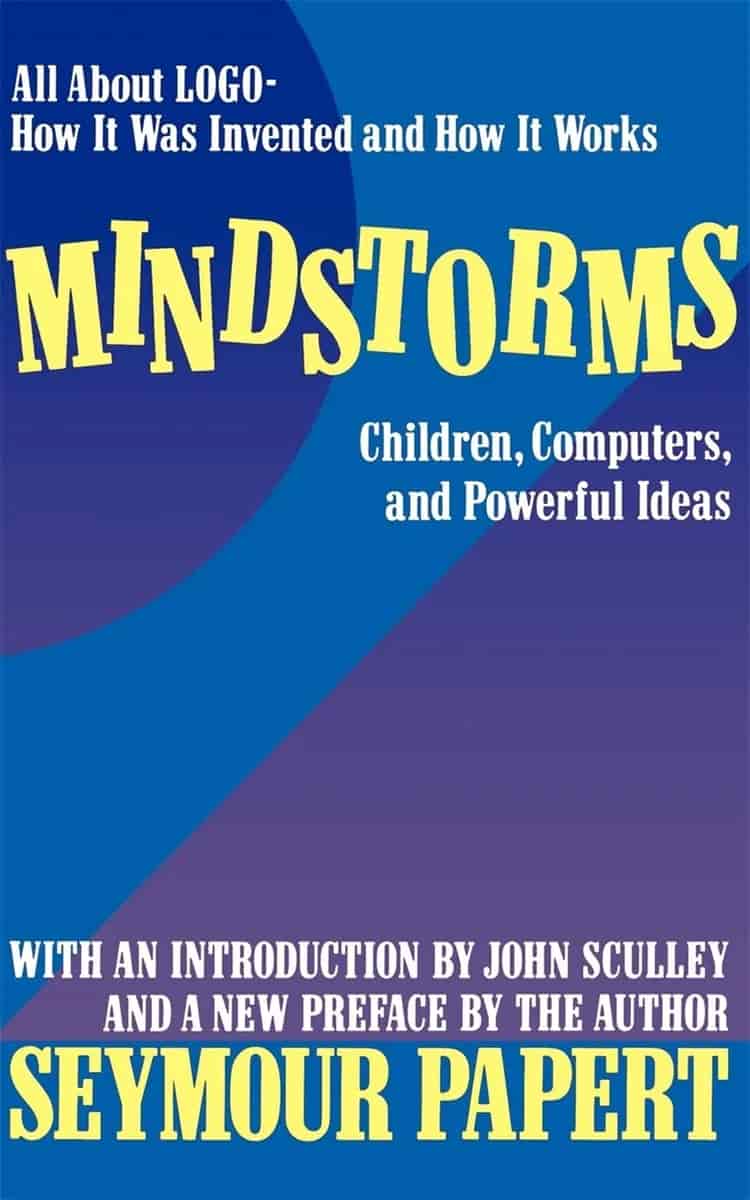
Our children grow up in a culture permeated with the idea that there are "smart people" and "dumb people"… — Seymour A. Papert
Our children grow up in a culture permeated with the idea that there are "smart people" and "dumb people". The social construction of the individual is as a bundle of aptitudes. There are people who are "good at math" and people who "can't do math." Everything is set up for children to attribute their first unsuccessful or unpleasant learning experiences to their own disabilities. As a result, children perceive failure as relegating them either to the group of "dumb people" or, more often, to a group of people "dumb at x" (where, as we have pointed out, x often equals mathematics). Within this framework children will define themselves in terms of their limitations, and this definition will be consolidated and reinforced throughout their lives. Only rarely does some exceptional event lead people to reorganize their intellectual self-image in such a way as to open up new perspectives on what is learnable.
Source: Wikiquote · CC BY-SA 4.0
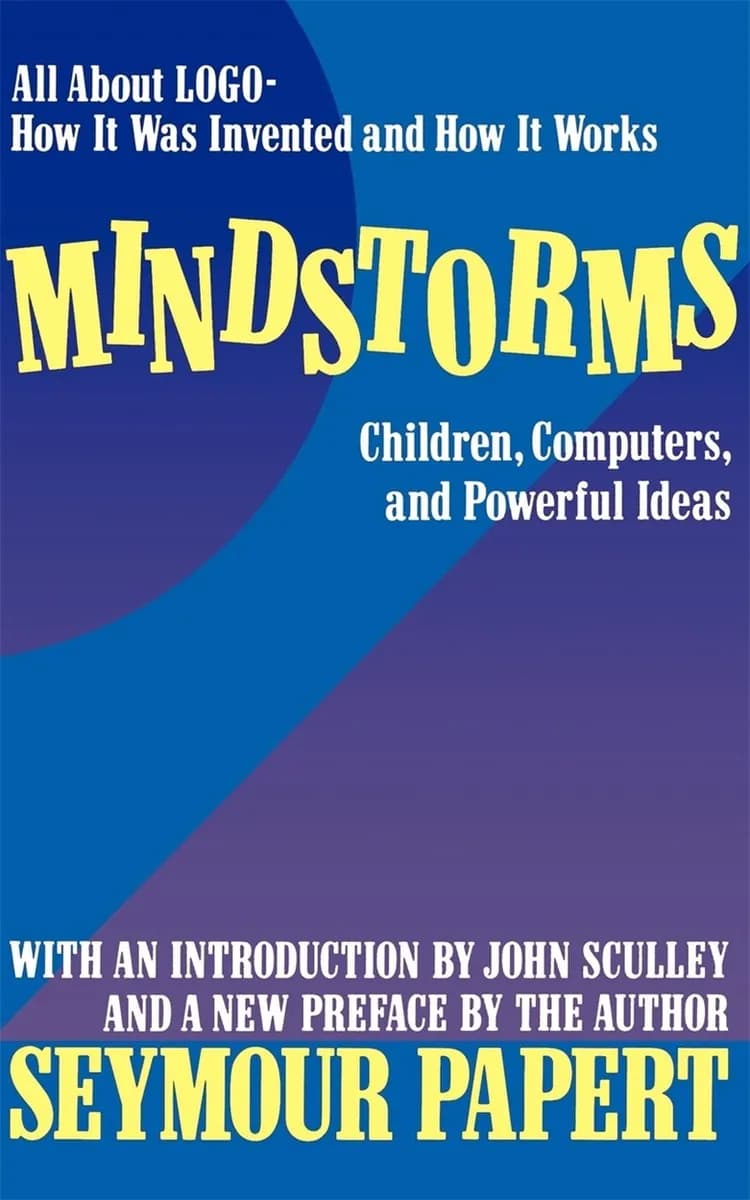
More from this book
In many schools today, the phrase "computer-aided instruction" means making the computer teach the child. One might say the computer is being used to program the child. In my vision, the child programs the computer and, in doing so, both acquires a sense of master over a piece of the most modern and powerful technology and establishes an intimate contact with some of the deepest ideas from science, from mathematics, and from the art of intellectual model building.
One might ask why the teachers do not notice the difficulty children have in learning BASIC. The answer is simple: Most teachers do not expect high performance from most students, especially in a domain of work that appears to be as "mathematical" and "formal" as programming. Thus the culture's general perception of mathematics as inaccessible bolsters the maintenance of BASIC, which in turn confirms these perceptions.
I have asked many teachers and parents what they thought mathematics to be and why it was important to learn it. Few held a view of mathematics that was sufficiently coherent to justify devoting several thousand hours of a child's life to learning it, and children sense this. When a teacher tells a student that the reason for those many hours of arithmetic is to be able to check the change at the supermarket, the teacher is simply not believed. Children see such "reasons" as one more example of adult double talk. The same effect is produced when children are told school math is "fun" when they are pretty sure that teachers who say so spend their leisure hours on anything except this allegedly fun-filled activity. Nor does it help to tell them that they need math to become scientists---most children don't have such a plan. The children can see perfectly well that the teacher does not enjoy math any more than they do and that the reason for doing it is simply that it has been inscribed into the curriculum. All of this erodes children's confidence in the adult world and the process of education. And I think it introduces a deep element of dishonestly into the education relationship.