Leafy Quotes
Recently added
The newest book quotes in the Leafy Quotes collection — passages readers have just added, each with its author, book and the page it came from.
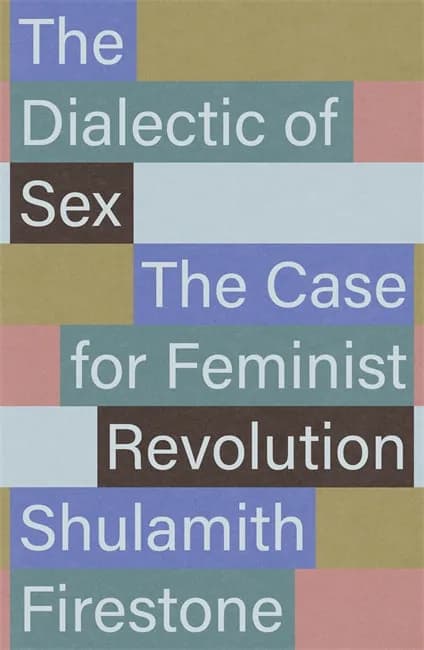
To live without love in the end proves intolerable to men just as it does to women.
p. 137
I submit that love is essentially a much simpler phenomenon – it becomes complicated, corrupted, or obstructed by an unequal balance of power. We have seen that love demands a mutual vulnerability or it turns destructive: the destructive effects of love occur only in a context of inequality. But because sexual inequality has remained a constant – however its degree may have varied – the corruption 'romantic' love became characteristic of love between the sexes.
p. 130
An artist can never know in advance just how his vision might be articulated in reality.
p. 173
Another scientific development that we find difficult to absorb into our traditional value system is the new science of cybernetics: machines that may soon equal or surpass man in original thinking and problem-solving. [...] In the hands of the present establishment there is no doubt that the machine could be used – is being used – to intensify the apparatus of repression and to increase established power. But again, as in the issue of population control, misuse of science has often obscured the value of science itself. In this case, though perhaps the response may not be quite so hysterical and evasive, we still often have the same unimaginative concentration on the evils of the machine itself, rather than a recognition of its revolutionary significance.
p. 200
Culture is the attempt by man to realize the conceivable in the possible. Man’s consciousness of himself within his environment distinguishes him from the lower animals, and turns him into the only animal capable of culture. This consciousness, his highest faculty, allows him to project mentally states of being that do not exist at the moment. Able to construct a past and future, he becomes a creature of time – a historian and a prophet. More than this, he can imagine objects and states of being that have never existed and may never exist in the real world – he becomes a maker of art. Thus, for example, though the ancient Greeks did not know how to fly, still they could imagine it. The myth of Icarus was the formulation in fantasy of their conception of the state ‘flying’. But man was not only able to project the conceivable into fantasy. He also learned to impose it on reality: by accumulating knowledge, learning experience, about that reality and how to handle it, he could shape it to his liking. This accumulation of skills for controlling the environment, technology, is another means to reaching the same end, the realization of the conceivable in the possible.
p. 172
The most important characteristic to be maintained in any revolution is flexibility.
p. 227
Women and love are underpinnings. Examine them and you threaten the very structure of culture.
p. 126
Being unable to love is hell.
p. 136
The ideology of school was the ideology of childhood. It operated on the assumption that children needed"discipline," that they were special creatures who had to be handled in a special way (child psych., child ed., etc.) and that to facilitate this they should be corralled in a special place with tie own kind, and with an age group as restricted to their own as possible.
p. 87
The classic trap for any revolutionary is always, ‘What’s your alternative?’ But even if you could provide the interrogator with a blueprint, this does not mean he would use it: in most cases he is not sincere in wanting to know. In fact this is a common offensive, a technique to deflect revolutionary anger and turn it against itself. Moreover, the oppressed have no job to convince all people. All they need know is that the present system is destroying them.
p. 226
Self-regulation is the basis of freedom, and dependence the origin of inequality.
p. 97
Bliss in love is seldom the case: for every successful contemporary love experience, for every short period of enrichment, there are ten destructive love experiences, post-love ‘downs’ of much longer duration – often resulting in the destruction of the individual, or at least an emotional cynicism that makes it difficult or impossible ever to love again.
p. 128