Leafy Quotes
Recently added
The newest book quotes in the Leafy Quotes collection — passages readers have just added, each with its author, book and the page it came from.
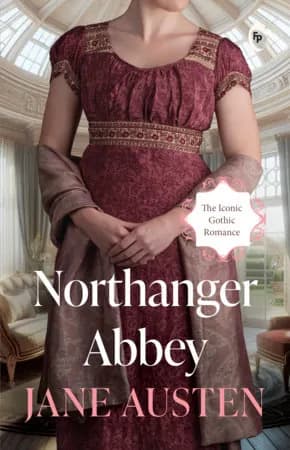
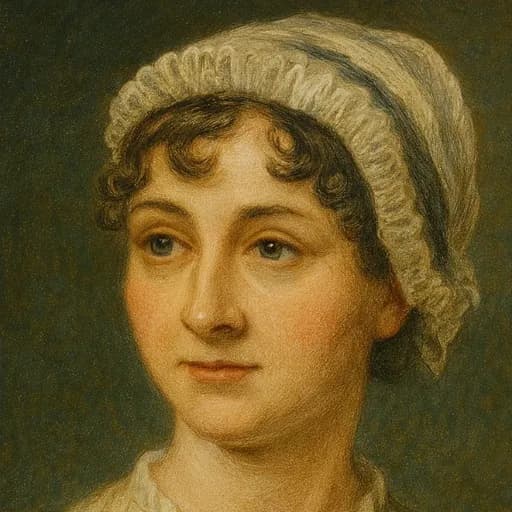
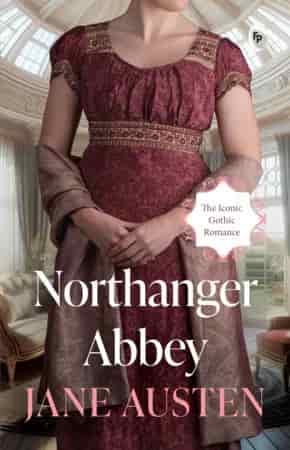
No man is offended by another man’s admiration of the woman he loves; it is the woman only who can make it a torment., p. 302, 2013, en:s:Northanger Abbey/Chapter 19
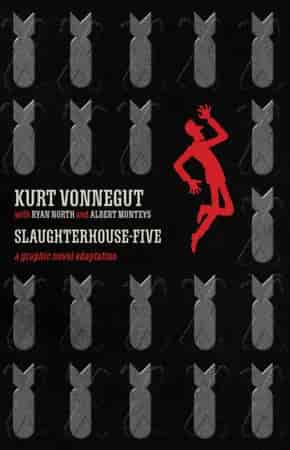
"I think the climax of the book will be the execution of poor old Edgar Derby," I said. "The irony is so great. A whole city gets burned down, and thousands of people are killed. And then this one American foot soldier is arrested in the ruins for taking a teapot. And he's given a regular trial, and then he's shot by a firing squad." (pp. 4-5)
"You were just babies then!" she said.
"What?" I said.
"You were just babies in the war — like the ones upstairs!"
I nodded that this was true. We had been foolish virgins in the war, right at the end of childhood.
"But you're not going to write it that way, are you." This wasn't a question. It was an accusation.
"I — I don't know," I said.
"Well I know," she said. "You'll pretend you were men instead of babies, and you'll be portrayed in the movies by Frank Sinatra and John Wayne or some of those other glamorous, war-loving, dirty old men. And war will look just wonderful, so we'll have a lot more of them. And they'll be fought by babies like the babies upstairs."
So then I understood. It was war that made her so angry. She didn't want her babies or anybody else's babies killed in wars. And she thought wars were partly encouraged by books and movies.
So I held up my right hand and I made her a promise: "Mary," I said, "I don't think this book of mine is ever going to be finished. I must have written five thousand pages by now, and thrown them all away. If I ever do finish it, though, I give you my word of honor: there won't be a part for Frank Sinatra or John Wayne.
"I tell you what," I said, "I'll call it The Children's Crusade."
She was my friend after that.
p. 14
The mere habit of learning to love is the thing; and a teachableness of disposition in a young lady is a great blessing.
Mrs. Allen was one of that numerous class of females, whose society can raise no other emotion than surprise at there being any men in the world who could like them well enough to marry them. p. 34, 2013, en:s:Northanger Abbey/Chapter 2
“As far as I have had opportunity of judging, it appears to be that the usual style of letter-writing among women is faultless, except in three particulars.”
“And what are they?”
“A general deficiency of subject, a total inattention to stops, and a very frequent ignorance of grammar.” p. 52, 2013
He had a way of anticipating memories he particularly did not want to have. That memory would be as unbearable as things are when there is nothing else to do but live with them.
Why were there an infinite number of ways to feel awkward? He believed this was a theological question having to do with man's place in the universe. But when he felt the true force of the question, he was always in the middle of an embarrassing emergency of some kind that paralyzed reflection.
She said, "Meaninglessness would come as a terrible blow to most people. It would be full of significance for them. So it wouldn't be meaningless. That's where I always end up. Once you ask if there is meaning, the only answer is yes. You can't get away from it."
"There is nothing I would not do for those who are really my friends. I have no notion of loving people by halves; it is not my nature." - Isabella Thorpe, en:s:Northanger Abbey/Chapter 6
But prison was terrible. It reduced him to absolute Jack, no matter what anyone thought of him. His great problem, after all, was other people. Prison was full of them.
Let us leave it to the reviewers to abuse such effusions of fancy at their leisure, and over every new novel to talk in threadbare strains of the trash with which the press now groans. Let us not desert one another; we are an injured body. Although our productions have afforded more extensive and unaffected pleasure than those of any other literary corporation in the world, no species of composition has been so much decried. From pride, ignorance, or fashion, our foes are almost as many as our readers. And while the abilities of the nine-hundredth abridger of the History of England, or of the man who collects and publishes in a volume some dozen lines of Milton, Pope, and Prior, with a paper from the Spectator, and a chapter from Sterne, are eulogized by a thousand pens — there seems almost a general wish of decrying the capacity and undervaluing the labour of the novelist, and of slighting the performances which have only genius, wit, and taste to recommend them. "I am no novel-reader — I seldom look into novels — Do not imagine that I often read novels — It is really very well for a novel." Such is the common cant. "And what are you reading, Miss — ?" "Oh! It is only a novel!" replies the young lady, while she lays down her book with affected indifference, or momentary shame. "It is only Cecilia, or Camilla, or Belinda"; or, in short, only some work in which the greatest powers of the mind are displayed, in which the most thorough knowledge of human nature, the happiest delineation of its varieties, the liveliest effusions of wit and humour, are conveyed to the world in the best-chosen language.