Leafy Quotes
Recently added
The newest book quotes in the Leafy Quotes collection — passages readers have just added, each with its author, book and the page it came from.
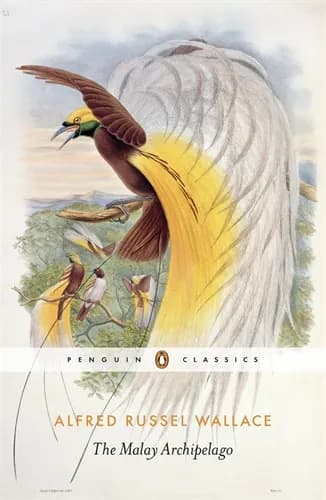
We permit absolute possession of the soil of our country, with no legal rights of existence on the soil to the vast majority who do not possess it. A great landholder may legally convert his whole property into a forest or a hunting-ground, and expel every human being who has hitherto lived upon it. In a thickly-populated country like England, where every acre has its owner and its occupier, this is a power of legally destroying his fellow-creatures; and that such a power should exist, and be exercised by individuals, in however small a degree, indicates that, as regards true social science, we are still in a state of barbarism.
I received an impassioned letter from Sonoko. There was no doubt that she was truly in love. I felt jealous. Mine was the unbearable jealousy a cultured pearl must feel toward a genuine one. Or can there be such a thing in this world as a man who is jealous of the woman who loves him, precisely because of her love?
p. 208
It’s even more important to prosecute police who’ve broken the law than it is to prosecute anybody else, because otherwise nobody trusts the police.
p. 266
I only tell them that because that’s what they like to hear, what they want to hear. That’s one of the lessons I’ve learned, isn’t it? You can go a long way just telling people what they want to hear. Of course, you got to be careful, and you got to choose the right people, but still, know that I mean?
p. 16
One of the wisest things anybody ever said to me was that if all you ever care about is money, money is all that will ever care for you.
p. 65
The old and powerful never want to let go. They always think they’re both profoundly indispensable and uniquely right. They are always wrong. Part of the function of ageing and dying is to let the next generation have its say, its time in the sun, to sweep away the mistakes of the previous age while, if they’re lucky, retaining the advances made and the benefits accrued.
p. 331
There is a saying that some foolish people believe: what does not kill you makes you stronger. I know for a fact, having seen the evidence – indeed, often enough having been the cause of it – that what does not kill you can leave you maimed. Or crippled, or begging for death or in one of those ghastly twilights experienced – and one has to hope that that is entirely not the right word – by those in a locked-in or persistent vegetative state. In my experience the same people also believe that everything happens for a reason. Given the unalleviatedly barbarous history of every world we have ever encountered with anything resembling Man in it, this is a statement of quite breathtakingly casual retrospective and ongoing cruelty, tantamount to the condonation of the most severe and unforgivable sadism.
p. 274
People will generally make whatever compromises with the world they think necessary still to convince themselves that they are the most important thing in it.
p. 328
We live in an infinity of infinities, and we reshape our lives with every passing thought and each unconscious action, threading an ever-changing course through the myriad possibilities of existence. I lie here and ponder the events and decisions that led me to this point, the precise sequence of thoughts and actions that ended – for now – with me having nothing more constructive or urgent to do than think about those very eventualities.
p. 57
Whether the Dweller List existed or not, everybody appeared to be acting as though it did, and that was all that mattered. It was a bit like money; all about trust, about faith. The value lay in what people believed, not in anything intrinsic.
p. 278
Lying here, during all this time after my own small fall, it has become my conviction that things mean pretty much what we want them to mean. We’ll pluck significance from the least consequential happenstance if it suits us and happily ignore the most flagrantly obvious symmetry between separate aspects of our lives if it threatens some cherished prejudice or cosily comforting belief; we are blindest to precisely whatever might be most illuminating.
p. 3
It is an insane conceit. Power always drives to perpetuate itself, but this is a phenomenal extra distillation of idiocy. Only people already riddled with the internalised special pleading and self-importance that too much power brings could even start to imagine that this might be in any way sustainable.
p. 331