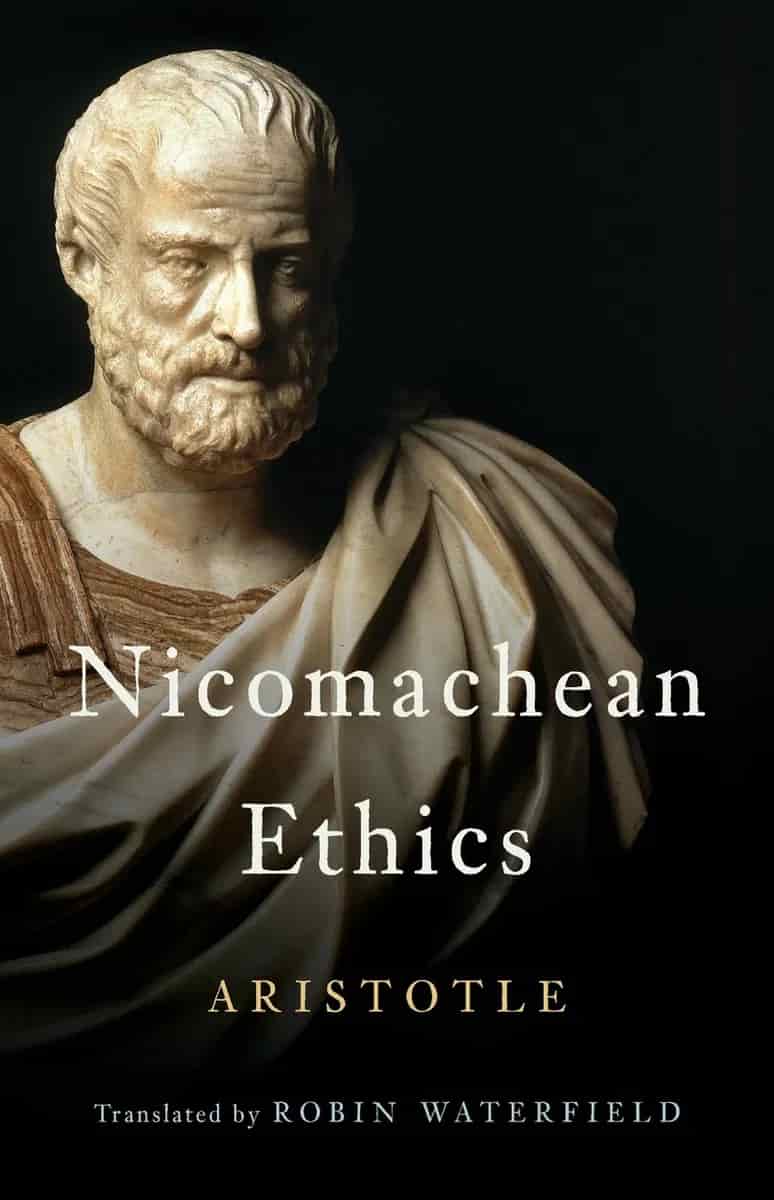
Aristotle
Quotes
It is of the nature of desire not to be satisfied, and most men live only for the gratification of it.
Where some people are very wealthy and others have nothing, the result will be either extreme democracy or absolute oligarchy, or despotism will come from either of those excesses.
Money was intended to be used in exchange, but not to increase at interest. And this term interest, which means the birth of money from money, is applied to the breeding of money because the offspring resembles the parent. Wherefore of all modes of getting wealth this is the most unnatural.
Inferiors revolt in order that they may be equal, and equals that they may be superior. Such is the state of mind which creates revolutions.
The proof that the state is a creation of nature and prior to the individual is that the individual, when isolated, is not self-sufficing; and therefore he is like a part in relation to the whole.
But the greatest thing by far is to have a command of metaphor. This alone cannot be imparted by another; it is the mark of genius, for to make good metaphors implies an eye for resemblances.
Homer has taught all other poets the art of telling lies skillfully.
For the purposes of poetry a convincing impossibility is preferable to an unconvincing possibility.
Let this serve as an outline of the good; for we must presumably first sketch it roughly, and then later fill in the details. But it would seem that any one is capable of carrying on and articulating what has once been well outlined, and that time is a good discoverer or partner in such a work; to which facts the advances of the arts are due; for any one can add what is lacking. And we must also remember what has been said before, and not look for precision in all things alike, but in each class of things such precision as accords with the subject-matter, and so much as is appropriate to the inquiry. For a carpenter and a geometer investigate the right angle in different ways; the former does so in so far as the right angle is useful for his work, while the latter inquires what it is or what sort of thing it is; for he is a spectator of the truth. We must act in the same way, then, in all other matters as well, that our main task may not be subordinated to minor questions. Nor must we demand the cause in all matters alike; it is enough in some cases that the fact be well established, as in the case of the first principles; the fact is the primary thing or first principle. Now of first principles we see some by induction, some by perception, some by a certain habituation, and others too in other ways. But each set of principles we must try to investigate in the natural way, and we must take pains to state them definitely, since they have a great influence on what follows. For the beginning is thought to be more than half of the whole, and many of the questions we ask are cleared up by it.
Now the activity of the practical virtues is exhibited in political or military affairs, but the actions concerned with these seem to be unleisurely. Warlike actions are completely so (for no one chooses to be at war, or provokes war, for the sake of being at war; any one would seem absolutely murderous if he were to make enemies of his friends in order to bring about battle and slaughter); but the action of the statesman is also unleisurely, and-apart from the political action itself—aims at despotic power and honours, or at all events happiness, for him and his fellow citizens—a happiness different from political action, and evidently sought as being different. So if among virtuous actions political and military actions are distinguished by nobility and greatness, and these are unleisurely and aim at an end and are not desirable for their own sake, but the activity of reason, which is contemplative, seems both to be superior in serious worth and to aim at no end beyond itself, and to have its pleasure proper to itself (and this augments the activity), and the self-sufficiency, leisureliness, unweariedness (so far as this is possible for man), and all the other attributes ascribed to the supremely happy man are evidently those connected with this activity, it follows that this will be the complete happiness of man, if it be allowed a complete term of life.
A whole is that which has beginning, middle, and end.
For legislators make the citizens good by forming habits in them, and this is the wish of every legislator, and those who do not effect it miss their mark, and it is in this that a good constitution differs from a bad one.