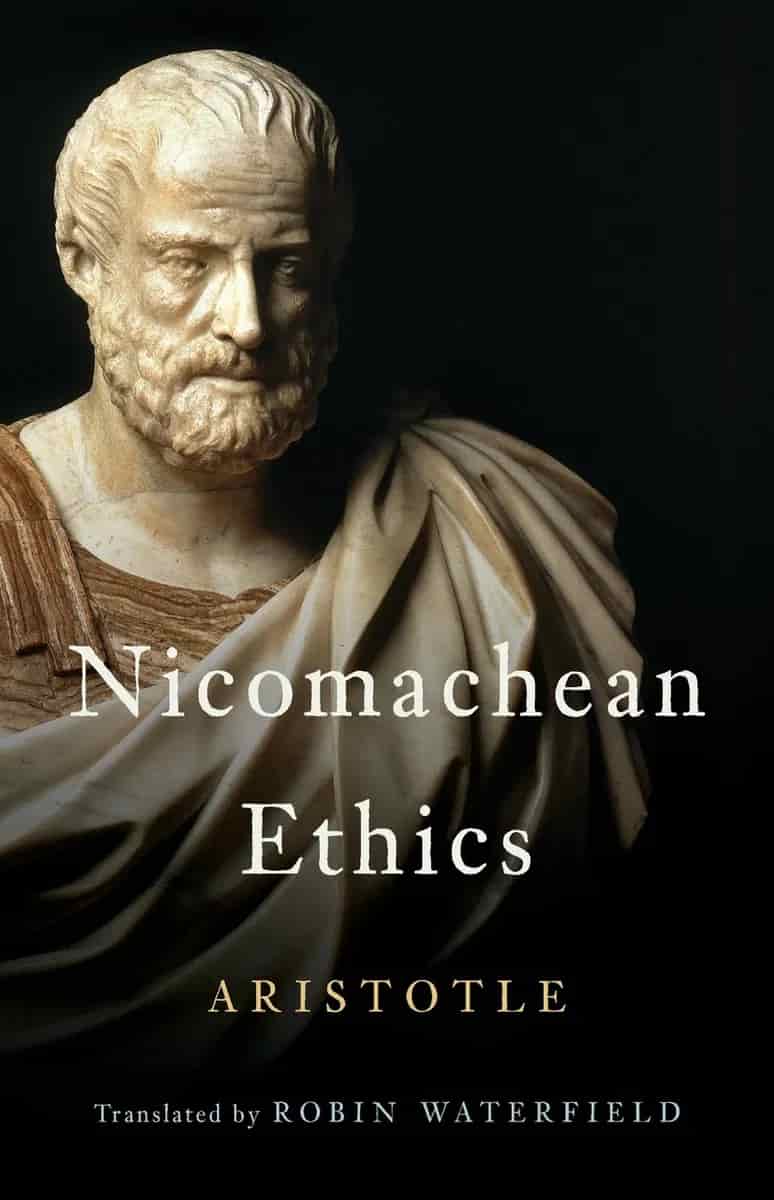
Let this serve as an outline of the good; for we must presumably first sketch it roughly, and then later fill… — Aristotle
Let this serve as an outline of the good; for we must presumably first sketch it roughly, and then later fill in the details. But it would seem that any one is capable of carrying on and articulating what has once been well outlined, and that time is a good discoverer or partner in such a work; to which facts the advances of the arts are due; for any one can add what is lacking. And we must also remember what has been said before, and not look for precision in all things alike, but in each class of things such precision as accords with the subject-matter, and so much as is appropriate to the inquiry. For a carpenter and a geometer investigate the right angle in different ways; the former does so in so far as the right angle is useful for his work, while the latter inquires what it is or what sort of thing it is; for he is a spectator of the truth. We must act in the same way, then, in all other matters as well, that our main task may not be subordinated to minor questions. Nor must we demand the cause in all matters alike; it is enough in some cases that the fact be well established, as in the case of the first principles; the fact is the primary thing or first principle. Now of first principles we see some by induction, some by perception, some by a certain habituation, and others too in other ways. But each set of principles we must try to investigate in the natural way, and we must take pains to state them definitely, since they have a great influence on what follows. For the beginning is thought to be more than half of the whole, and many of the questions we ask are cleared up by it.
Source: Wikiquote · CC BY-SA 4.0
More from this book
For pleasure is a state of soul, and to each man that which he is said to be a lover of is pleasant.... Now for most men their pleasures are in conflict with one another because these are not by nature pleasant, but the lovers of what is noble find pleasant the things that are by nature pleasant; and virtuous actions are such... Happiness then is the best, noblest, and most pleasant thing in the world, and these attributes are not severed as in the inscription at Delos: Most noble is that which is justest, and best is health; but pleasantest is it to win what we love.
Any one can get angry — that is easy — or give or spend money; but to do this to the right person, to the right extent, at the right time, with the right motive, and in the right way, that is not for every one, nor is it easy.
p. 203
Without friends no one would choose to live, though he had all other goods.