Quotes about lies
17 quotes · 5 authors
Quotes
What was the point of spending your life with someone you were always looking for ways to deceive?
Both women, looking different ways, kept shrugging their shoulders, and asking themselves how the deuce the other could tell such woppers!
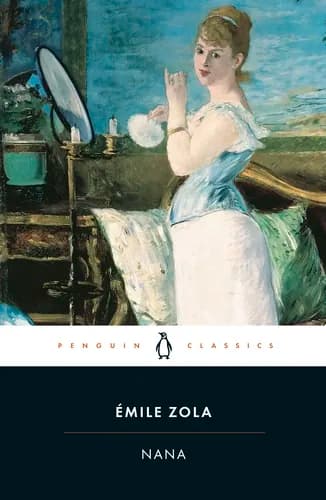 Nana
NanaTruth, like light, blinds. Falsehood, on the contrary, is a beautiful twilight that enhances every object.
'At my age one's got to be sincere. Lying's too much effort.'
Homer has taught all other poets the art of telling lies skillfully.
"What is that gun firing for?" said Boxer.
"To celebrate our victory!" cried Squealer.
"What victory?" said Boxer. His knees were bleeding, he had lost a shoe and split his hoof, and a dozen pellets had lodged themselves in his hind leg.
"What victory, comrade? Have we not driven the enemy off our soil—the sacred soil of Animal Farm?"
"But they have destroyed the windmill. And we had worked on it for two years!"
"What matter? We will build another windmill. We will build six windmills if we feel like it. You do not appreciate, comrade, the mighty thing that we have done. The enemy was in occupation of this very ground that we stand upon. And now—thanks to the leadership of Comrade Napoleon—we have won every inch of it back again!"
"Then we have won back what we had before," said Boxer.
"That is our victory," said Squealer.
For the time being, certainly, it had been found necessary to make a readjustment of rations (Squealer always spoke of it as a "readjustment," never as a "reduction"), but in comparison with the days of Jones, the improvement was enormous. Reading out the figures in a shrill, rapid voice, he proved to them in detail that they had more oats, more hay, more turnips than they had had in Jones's day, that they worked shorter hours, that their drinking water was of better quality, that they lived longer, that a larger proportion of their young ones survived infancy, and that they had more straw in their stalls and suffered less from fleas. The animals believed every word of it. Truth to tell, Jones and all he stood for had almost faded out of their memories. They knew that life nowadays was harsh and bare, that they were often hungry and often cold, and that they were usually working when they were not asleep. But doubtless it had been worse in the old days. They were glad to believe so. Besides, in those days they had been slaves and now they were free, and that made all the difference, as Squealer did not fail to point out.
A few days later, when the terror caused by the executions had died down, some of the animals remembered--or thought they remembered--that the Sixth Commandment decreed "No animal shall kill any other animal." And though no one cared to mention it in the hearing of the pigs or the dogs, it was felt that the killings which had taken place did not square with this. Clover asked Benjamin to read her the Sixth Commandment, and when Benjamin, as usual, said that he refused to meddle in such matters, she fetched Muriel. Muriel read the Commandment for her. It ran: "No animal shall kill any other animal WITHOUT CAUSE." Somehow or other, the last two words had slipped out of the animals' memory. But they saw now that the Commandment had not been violated; for clearly there was good reason for killing the traitors who had leagued themselves with Snowball.
But a few days later Muriel, reading over the Seven Commandments to herself, noticed that there was yet another of them which the animals had remembered wrong. They had thought the Fifth Commandment was "No animal shall drink alcohol," but there were two words that they had forgotten. Actually the Commandment read: "No animal shall drink alcohol TO EXCESS."
About this time there occurred a strange incident which hardly anyone was able to understand. One night at about twelve o'clock there was a loud crash in the yard, and the animals rushed out of their stalls. It was a moonlit night. At the foot of the end wall of the big barn, where the Seven Commandments were written, there lay a ladder broken in two pieces. Squealer, temporarily stunned, was sprawling beside it, and near at hand there lay a lantern, a paint-brush, and an overturned pot of white paint. The dogs immediately made a ring round Squealer, and escorted him back to the farmhouse as soon as he was able to walk. None of the animals could form any idea as to what this meant, except old Benjamin, who nodded his muzzle with a knowing air, and seemed to understand, but would say nothing.
Meanwhile life was hard. The winter was as cold as the last one had been, and food was even shorter. Once again all rations were reduced, except those of the pigs and the dogs. A too rigid equality in rations, Squealer explained, would have been contrary to the principles of Animalism. In any case he had no difficulty in proving to the other animals that they were NOT in reality short of food, whatever the appearances might be.
Whenever anything went wrong it became usual to attribute it to Snowball. If a window was broken or a drain was blocked up, someone was certain to say that Snowball had come in the night and done it, and when the key of the store-shed was lost, the whole farm was convinced that Snowball had thrown it down the well. Curiously enough, they went on believing this even after the mislaid key was found under a sack of meal.