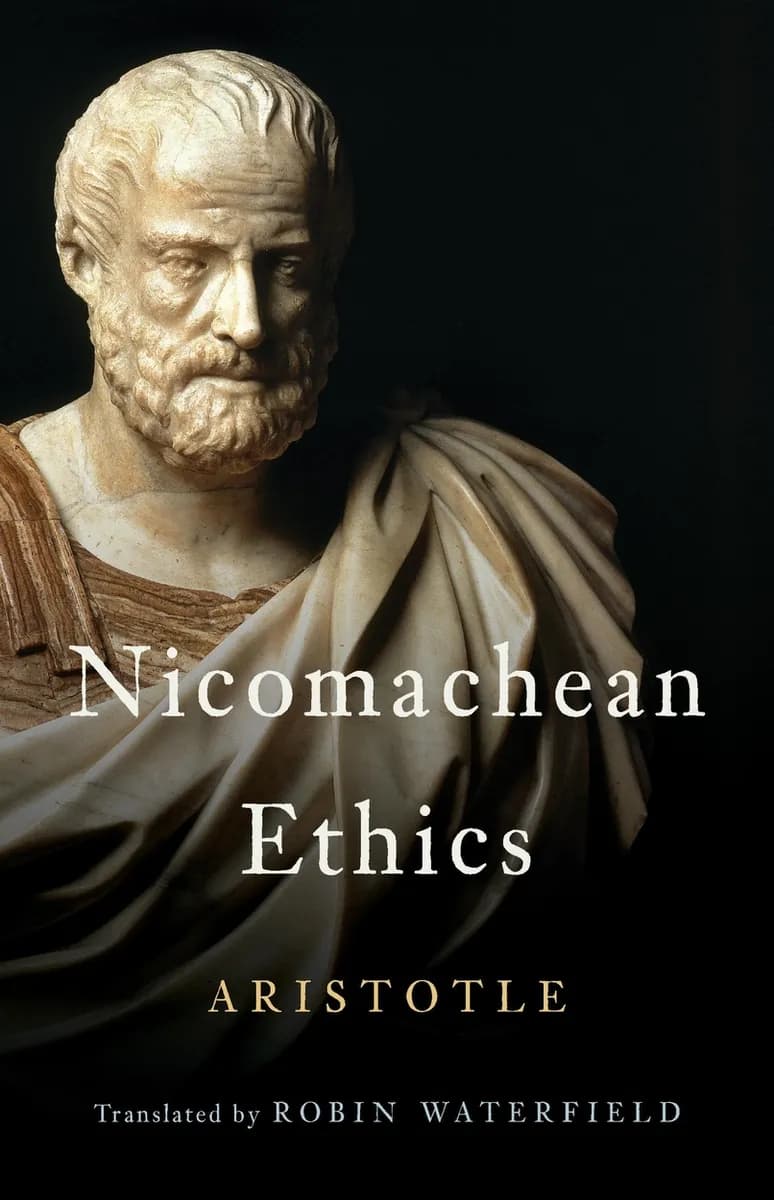
Aristotle
Quotes
Again, it is possible to fail in many ways (for evil belongs to the class of the unlimited ... and good to that of the limited), while to succeed is possible only in one way (for which reason also one is easy and the other difficult—to miss the mark easy, to hit it difficult); for these reasons also, then, excess and defect are characteristic of vice, and the mean of virtue; For men are good in but one way, but bad in many.
If there is some end of the things we do, which we desire for its own sake, clearly this must be the good. Will not knowledge of it, then, have a great influence on life? Shall we not, like archers who have a mark to aim at, be more likely to hit upon what we should? If so, we must try, in outline at least, to determine what it is.
The truly good and wise man will bear all kinds of fortune in a seemly way, and will always act in the noblest manner that the circumstances allow.
When people are friends, they have no need of justice, but when they are just, they need friendship in addition.
.... In a word, acts of any kind produce habits or characters of the same kind. Hence we ought to make sure that our acts are of a certain kind; for the resulting character varies as they vary. It makes no small difference, therefore, whether a man be trained in his youth up in this way or that, but a great difference, or rather all the difference.
It is well said, then, that it is by doing just acts that the just man is produced, and by doing temperate acts the temperate man; without doing these no one would have even a prospect of becoming good. But most people do not do these, but take refuge in theory and think they are being philosophers and will become good in this way, behaving somewhat like patients who listen attentively to their doctors, but do none of the things they are ordered to do.
While both are dear, Piety requires us to honor truth above our friends.
May not we then confidently pronounce that man happy who realizes complete goodness in action, and is adequately furnished with external goods? Or should we add, that he must also be destined to go on living not for any casual period but throughout a complete lifetime in the same manner, and to die accordingly, because the future is hidden from us, and we conceive happiness as an end, something utterly and absolutely final and complete? If this is so, we shall pronounce those of the living who possess and are destined to go on possessing the good things we have specified to be supremely blessed, though on the human scale of bliss.
For some identify happiness with virtue, some with practical wisdom, others with a kind of philosophic wisdom, others with these, or one of these, accompanied by pleasure or not without pleasure; while others include also external prosperity. Now ... it is not probable that these should be entirely mistaken, but rather that they should be right in at least some one respect or even in most respects.
The life of money-making is one undertaken under compulsion, and wealth is evidently not the good we are seeking; for it is merely useful and for the sake of something else.
Everything that depends on the action of nature is by nature as good as it can be, and similarly everything that depends on art or any rational cause, and especially if it depends on the best of all causes. To entrust to chance what is greatest and most noble would be a very defective arrangement.
In cases of this sort, let us say adultery, rightness and wrongness do not depend on committing it with the right woman at the right time and in the right manner, but the mere fact of committing such action at all is to do wrong.