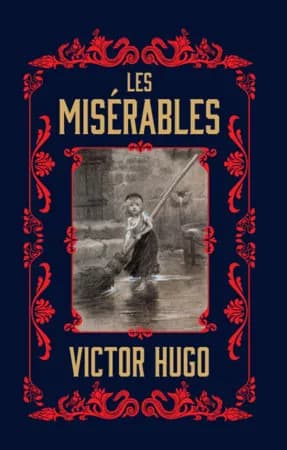
Victor Hugo
Quotes
Nothing is more dangerous than discontinued labor; it is habit lost. A habit easy to abandon, difficult to resume.
Let us lament as over stomachs, over minds which do not eat. If there is anything more poignant than a body agonising for want of bread, it is a soul which is dying of hunger for light.
p. 842
There is but one way of refusing To-morrow, that is to die.
p. 843
Civil war? What does this mean? Is there any foreign war? Is not every war between men, war between brothers? War is modified only by its aim. There is neither foreign war, nor civil war; there is only unjust war and just war.
p. 947
He said to himself that he really had not suffered enough to deserve such radiant happiness, and he thanked God, in the depths of his soul, for having permitted that he, a miserable man, should be so loved by this innocent being.
p. 751
Logic ignores the Almost, just as the sun ignores the candle.
p. 699
His specialty was to succeed in nothing... He was poor, but his fund of good humor was inexhaustible. He soon reached the last sou but never the last burst of laughter. When met by adversity, he saluted that acquaintance cordially, he patted catastrophes on the back; he was so familiar with fatality as to call it by its nick-name.
You speak now like a brave man and an honest man. Courage does not fear crime, and honesty does not fear authority.
p. 652
A fire would cause a dawn, undoubtedly, but why not wait for the break of day?
p. 549
At a certain depth of distress, the poor, in their stupor, groan no longer over evil, and are no longer thankful for good.
p. 798
Happy, even in anguish, is he to whom God has given a soul worthy of love and of grief! He who has not seen the things of this world, and the hearts of men by this double light, has seen nothing, and know nothing of the truth.
p. 727
What can be done in a sepulcher, they agonised, and what can be done in a hell, they sang. For where there is no more hope, song remains.
p. 837