Quotes
Even a modest Basic Income program could become a stepping-stone toward the most profound transformation of all: to unlatch work from livelihood entirely.
How do we create only games that we actually feel like playing, because we can opt out at any time? In the economic field, at least, the answer is obvious. All of the gratuitous sadism of workplace politics depends on one’s inability to say “I quit” and feel no economic consequences.
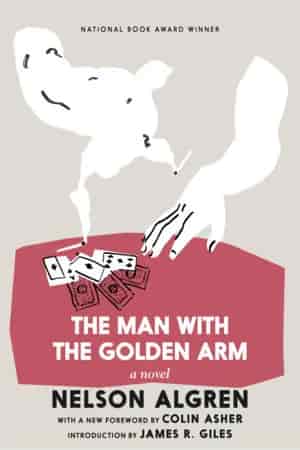
That nothing could lower human dignity faster than manual labor was understood. ‘Go get yourself a lunch bucket and get back in your ditch’ was the ultimate insult on Perdido Street.
He was simply a man who didn't know what to do with himself, for he didn't yet know who he was. It's sometimes easier to find a job than to find oneself and John hadn't yet gotten around to doing the first. How could he know who he was? Some find themselves through joy, some through suffering and some through toil. Johnny had till now tried nothing but whisky. A process which left him feeling like somebody new every day. / [...] He was many men and no man at all. He was a hysterical little bundle of possibilities that could never come true.
“In my dreams I sign chits and file papers,” Nikoros muttered. “Then I awake to sign real chits and file real papers. I imagine my grave marker will be carved as a writing desk. ‘Here lies Nikoros Via Lupa, wifeless and heirless, but gods how he could alphabetize!’”
p. 582
I mean, the question actors most often get asked is how they can bear saying the same things over and over again night after night, but God knows the answer to that is, don’t we all anyway; might as well get paid for it.
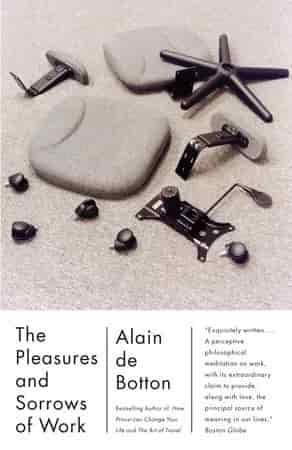
Symons … remarked that the most common and unhelpful illusion plaguing those who came to see him was the idea that they ought somehow, in the normal course of events, to have intuited—long before they had finished their degrees, started families, bought houses and risen to the top of law firms—what they should properly be doing with their lives. They were tormented by a residual notion of having through some error or stupidity on their part missed out on their true calling.
p. 113
I left Symons’s company newly aware of the unthinking cruelty discreetly coiled within the magnanimous bourgeois assurance that everyone can discover happiness through work and love. It isn’t that these two entities are invariably incapable of delivering fulfilment, only that they almost never do so. And when an exception is represented as a rule, our individual misfortunes, instead of seeming to us quasi-inevitable aspects of life, will weigh down on us like particular curses. In denying the natural place reserved for longing and error in the human lot, the bourgeois ideology denies us the possibility of collective consolation for our fractious marriages and our unexploited ambitions, and condemns us instead to solitary feelings of shame and persecution for having stubbornly failed to become who we are.
p. 127
The start of work means the end to freedom, but also to doubt, intensity and wayward desires. The accountant’s ten thousand possibilities have been reduced to an agreeable handful. She has a business card which she hands over in meetings and which tells other people—and, more meaningfully perhaps, reminds her—that she is a Business Unit Senior manager, rather than a vaporous transient consciousness in an incidental universe. How satisfying it is to be held in check by the assumptions of colleagues, instead of being forced to contemplate, in the loneliness of the early hours, all that one might have been and now never will be. … Life is no longer mysterious, sad, haunting, touching, confusing or melancholy; it is a practical stage for clear-eyed action.
p. 238
The real issue is not whether baking biscuits is meaningful, but the extent to which the activity can seem to be so after it has been continuously stretched and subdivided across five thousand lives.
p. 80
Workers were occupied with the ancient task of trying to stay alive, which simply happened to require, in a consumer economy overwhelmingly based on the satisfaction of peripheral desires, a series of activities all to easily confused with clownishness.
p. 97
The unremitting division of labour resulted in admirable levels of productivity. The company’s success appeared to bear out the principles of efficiency laid down at the turn of the twentieth century by the Italian economist Vilfredo Pareto, who theorized that a society would grow wealthy to the extent that its members forfeited general knowledge in favour of fostering individual ability in narrowly constricted fields. In an ideal Paretan economy, jobs would be ever more finely subdivided to allow for the accumulation of complex skills, which would then be traded among workers. … But however great the economic advantages of segmenting the elements of an afternoon’s work into a range of forty-year-long careers, there was reason to wonder about the unintended side effects of doing so. In particular, one felt tempted to ask … how meaningful the lives might feel as a result.